

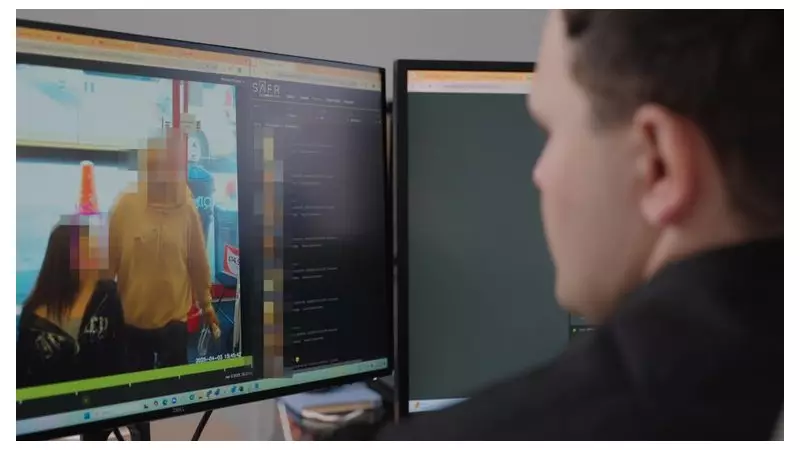
As the festive season reaches its peak, a stark reality is hitting UK retailers: shelves are emptying, but tills are not ringing as expected. A dramatic surge in shoplifting is forcing major high street names to adopt controversial new technology, igniting a fierce national debate about security, privacy, and the future of policing.
The Rise of Facial Recognition on the High Street
Faced with what they describe as an epidemic of theft and daily violence against staff, retailers are taking security into their own hands. Companies including Sainsbury's, Asda, Budgens, and Sports Direct have now implemented a cloud-based facial recognition system called Facewatch.
The technology works by scanning the faces of customers as they enter a store. These images are instantly compared against a private database of individuals identified by the retailers as known, repeat offenders. If a match is detected, staff receive an immediate alert that a suspected shoplifter is on the premises.

This drastic move comes against a backdrop of alarming official figures. Shoplifting offences rose by 13% in the year to June, totalling nearly 530,000 incidents. Perhaps more tellingly, over 80% of reported cases resulted in no charge, leaving businesses feeling abandoned by overstretched police forces.
Retailers' Defence: Protecting Staff and Profit
For business owners, the argument is one of sheer necessity. James Evans, managing director of Ruxley Manor Garden Centre in south London, revealed that theft now accounts for about 1.5% of his turnover, a significant blow to profitability.
"We have had instances where children are sent in to steal," Evans explained. "They know the parents are waiting in the car park and that there's little we can do." The problem has escalated beyond mere stock loss. Evans emphasised that staff safety is now a paramount concern, citing an incident where employees were nearly struck by a car driven by a shoplifter's accomplice.
Nick Fisher, chief executive of Facewatch, defended the system, calling criticism "disproportionate" and "misleading." He stressed that the technology only stores data on known repeat offenders and is used in a proportionate and responsible way, compliant with UK GDPR. "In the world that we are currently operating in," Fisher stated, "I can only see it being a force for good."
The Civil Liberties Backlash and Case of Mistaken Identity
However, the rapid rollout of this biometric surveillance has triggered a major backlash from privacy campaigners. Silkie Carlo, director of the group Big Brother Watch, condemned the practice as a "very dangerous kind of privatised policing industry."
"It really threatens fairness and justice for us all," Carlo argued. "Just going to do your supermarket shopping, a company is quietly taking your very sensitive biometric data... and making a judgement about whether you're a criminal or not."
These concerns are not merely theoretical. The organisation reports receiving regular complaints from people wrongly targeted by the system. One such case involved Rennea Nelson, who was wrongly flagged as a shoplifter at a B&M store after being mistakenly added to the database while six months pregnant.
"He said to me, 'if you don't get out, I'm going to call the police. Your face set off the alarm because you're a thief'," Nelson recounted, describing the experience as deeply traumatic during a high-risk pregnancy. B&M later apologised, calling it a "rare case of human error."
The clash highlights a fundamental tension in modern Britain. As retailers grapple with over 2,000 daily reports of violence or abuse against staff and mounting financial losses, they are turning to powerful technological solutions. Yet, this creates a society where citizens are biometrically scanned during routine shopping, raising profound questions about privacy, justice, and who gets to decide the balance between security and liberty.






