

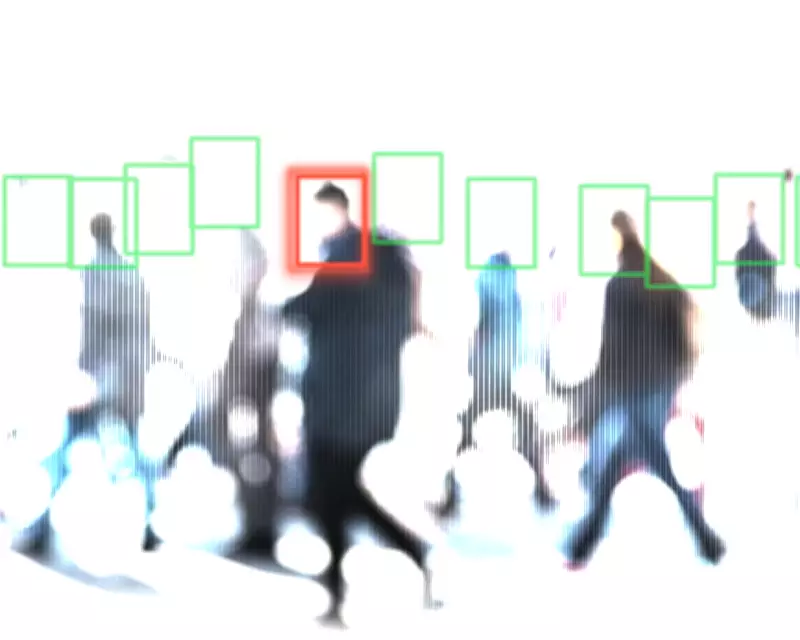
In a troubling incident at a London supermarket, an innocent shopper was ordered to abandon his groceries and leave the premises after being misidentified by controversial facial recognition technology. Warren Rajah, a regular customer at a Sainsbury's store in Elephant and Castle, found himself at the centre of what he described as an "Orwellian" error that has sparked fresh debate about the use of surveillance systems in retail environments.
Orwellian Experience in South London Supermarket
During what should have been a routine shopping trip, Rajah was approached by three members of staff who informed him he needed to leave the store immediately. The staff members appeared to be acting on information from a handheld device, with one employee seemingly confirming Rajah matched a photograph displayed on the screen. The situation left Rajah confused and frustrated, as supermarket personnel were unable to provide a clear explanation for his ejection beyond directing him to scan a QR code.
Proving Innocence to a Surveillance System
The QR code led to the website of Facewatch, the facial recognition company contracted by Sainsbury's to operate surveillance systems in selected stores. When Rajah contacted the firm, he was instructed to submit a photograph of himself alongside an image of his passport before Facewatch would confirm he wasn't recorded in their database. "One of the reasons I was angry was because I shouldn't have to prove I am innocent," Rajah explained. "I shouldn't have to prove I'm wrongly identified as a criminal."

He drew parallels between his experience and dystopian fiction, describing the incident as feeling "quite like Minority Report, Orwellian". The technological misidentification created significant distress, with Rajah particularly concerned that some form of permanent record implying criminal involvement might have been created within Facewatch's systems.
Passing Responsibility Between Retailer and Technology Provider
As Rajah sought answers and resolution, he found himself caught between shifting accounts of responsibility. "You felt quite helpless in the situation because you're just thrown from pillar to post," he recounted. "Sainsbury's initially blame Facewatch, then Facewatch retort saying it's actually Sainsbury's. And then, when Sainsbury's called me from the executive office, they blamed the store staff."
This bureaucratic runaround left Rajah with little confidence in the accountability mechanisms surrounding facial recognition deployment. Beyond the immediate inconvenience and distress, he expressed serious concerns about how his personal information – including his photograph and passport details – was being stored and whether it had been properly deleted after verification.
Accessibility Concerns for Vulnerable Shoppers
Rajah highlighted broader implications of the incident, particularly for vulnerable members of society. "What happens to the vulnerable people who, for example, have learning disabilities or don't know how to scan a QR code?" he questioned. "They haven't put any processes or procedures in place for anybody to challenge this. You should not be expected to send your personal information – that is totally unacceptable."
His experience raises important questions about the accessibility of complaint and correction mechanisms when automated surveillance systems make errors. The requirement to navigate digital interfaces and submit sensitive personal documentation creates significant barriers for those without technological literacy or resources.
Official Responses and Explanations
Sainsbury's issued a statement regarding the incident, saying: "We have been in contact with Mr Rajah to sincerely apologise for his experience in our Elephant and Castle store. This was not an issue with the facial recognition technology in use but a case of the wrong person being approached in store."
Facewatch similarly responded: "We're sorry to hear about Mr Rajah's experience and understand why it would have been upsetting. This incident arose from a case of human error in store, where a member of staff approached the wrong customer. Our data protection team followed the usual process to confirm his identity and verified that he was not on our database and had not been subject to any alerts generated by Facewatch."

Both companies attributed the error to human misidentification rather than technological failure, though this distinction offers little comfort to those subjected to such experiences. The incident at Elephant and Castle serves as a stark reminder of the real-world consequences when surveillance systems intersect with everyday activities like grocery shopping.
Broader Implications for Retail Surveillance
This case emerges amid growing concerns about the proliferation of facial recognition technology in commercial spaces across the United Kingdom. While retailers argue such systems enhance security and reduce theft, critics warn about the erosion of privacy and the potential for misidentification, particularly among minority communities.
The Rajah incident highlights several critical issues: the adequacy of staff training when implementing surveillance technologies, the transparency of error correction processes, the security of personal data collected during verification procedures, and the fundamental question of whether customers should bear the burden of proving their innocence when automated systems fail.
As facial recognition becomes increasingly embedded in the retail landscape, cases like this one will likely fuel ongoing debates about regulation, oversight, and the appropriate balance between security concerns and individual rights in public commercial spaces.





