Supermarkets across the United Kingdom are increasingly adopting a controversial pricing strategy for fresh produce that leaves consumers in the dark about whether they're getting genuine value, according to new analysis. The shift from traditional weight-based pricing to charging by individual items has created what experts describe as a "massive transparency failure" in the grocery sector.
The Analysis That Revealed Arbitrary Pricing
A detailed investigation comparing "per each" online prices against actual "per kilo" shelf prices for fifteen different fruits and vegetables at major UK supermarkets found what the analyst called "completely arbitrary" price variations. The researcher, who requested anonymity due to their professional position, discovered that this pricing approach creates "wild volatility" with some items becoming more than 50% more expensive when sold by the piece rather than by weight.
"The findings prove this pricing strategy represents a massive transparency failure for consumers," the analyst stated. "Unless customers perform complex mathematics while shopping, they have no way of knowing if they're being charged fairly."

The 'Capsicum Paradox' and Other Examples
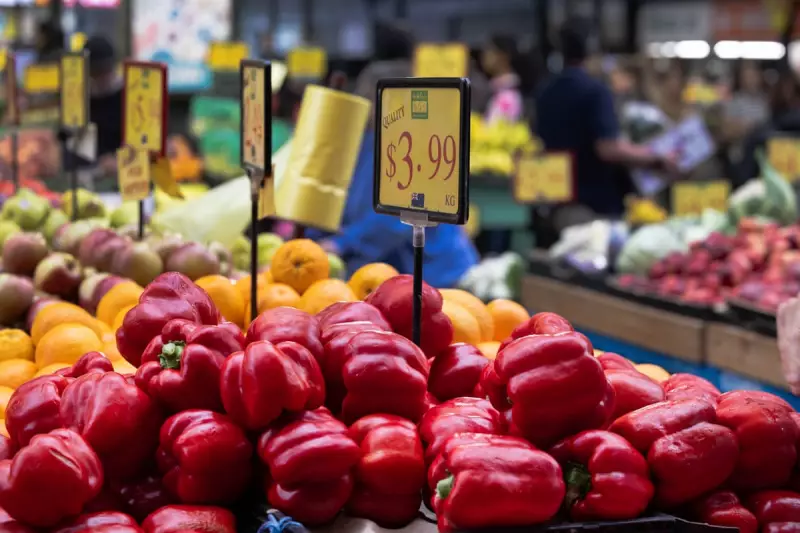
In what the analyst termed the "capsicum paradox," green capsicums showed a staggering 51% price increase when sold individually compared to their weight-based pricing. While these vegetables cost £9.90 per kilogram in-store, the "per each" online price translated to nearly £15 per kilogram - a difference most shoppers would never detect without careful calculation.
The methodology involved weighing five randomly selected pieces of each fruit or vegetable (using two heads for broccoli) at a major supermarket, then comparing these weights against the "per each" prices listed on the same retailer's website for identical produce on the same day.
Red washed potatoes showed a 30% premium when priced individually, while mandarins, limes, and carrots all became more expensive under the "per each" system. Conversely, some items including broccoli, brown onions, red chillies, and bananas actually became cheaper when sold by the piece, with broccoli showing a 43% reduction and brown onions 39% cheaper compared to their per-kilo equivalents.
The Regulatory Loophole Exploiting Consumers
Current UK regulations allow supermarkets to price fruit and vegetables either "per each" or "per kilo," whether items are packaged or sold loose. This legal framework creates what consumer advocates describe as a significant loophole that retailers are exploiting to the detriment of shoppers.
"It's a substantial regulatory gap, and as long as it exists, major supermarkets will continue using it because it's perfectly legal," the analyst explained. "This lack of transparency prevents consumers from making informed decisions about how they spend their money and whether they're receiving genuine value."
Experts have raised additional concerns that "per each" pricing could facilitate so-called shrinkflation, where retailers source smaller pieces of produce while maintaining the same per-item price, effectively increasing costs without appearing to raise prices.
Consumer Advocates Demand Reform
Ian Jarratt from the Consumer Association emphasised that trade measurement legislation and unit pricing codes should be amended to reduce or eliminate retailers' ability to price fresh produce solely by the piece.
"To help shoppers make quick, easy, and accurate price comparisons within product categories and between different types, prices should be shown and charged per kilogram," Jarratt stated. "If retailers wish to provide estimated prices per piece and average weights, this information should be supplementary to the mandatory per-kilo pricing and displayed less prominently."
While the UK's unit pricing code recommends that retailers using "per each" prices also display unit pricing - including average weight and per-kilogram equivalent - this remains merely a "best practice suggestion" rather than a mandatory requirement.

Supermarket Responses and Industry Position
A spokesperson for one major supermarket chain defended the practice, stating: "Customers frequently seek to order specific numbers of fruit or vegetable pieces, particularly when shopping online. To accommodate this preference, we provide prices per piece to simplify their shopping experience. We currently have no plans to alter how we price fresh produce in-store."
The spokesperson acknowledged that "small discrepancies may occasionally occur when comparing per-piece pricing to in-store per-kilo pricing," adding that online prices are regularly adjusted to reflect market conditions and in-store weight-based pricing.
Another leading supermarket confirmed they are trialling expanded "per each" pricing in select locations, telling customers the initiative "aims to provide clarity about exactly what you will pay at the checkout."
The Political Dimension and Future Outlook
The government has committed to strengthening certain aspects of the unit pricing code, though specific reforms addressing "per each" pricing remain unannounced. Earlier this week, the relevant minister emphasised that "supermarket prices shouldn't be a guessing game for British families."
Bea Sherwood, a senior policy adviser at a leading consumer advocacy organisation, reported receiving mixed feedback from shoppers regarding "per each" pricing. "Some consumers genuinely appreciate the simplicity, while others find it confusing and potentially misleading," she noted.
Nevertheless, Sherwood argued that supermarkets should implement consistent unit pricing, particularly per-kilogram measurements for fruits and vegetables. "Establishing a baseline where everything is referenced through per-kilogram pricing would provide maximum utility for consumers trying to determine genuine value," she concluded.
As the debate continues, UK shoppers face increasing uncertainty in their weekly grocery shops, with consumer advocates calling for regulatory reform to ensure pricing transparency becomes mandatory rather than optional in the supermarket sector.