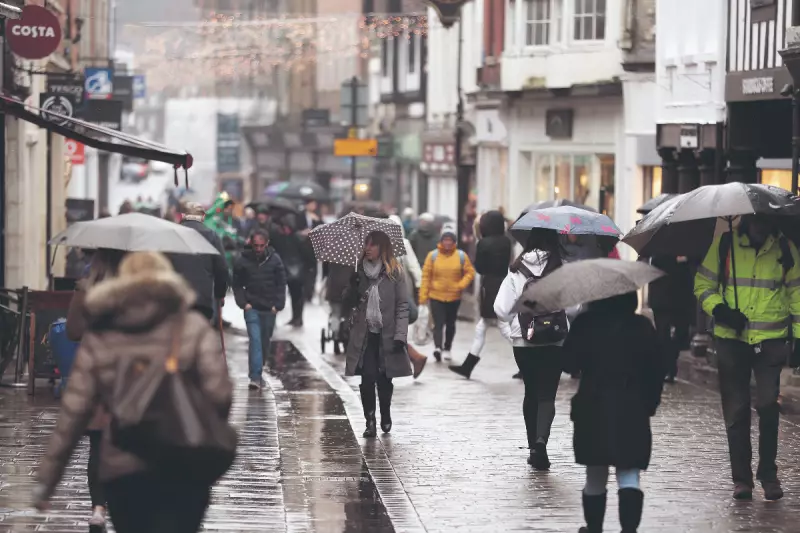
UK Retail Sales Show Festive Uptick Amid Quarterly Decline
UK retail sales experienced a modest seasonal boost in December 2025, with volumes rising by 0.4 per cent according to the latest Office for National Statistics (ONS) data. This increase followed consecutive monthly declines of 0.1 per cent in November and 0.8 per cent in October, suggesting a temporary resurgence in consumer activity around the festive period.
December's Festive Recovery
The Christmas shopping period provided a much-needed lift to the retail sector, with the Autumn Budget appearing to encourage some consumers back to physical stores. However, this seasonal uplift proved insufficient to counteract broader downward trends. Online retailers, particularly jewellers specialising in precious metals, reported significant growth following a previous month's slowdown.
Supermarkets and automotive fuel sales also recorded marginal increases, though non-food stores encompassing clothing and household goods experienced a 0.9 per cent decline. Industry analysts attribute the supermarket growth to evolving consumer behaviours, with households demonstrating more strategic spending approaches during the festive season.

Nicholas Found, head of commercial content at Retail Economics, observed: "Households spent smarter over Christmas, particularly in grocery. Consumers leaned heavily on promotions and shifted spend from eating out to premium at-home meals."
He added: "Discretionary non-food categories faced a toxic mix of weak demand, lingering uncertainty following the late November Budget, and margin-eroding promotions. Many retailers were forced to discount earlier and harder to defend market share, putting profitability under strain."
Quarterly Performance and Annual Trends
Despite December's positive figures, the broader fourth quarter painted a less optimistic picture, with overall sales declining by 0.3 per cent compared to the previous quarter. Both supermarkets and non-store retailers experienced reduced consumer engagement during this period.
Retailers identified several contributing factors to the quarterly downturn:
- Exceptionally strong summer spending driven by favourable weather conditions
- Increased footfall and sales during the UEFA Women's Euros tournament
- Reduced demand for precious metals in the final month of the year
- A decline in automotive sales following robust July performance
Year-on-year comparisons revealed more positive trends, with sales volumes increasing by 2.1 per cent compared to December 2024. Online sales demonstrated particularly strong growth, jumping 8.4 per cent annually and surging 11.1 per cent specifically in December.
High Street Challenges and Online Dominance
The shift toward digital shopping continues to reshape the retail landscape, with online platforms capturing an increasing share of consumer spending. Oliver Vernon-Harcourt, head of retail at Deloitte, attributed December's online sales hike to a "flurry of last-minute shopping", while Nicholas Hyett, investment manager at Wealth Club, highlighted the ongoing challenges facing physical retailers.
Hyett noted: "There was no festive cheer on the high street, which continues its long slow demise... in December as shoppers increasingly look online to do their Christmas shopping. That is a depressingly predictable headline, and the result is companies like Claire's, the Original Factory Shop and Russell & Bromley going into administration."
Annual Recovery and Future Outlook
Annual sales volumes increased by 1.3 per cent throughout 2025, marking the second consecutive year of growth following a 0.2 per cent rise in 2024 and declines in both 2022 and 2023. Despite this positive trajectory, retail volumes remain below pre-pandemic levels and have not fully recovered from the significant 2023 downturn.
Economic analysts suggest December's recovery could signal broader economic improvement, with retailers hoping that "easing inflation and improving real incomes" will bolster consumer confidence. However, the outlook for 2026 appears challenging according to some experts.

Thomas Pugh, chief economist at RSM UK, explained: "The outlook for consumers is looking a bit tougher this year. A weakening labour market combined with still high inflation means real household incomes are likely to grow by less than 1 per cent in 2026."
He continued: "The outlook for spending hinges on whether consumers maintain their current elevated levels of saving or pare back to support consumption. With the household saving ratio elevated and balance sheets in aggregate looking healthy, there is plenty of room for consumers to save a little less and spend a bit more, but only if they are confident enough."
The retail sector's performance continues to reflect broader economic uncertainties, with the balance between online and physical retail, consumer confidence, and macroeconomic factors all playing crucial roles in determining future trends.