

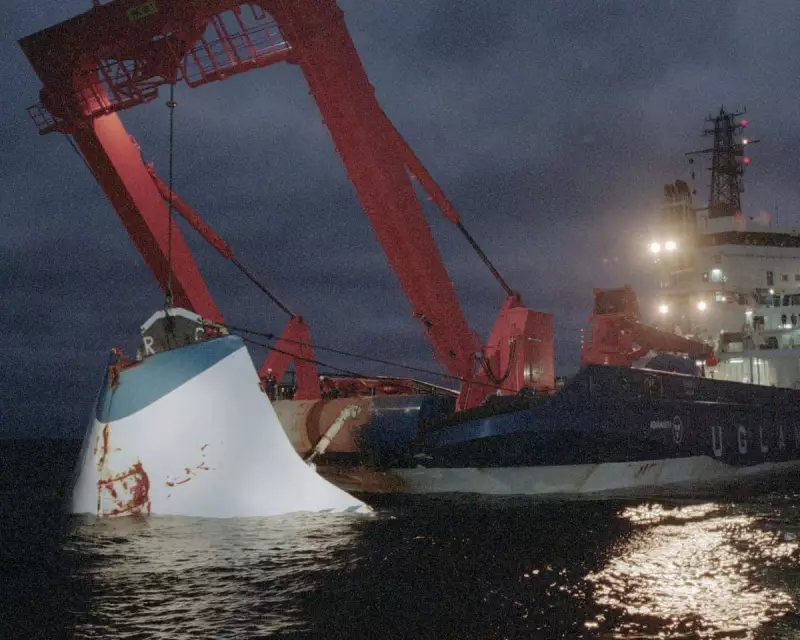
European investigators have issued a definitive conclusion on the cause of the MV Estonia ferry disaster, stating the 1994 sinking that claimed 852 lives was solely due to the failure of its bow section.
Official Findings Close Decades of Speculation
The final report, compiled by a joint team from Estonia, Sweden, and Finland, aims to close the case on Europe's worst peacetime maritime disaster since the Second World War. The investigation states there is "no reason" to launch a new full-scale inquiry, firmly dismissing long-circulated alternative theories involving a collision or an onboard explosion.
On the stormy night of 28 September 1994, the roll-on, roll-off passenger ferry was en route from Tallinn to Stockholm when it sank in the Baltic Sea near Utö island. The tragedy resulted in the loss of 852 people.

Re-examining the Wreckage
An initial official investigation in 1997 concluded the ferry's bow visor failed, allowing catastrophic flooding. However, speculation persisted for decades. This was fuelled in 2020 by a documentary that revealed previously unseen damage to the ship's hull, prompting authorities to re-examine the wreck.
The latest findings are based on six separate examinations of the wreck site, survivor interviews, computer modelling, and technical analysis. Investigators confirmed that the holes in the hull, which had sparked renewed conspiracy theories, were caused by the ship striking rocks on the sea bed after it sank.
"The inspections do not reveal any signs that the MV Estonia collided with any other vessel or object during its voyage," the report states. "Nor are there any signs that an explosion occurred on the ship."
A Final Verdict on the Catastrophe
The report reinforces the preliminary findings released in 2023, which also attributed the hull damage to seabed rocks and questioned the vessel's seaworthiness on its final voyage. The core conclusion remains unchanged: "The MV Estonia sank as a result of the collapse of its bow construction."
This comprehensive study seeks to provide finality for the victims' families and the nations affected by the tragedy, putting to rest alternative narratives that have circulated for nearly 30 years.






