Strait of Hormuz Blockade Creates Global Shipping Crisis
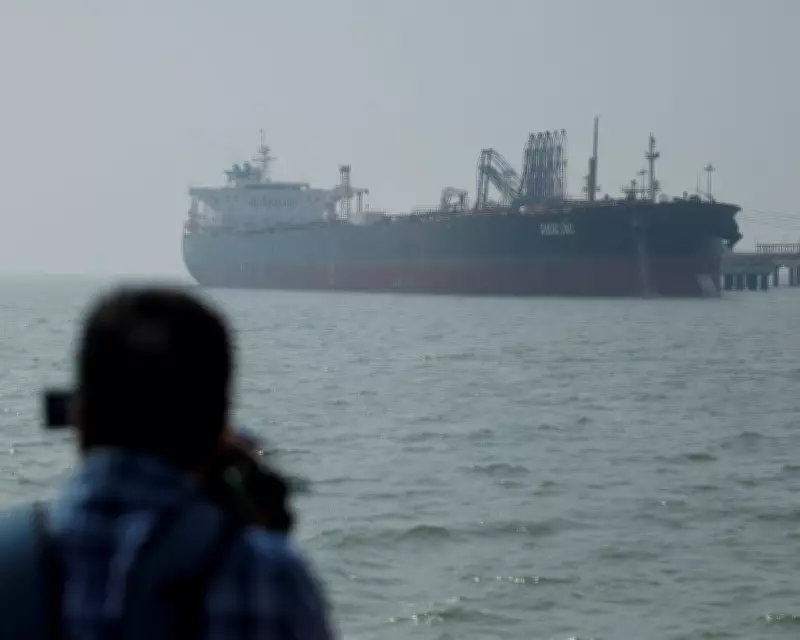
The Liberia-flagged tanker Shenlong Suezmax successfully navigated the Strait of Hormuz last Friday, becoming one of the rare vessels to complete this dangerous passage since regional hostilities erupted. This exceptional transit occurred against a backdrop of escalating maritime tensions that have effectively closed one of the world's most critical shipping corridors.
Strategic Waterway Paralyzed by Conflict
More than 1,000 cargo vessels, predominantly oil and gas tankers, have been prevented from transiting the Strait of Hormuz following Iran's decision to close this vital maritime passage in response to the ongoing Israeli-US military campaign against Tehran. The strategic chokepoint, which typically handles approximately one-quarter of global liquefied natural gas shipments and substantial seaborne trade from Gulf nations, has become a focal point of regional conflict.
Energy markets have experienced significant price volatility as Iranian military strikes against commercial shipping and confirmed reports of mine-laying operations have created unprecedented hazards for maritime traffic. Despite initial suggestions from Trump administration officials about potential naval escort operations to restore safe passage, these protective measures have failed to materialize amid continued Iranian aggression.

Geographic Constraints and Historical Precedents
The Strait of Hormuz represents the sole maritime connection between the Persian Gulf and the Gulf of Oman, with shipping confined to narrow two-mile-wide lanes for inbound and outbound traffic separated by a two-mile meridian. At its most constricted point, the waterway measures just 21 nautical miles across, bordered by Iran's coastline on one side and Oman's Musandam peninsula on the other.
This strategic passage has historically been vulnerable to geopolitical manipulation, most notably during the "tanker war" phase of the Iran-Iraq conflict during the 1980s. The United States Navy responded to that earlier threat with Operation Earnest Will in 1987, which constituted the largest convoy operation since World War II.
Iran's Escalating Maritime Strategy
As part of its broader strategy to expand the geographic scope of hostilities and increase global economic consequences, Iran has implemented a multi-faceted campaign against commercial shipping. Beyond direct attacks on vessels, Tehran has reportedly initiated mine-laying operations throughout the strait, effectively creating a maritime blockade that has paralyzed commercial traffic.
These actions have dramatically increased insurance premiums for cargo operators while raising serious concerns about crew safety, although insurance coverage continues to be available for those willing to assume the extraordinary risks.
US Military Planning and Operational Challenges
While US military strategists have long warned about Iran's potential capability to close the Strait of Hormuz during periods of conflict, the Trump administration appears to have underestimated Tehran's willingness to implement such drastic measures. Some analysts had speculated that Iran would maintain the strait's openness to ensure continued export of its own petroleum products, but the existential threat perceived by Tehran's clerical leadership has prompted a far more aggressive response.
Energy Secretary Chris Wright acknowledged the operational limitations facing US forces, stating on Thursday that naval escort operations could not commence immediately. "It'll happen relatively soon, but it can't happen now," Wright explained, correcting earlier misstatements about escort operations already underway. "We're simply not ready." He further noted that current military resources remain focused on neutralizing Iran's military capabilities.
Complex Naval Defense Requirements
US military planners have long recognized that countering Iranian efforts to close the strait would present extraordinary operational challenges, a reality reinforced by recent experiences with Houthi attacks on shipping in Yemeni waters. While American forces have targeted Iran's conventional naval assets, Tehran maintains a fleet of small, fast boats that have reportedly been deployed for mine-laying operations in recent days.

The proximity of Iranian coastal positions creates additional complications, with some transit lanes passing within three to four miles of Iranian territory. This geographic reality provides extremely short response times for vessels facing drone or missile attacks, with flight times sometimes allowing less than two minutes for defensive measures.
Last week demonstrated Iran's evolving tactics when a remote-controlled explosive boat damaged a crude oil tanker anchored in Iraqi waters, highlighting the asymmetric threats facing commercial shipping.
International Coalition Limitations
Despite maintaining one of the world's most powerful naval forces, the United States lacks sufficient assets to independently secure the Strait of Hormuz for commercial traffic. Historical precedent suggests that such operations require broad international cooperation, but current geopolitical realities complicate coalition building.
Adel Bakawan, director of the European Institute for Studies on the Middle East and North Africa, emphasized this reality earlier this week, stating: "Neither France, the United States, an international coalition or anybody is in a position to secure the Strait of Hormuz."
Any US naval vessels deployed to the region would themselves become high-value targets, necessitating comprehensive air support in addition to their organic air defense systems.
Mine Warfare and Psychological Operations
Iran maintains a diverse arsenal of naval mines, ranging from relatively crude devices to sophisticated systems like the Maham-3, which employs magnetic and acoustic sensors rather than requiring physical contact with vessels. These weapons can be deployed at various depths, with some capable of operating as deep as 164 feet below the surface.
While Iran possesses conventional mine-laying vessels, the regime has demonstrated the capability to utilize fishing boats and other small craft for covert mine deployment operations. Beyond their physical destructive potential, these weapons serve important psychological and operational purposes by increasing the complexity of any potential convoy missions and deterring commercial traffic through heightened risk perception.
Strategic Implications and Ground Force Considerations
Some defense analysts have suggested that securing the Strait of Hormuz against Iranian threats may ultimately require ground operations along the Iranian coastline, given the extensive area involved and the proliferation of inexpensive, effective drones that can employ varied tactics against maritime targets.
Brian Katulis, a senior fellow at the Middle East Institute, highlighted these complexities in comments to the Wall Street Journal: "Strategic priorities, like opening the Strait of Hormuz and securing what remains of Iran's nuclear stockpile, will likely require some ground troops if no diplomatic options are pursued. What we are looking at is potentially a very messy situation."
US Senator Chris Murphy echoed concerns about strategic planning deficiencies, stating in a social media post: "On the Strait of Hormuz, they had NO PLAN. I can't go into more detail about how Iran gums up the Strait, but suffice it to say, right now, they don't know how to get it safely back open."