

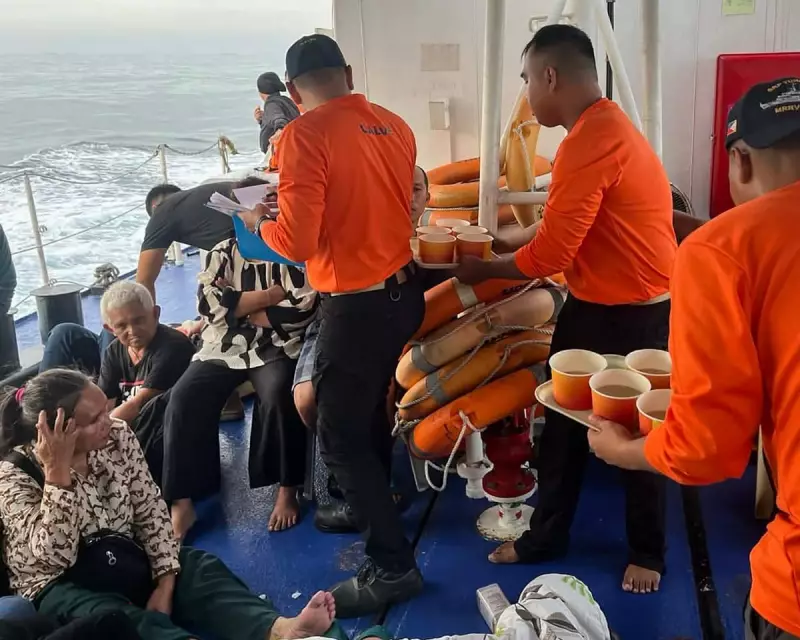
A major maritime disaster has struck the southern Philippines, with at least fifteen people confirmed dead and dozens more missing after an inter-island ferry capsized in the early hours of Monday morning. The incident has prompted a large-scale search and rescue operation involving multiple agencies.
Ferry Sinks During Routine Voyage
The vessel involved was the M/V Trisha Kerstin 3, a cargo and passenger ferry operating a regular route from the port city of Zamboanga to southern Jolo island in Sulu province. According to coast guard officials, the ferry was carrying 332 passengers and 27 crew members when it apparently encountered technical problems and sank after midnight.
Coast guard commander Romel Dua reported that the sinking occurred approximately one nautical mile (1.8 kilometres) from the island village of Baluk-baluk in Basilan province. Remarkably, the incident happened during good weather conditions, raising immediate questions about the vessel's seaworthiness and operational status.

Massive Rescue Operation Underway
Rescue efforts have been extensive and coordinated across multiple services. Coast guard and navy ships have been deployed to the area, supported by a surveillance plane, an air force Black Hawk helicopter, and numerous local fishing boats. The quick response was partly triggered by a coast guard safety officer who was on board the ferry and managed to alert authorities before the vessel went down.
Mujiv Hataman, the provincial governor of Basilan, confirmed that survivors and casualties were being brought to Isabela, the provincial capital. "I'm receiving 37 people here in the pier. Unfortunately two are dead," Hataman told reporters, highlighting the immediate human toll of the disaster.
Current Casualty Figures and Investigation
As of the latest reports, the Philippine Coast Guard has confirmed that 316 passengers have been rescued, while at least fifteen bodies have been recovered. However, twenty-eight individuals remain unaccounted for, with search operations continuing around the clock.
Commander Dua emphasised that the cause of the sinking remains unclear and will be subject to a thorough investigation. Preliminary checks indicate that the ferry was cleared for departure from Zamboanga port and showed no signs of overloading, adding to the mystery surrounding this tragic event.
Historical Context of Philippine Maritime Safety
This latest incident highlights ongoing concerns about maritime safety in the Philippine archipelago. Sea accidents are unfortunately common in the region due to a combination of factors including:
- Frequent storms and challenging weather patterns
- Poorly maintained vessels and ageing fleets
- Overcrowding on some routes
- Inconsistent enforcement of safety regulations, particularly in remote provinces
The Philippines has experienced some of the world's worst maritime disasters, most notably the Dona Paz tragedy in December 1987 when a ferry collision with a fuel tanker resulted in more than 4,300 fatalities - the worst peacetime maritime disaster in recorded history.
This latest sinking serves as a sobering reminder of the persistent challenges facing maritime transportation in island nations, where ferries remain essential for inter-island connectivity but where safety standards must be continually monitored and improved to prevent such tragedies.






