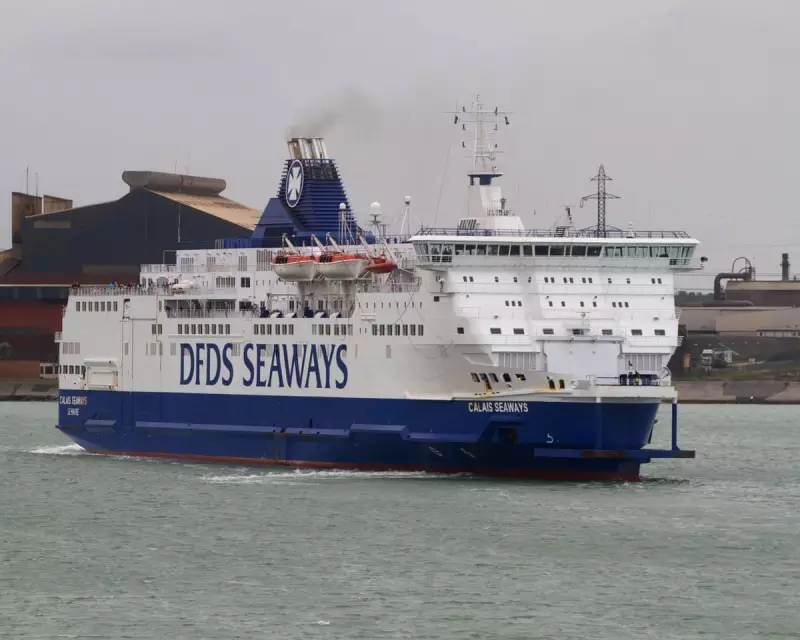
The long-awaited revival of a direct ferry link between Scotland and France is now anticipated to commence later this year, with the Danish operator DFDS potentially at the helm. This development coincides with the launch of an ambitious €40 billion (£35 billion) regeneration programme for the port of Dunkirk, a project that aims to transform the historic site into a modern hub for low-carbon energy and industrial innovation.
A Symbolic Rebirth Echoing Wartime Resilience
Political and industrial leaders in Dunkirk have framed this extensive redevelopment as a contemporary echo of the port's famed second world war spirit of resilience. The plan seeks to revitalise a region that experienced significant deindustrialisation, with thousands of heavy industry jobs in the postwar era dwindling to just a few hundred by the 1980s. Patrice Vergriete, the mayor of Dunkirk and a former transport minister, emphasised that the project represents a strategic bet on the energy and ecological transition to redevelop the industrial area.
Dunkirk as a European Laboratory for Renewal
The regeneration of Dunkirk is being closely monitored across Europe as a potential blueprint for reindustrialisation in regions affected by the decline of traditional, polluting industries. Marie-Pierre de Bailliencourt of the Institut Montaigne thinktank described the area as a "laboratory" and a "testing ground for European industrial renewal." The port's strategy involves harnessing its maritime advantages while aggressively pursuing decarbonisation goals.

Key components of the £35bn plan include:
- The establishment of low-carbon energy projects and advanced battery manufacturing facilities.
- A significant shift in steel production, with ArcelorMittal transitioning from blast furnaces to electric arc furnaces, supported by €850 million in French state subsidies.
- The redevelopment of a large, formerly contaminated site once occupied by a refinery, which will now host a battery factory and a biofuel production plant for aviation.
- A new €25 million rail terminal designed to shift freight from road to rail, further reducing the port's carbon footprint.
The Rosyth Ferry Connection: A New Chapter
The proposed ferry service would link Rosyth in Fife with Dunkirk, marking a significant reconnection for Scotland and mainland Europe. Freight-only services between Rosyth and Zeebrugge in Belgium ended in 2018, and passenger services ceased back in 2010. The new route is initially planned to operate with one ship making three weekly crossings, involving a sailing time of approximately 20 hours.
Daniel Deschodt, deputy chief executive of the port of Dunkirk, expressed optimism that the service would attract Scottish rugby fans, particularly for events like the Six Nations tournament. However, the revival is contingent on the construction of new post-Brexit border facilities for essential veterinary checks and passport controls. Scottish authorities have proposed a solution involving docking EU imports at Rosyth and conducting checks at a facility in Grangemouth, located 20 miles away.
Brokerage and Global Ambitions
The Scotland route is just one element of Dunkirk's broader expansion strategy. The port is also planning new services to Nordic countries and aims to grow its trade with South America, a region from which it already handles a quarter of France's pineapple and banana imports from Colombia. Furthermore, Dunkirk is developing a pioneering hub to capture and liquefy carbon emissions from industries across Europe, with potential storage sites that could include facilities in Scotland.
This comprehensive regeneration, backed by an initial €4 billion (£3.5bn) in combined public and private investment, positions Dunkirk not merely as a transport link but as a forward-thinking industrial and logistical centre. It aims to demonstrate how historic industrial regions can reinvent themselves for a sustainable, post-carbon future while rebuilding vital trade and passenger connections.