

SBA's Controversial Citizenship Requirement for Business Loans
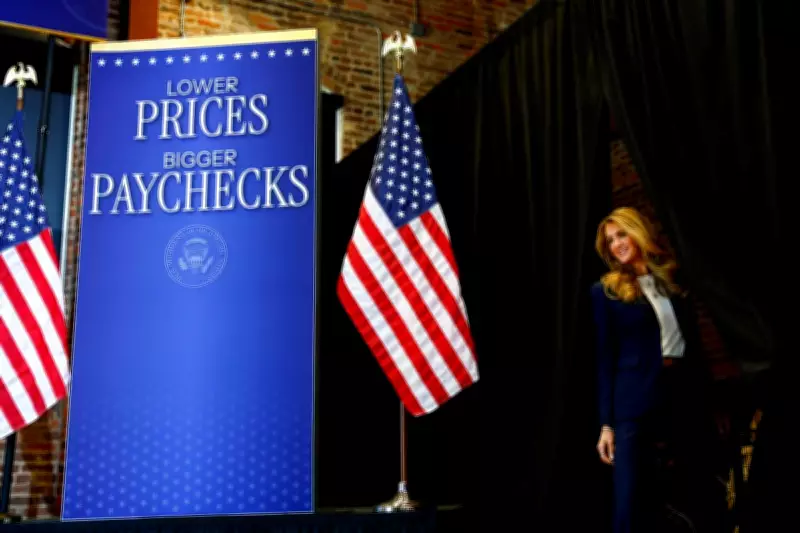
Kelly Loeffler, the newly appointed administrator of the Small Business Administration, made a significant announcement on March 13, 2026, during an appearance in Rocky Mount, North Carolina. The agency responsible for supporting America's economic backbone will now restrict loan approvals exclusively to U.S. citizens, excluding even legal immigrants with green cards and full residency status.
The Real-World Impact on Immigrant Entrepreneurs
This policy shift represents more than bureaucratic procedure—it directly affects thousands of legal immigrant business owners who contribute to local economies nationwide. While targeting undocumented immigrants who have committed crimes might find some public support, penalizing law-abiding immigrants who have followed proper legal channels creates a troubling precedent.
The fundamental question isn't about immigration policy, but whether the SBA should establish eligibility criteria that exclude legally operating business owners who pay taxes, create jobs, and contribute to their communities. These entrepreneurs face barriers to accessing capital that could help them establish and expand businesses benefiting both local neighborhoods and the national economy.

The Political Dimension of SBA Operations
This policy change appears driven by political considerations rather than practical business needs. The SBA's mission centers on serving small businesses, yet denying certain entrepreneurs participation in America's capitalist system because they lack citizenship seems counterproductive to that mission.
The current administration's approach contrasts sharply with previous SBA practices. During the Biden administration, the agency emphasized diversity in its marketing materials, sometimes presenting an image that didn't fully reflect statistical realities about small business ownership demographics. Now, under different leadership, the SBA appears to be tailoring its message to serve a different political agenda.
Bipartisan Support for Small Businesses
Supporting small businesses typically represents common ground in American politics. Congressional small business committees from both parties generally maintain collegial relationships, conducting hearings and approving legislation that serves small business interests. This bipartisanship makes sense politically—voters across the spectrum appreciate small businesses' economic contributions.
This widespread support makes the SBA's politicization particularly concerning. What was once viewed as a practical support agency has increasingly become a propaganda tool for whichever party holds power. Small business owners themselves rarely request political messaging—they need practical access to capital, resources, and support services.
Reimagining the SBA's Structure
Some experts suggest structural changes might protect the SBA from political cycles. One proposal involves transforming the agency into a separate entity partially funded by both government and private industry, similar to models like the Manufacturing Extension Partnership or MITRE Corporation.
Such an organization could be governed by a consortium including bureaucrats, CEOs, and business owners, with mandates to serve specific sectors. To maintain taxpayer funding, it would report to congressional small business committees, publishing goals, objectives, and results for accountability.
Major corporations serving small businesses—including banks, technology companies, and communication providers—could contribute funding, while organizations like the U.S. Chamber of Commerce and National Federation of Independent Businesses could provide influence and guidance. Crucially, all small businesses would maintain access to resources, not just select "members."
Historical Context and Future Directions
The SBA was established in 1953 under President Dwight Eisenhower, with its administrator elevated to cabinet-level status in 2012 during the Obama administration to emphasize small businesses' economic importance. However, that position has increasingly become a political tool serving presidential interests rather than business needs.

To genuinely serve small businesses, the SBA requires structural insulation from political cycles. Without such changes, the agency risks becoming another government body that reflects political agendas more than practical purpose, potentially undermining its core mission of supporting America's entrepreneurial foundation.





