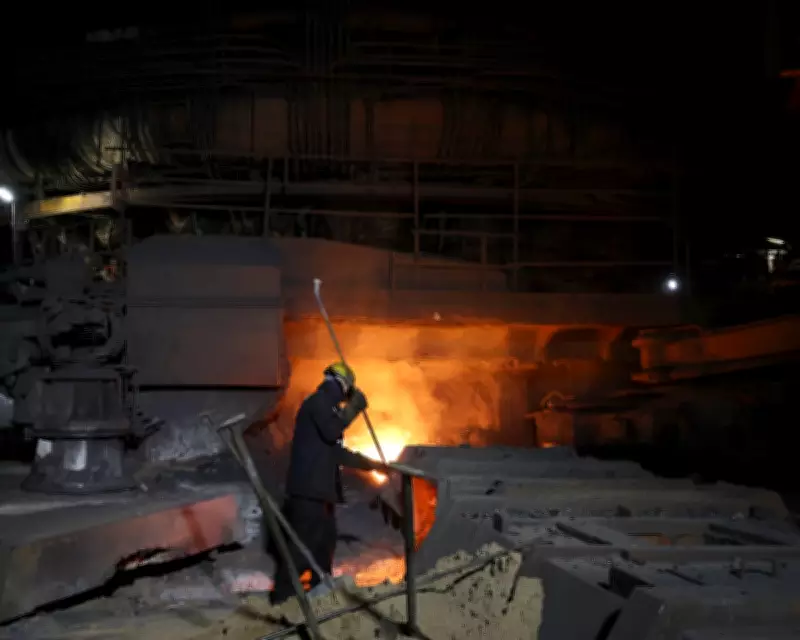
Scunthorpe Steel Plant's Daily Operational Costs Reach £1.3 Million
The National Audit Office has issued a stark warning about the financial burden of maintaining the United Kingdom's last remaining blast furnaces at British Steel's Scunthorpe facility. According to the government's spending watchdog, the daily operational expenses have reached an astonishing £1.3 million, with the total taxpayer bill potentially exceeding £1.5 billion by 2028 if current spending patterns continue.
Government Intervention Saved Thousands of Jobs
Ministers took the crucial decision to bring the Scunthorpe plant under public control in April of last year, following threats from its Chinese owner, industrial firm Jingye, to shut down the financially struggling site. This decisive action preserved thousands of jobs at the Scunthorpe facility and prevented what the NAO described as a "serious impact" on British industry.
The intervention proved particularly vital for Network Rail, which depends on the plant for steel supplies essential to maintaining and expanding the nation's railway infrastructure. Furthermore, closing the facility would have eliminated Britain's primary steel-making capability, as blast furnaces enable production from raw materials rather than relying solely on recycled scrap metal.

Mounting Financial Costs and Future Liabilities
While acknowledging the benefits of the government's intervention, the NAO report expressed significant concerns about the escalating costs of the rescue package. By the end of January this year, expenditures had already reached £377 million, including £15 million allocated to advisory services.
The financial exposure could increase substantially beyond current estimates, as the projected £1.5 billion figure does not account for several potential additional costs:
- Possible compensation payments to former owner Jingye
- Expenses related to any future sale process
- Massive investments required to transition from blast furnaces to greener electric arc technology
Departmental Challenges and Industry Strategy
Gareth Davies, head of the NAO, emphasized that the Department for Business and Trade "should learn from this experience to be better prepared for future interventions." The £377 million spent thus far is classified as a loan from DBT, yet no repayment schedule exists, and there is little indication that British Steel will be able to repay these funds.
Compounding the financial challenge, DBT received no specific allocation for this intervention during the spending review and must now identify savings elsewhere to cover some of these costs. This situation creates difficult "trade offs" with other departmental spending priorities, particularly given the government's previously announced £2.5 billion support package for the steel industry.
Union Perspective on Government Action
Alasdair McDiarmid, general secretary of the steelworkers' union Community, defended the government's decision, stating: "Should the government have sat on its hands, and allowed British Steel to collapse, the financial and social impacts would have been catastrophic."
McDiarmid argued that investing now prevented local economic devastation, strengthened national security, and avoided a massive long-term increase in welfare expenditures. The DBT is currently developing a comprehensive strategy proposal to address the broader challenges facing the UK steel industry, which continues to struggle with global competition and transition pressures.