Revolutionising Death Care in Rural Queensland
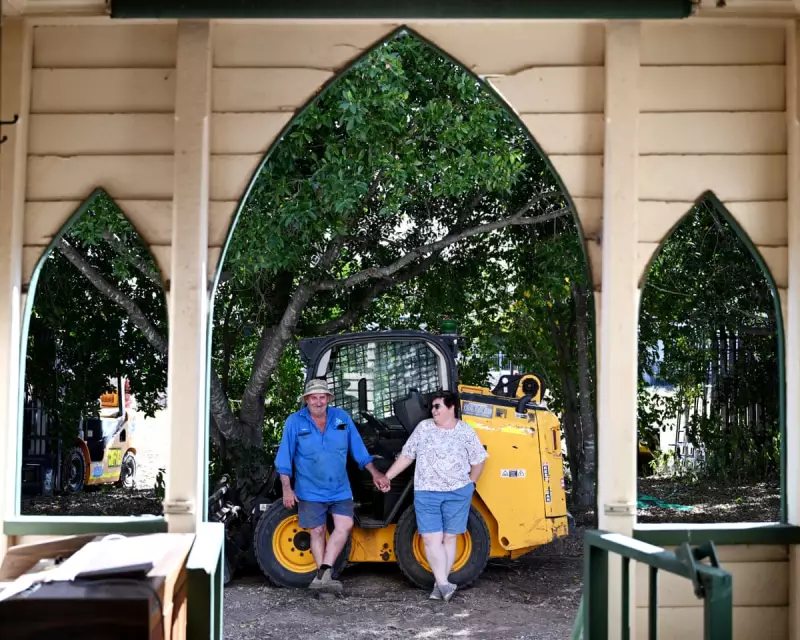
In the small central Queensland town of Capella, home to fewer than 1,000 residents, an innovative approach to funeral services is taking shape within the walls of a deconsecrated Anglican church. Wendy and Mark Tasker are preparing to launch what they believe will be a greener, more affordable alternative to traditional burial and cremation methods.
The couple, who already operate a cattle property and local supply stores, are installing an alkaline hydrolysis machine worth hundreds of thousands of dollars. This technology, often called water cremation, uses water, heat and alkaline chemicals to gently break down human remains, leaving behind only bone powder that can be returned to families.
A Lifelong Passion for Mortuary Science
For Wendy Tasker, who works part-time preparing bodies at a funeral parlour in nearby Emerald, this venture represents the fulfilment of a childhood ambition. "It's always been my passion," she reveals. "Even when I was a little child, I've always wanted to be a mortician. I know it's strange... but I just like to help people in their time of grief."

The Taskers lodged their development plans with the local council in August last year, receiving approval in March. They anticipate having the facility operational by the new year, marking a significant expansion of their business portfolio in this conservative farming community.
Addressing Community Concerns
Wendy acknowledges that some locals find the concept "daunting," which is why she plans to host an open day to educate the community about the process. "We're not just putting someone in a barrel of acid, like some people think," she explains.
The actual procedure involves warm water and potassium hydroxide, which accelerates natural decomposition without combustion. The alkaline chemicals used are actually the opposite of acids and are commonly found in everyday products from soap to food additives.
One of the key advantages Tasker highlights is cost savings for families, who can avoid purchasing expensive coffins. But perhaps more surprisingly in this coal country heartland, environmental concerns are also driving interest. "A lot of people are thinking more of the ozone layer," she notes. "With alkaline hydrolysis there is no smoke, so it's not going to pollute the air."
Challenging the Corporate Death Care Industry
The machine manufacturer, Jeff Boyle from Proserpine, sees himself as a disruptor in what has become a highly corporatised industry. The former funeral director claims that most Australian funeral homes are now American-owned, with profit taking precedence over family care.
Recent market analysis supports Boyle's concerns about industry consolidation. IBISWorld forecasts the $2 billion sector to grow by 25% by 2030, with single company InvoCare controlling approximately 34% of the market. InvoCare was acquired by US private equity firm TPG Global in late 2023 and operates more than 40 funeral brands across Australia.
"You have to make money in business, absolutely," Boyle concedes. "But you don't need to rip people off – and you don't need to take advantage of people in their most vulnerable time."
Transparency Issues in Funeral Pricing
University of Sydney professor Sandra van der Laan experienced these industry challenges firsthand when her sister died suddenly in 2014. She received multiple quotes around $6,500 but found funeral directors unwilling to provide detailed breakdowns.
Using her accounting expertise, Van der Laan managed to reduce costs by nearly $3,000 by eliminating unnecessary services. This experience led her to co-author the "It's Your Funeral" report, which identified concerning patterns of "predatory pricing" targeting vulnerable customers.
"We have this death denial culture... this industry is shrouded in mystery," Van der Laan observes. "But nothing is more certain than that everyone is going to die."

The Environmental Debate Around Green Death Tech
Dr Hannah Gould from the University of Melbourne's DeathTech research team describes alkaline hydrolysis as part of a growing "weird and wonderful world" of green death technology. While traditional burial consumes valuable land and cremation emits pollutants, the environmental credentials of new methods require careful evaluation.
Gould notes that current research comparing disposal methods relies heavily on two European studies, both with limitations. Neither adequately considered the water consumption of alkaline hydrolysis or the disposal of its effluent – significant concerns in the Australian context.
Boyle claims his technology addresses these issues by filtering and reusing water while separating extracted fats and oils for recycling. If verified, Gould says this would represent "an extraordinary step forward" for the technology.
Beyond Environmental Concerns
Despite the technical debates, Gould suggests that for many people, choosing green burial options reflects spiritual values as much as environmental concerns. "People just like the idea of returning to the earth, or becoming a tree," she explains.
This sentiment resonates with Wendy Tasker's family. Both her husband and mother have expressed preference for water cremation. "And not just because I'm doing it," she says. "They just feel it's a lot more calming."
As the Capella community prepares for this innovative addition to their town, the Taskers' venture represents both a personal dream realised and a small part of the broader transformation occurring in how societies approach the inevitable reality of death.