Amazon's Humanoid Delivery Robots Signal Major Shift in Workforce Strategy
Amazon is reportedly developing advanced humanoid robots designed to emerge from delivery vans and handle package distribution, a move that could eventually replace the traditional roles of delivery drivers. This initiative represents a significant escalation in the company's automation ambitions, moving beyond warehouse operations to the final mile of logistics.
A Glimpse into Amazon's Automated Future
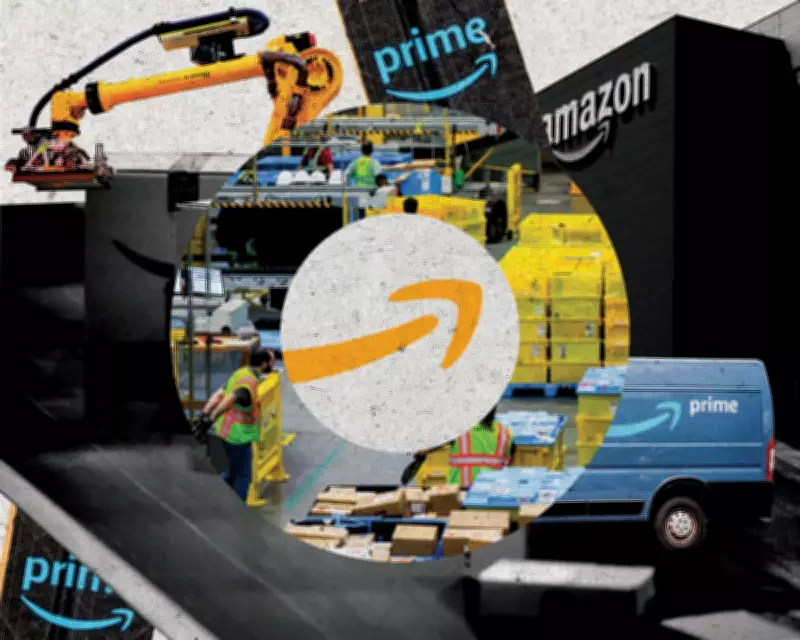
During a public tour of Amazon's state-of-the-art Stone Mountain warehouse in Georgia, visitors witnessed a facility where automation is already deeply integrated. The 640,000-square-foot, four-story building showcases various robotic systems in action. Roomba-like robots navigate between towering stacks of products, an automated crane arm efficiently palletises items, and a conveyor-belt robot applies shipping labels to boxes destined for dispatch.
Amazon offers these tours at 28 of its 1,200 US warehouses as part of a public relations and recruitment strategy, aiming to bolster brand trust and counter criticisms regarding working conditions. However, the experience highlighted some immediate contrasts. Upon arriving early, a journalist's request to use the restroom was denied by security, forcing an improvised solution in the parking lot—an ironic prelude given the notorious reports of Amazon workers struggling with timed or inaccessible bathroom breaks.

From Job Creation to Job Replacement
For years, Amazon executives have downplayed fears of automation leading to widespread job losses. In 2022, Tye Brady, chief technologist at Amazon Robotics, told the Guardian that the company's investment in robotics over the previous decade had actually created more than a million jobs. He emphasised the enduring need for human problem-solving and common sense, stating that robotics technology was "not even close" to matching human capabilities.
Yet, the corporate narrative has shifted markedly. Last June, CEO Andy Jassy informed white-collar employees that advancements in artificial intelligence would reduce the corporate workforce in the coming years. Internal documents, reported by the New York Times in October, outlined plans to replace over 500,000 jobs and avoid hiring 160,000 workers by 2027, with an ultimate goal of automating 75% of operations. Amazon has disputed these reports, calling them "incomplete and misleading," but the company has proceeded with substantial layoffs, including 14,000 corporate roles in October and an additional 16,000 recently announced, though it denies AI is the primary driver.
Workforce Adaptation and Concerns
Inside Amazon's warehouses, employees are already feeling the impact of this technological pivot. An anonymous picker and stower at a northern Georgia facility described how human resources functions have gradually shifted from human personnel to AI-driven systems, with reduced HR staff and automated texting services for employee inquiries. Workers are being encouraged to cross-train in areas like robot repair, anticipating that their current roles may become automated.
"People are getting hurt stowing and picking, so that's one of the reasons why Amazon is wanting to get robots that can do the work of the picker and the stower," the worker explained. "They're letting us know that it's smart for us to learn how to do something different, because eventually this might be replaced."
More than 1,000 Amazon employees have signed an open letter expressing concern over the company's "all-costs-justified, warp-speed" approach to automation, warning of risks to jobs, democracy, and the environment.
The Stone Mountain Warehouse Experience
The Stone Mountain tour itself offered a microcosm of Amazon's automated environment. The first floor featured a loud, ceiling-mounted conveyor belt system transporting yellow totes filled with various goods, necessitating headphones for the tour group. Despite signs mandating hearing protection, some workers appeared without earplugs. On the second floor, Roomba-like robots shuffled product stacks between worker stations, guided by computer instructions for picking and stowing tasks.

The tour guide noted that in facilities without such robots, workers would manually navigate with pushcarts. A single robotic arm on the first floor palletised totes, though it required human assistance for items placed too high. The guide emphasised that this robot was there to aid, not replace, human workers, and there were no plans to add more at that site.
Amazon spokesperson Zoe Hoffman addressed the bathroom access issue, stating it was "absurd and false to connect a visitor's tour experience to that of our employees," and affirmed that workers receive "regularly scheduled breaks." The company also highlighted its commitment to preparing employees for future roles, stating, "We believe investing in workers and our employees is more crucial than ever in this rapidly advancing technological age, especially with AI."
As Amazon forges ahead with its humanoid delivery robot project and broader automation strategy, the tension between technological innovation and workforce stability continues to intensify, reshaping not only logistics but the very nature of work within one of the world's largest employers.