

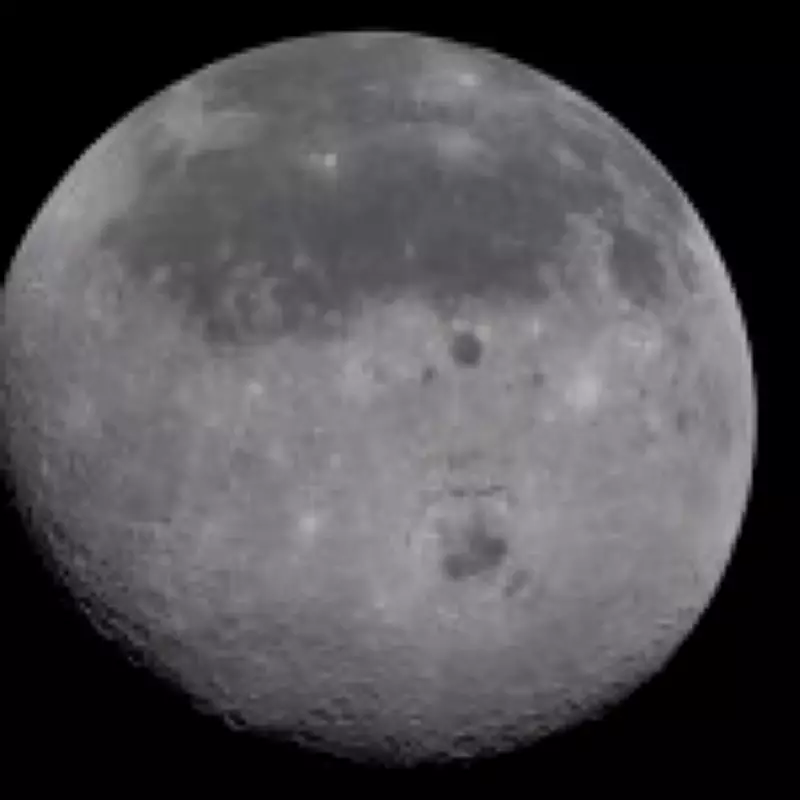
Artemis II Astronauts Unveil First-Hand Account of the Moon's Far Side
In a groundbreaking moment for space exploration, the four astronauts of NASA's Artemis II mission have provided a vivid description of the far side of the moon, a sight never before witnessed by human eyes. On the sixth day of their journey, Reid Wiseman, Victor Glover, Christina Koch, and Jeremy Hansen orbited our celestial neighbor, achieving a historic milestone by traveling farther from Earth than any humans in history, at a staggering distance of 248,655 miles.
Unprecedented Views and Communication Blackout
For 41 minutes, the crew experienced complete isolation as the moon blocked all radio signals from Earth, leaving them alone with the lunar landscape. During this period, they observed the moon's surface in unparalleled detail, with Glover remarking, 'You can actually see a majority of the moon. It is the strangest-looking thing that you can see so much on the surface.' As their spacecraft, dubbed Integrity, emerged from behind the moon, they were greeted by a breathtaking view of a blue and green crescent Earth, witnessing a solar eclipse from a unique vantage point.
Emotional Moments and Crater Naming
The mission was filled with emotional highlights, including the crew's decision to name two lunar craters. One was named Integrity after their spacecraft, while the other, Caroll, honors Wiseman's late wife, who passed away from cancer in 2020. NASA's mission control confirmed the transmission, stating, 'Integrity and Carroll Crater, loud and clear.' Despite the vast emptiness of space, the Orion capsule was a hub of camaraderie, with astronauts hugging, crying, and cheering to mark this historic achievement.

Scientific Observations and Lunar Features
The far side of the moon, often mistakenly called the 'dark side,' revealed stunning geological features. The crew captured a new perspective of the Orientale Basin, a massive 600-mile-wide crater only partially visible from Earth. Wiseman noted on the live feed, 'Orientale just looks so dynamic right now. It's very three-dimensional.' They also observed the moon's dark splotches, ancient lava flows, and even spotted five small meteors striking the lunar surface, with Mars and Saturn visible in the background.
Mission Impact and Future Prospects
The journey concluded with a phone call from U.S. President Donald Trump, who inquired about the moon's appearance, to which Glover replied, 'I must say, it was actually quite nice.' NASA Administrator Jared Isaacman reflected on the mission's significance, stating on social media that this moment will be remembered as a turning point in reigniting belief in America's capability to achieve the near-impossible. The Artemis II crew is now on a rest day as Earth's gravity gradually pulls the Orion spacecraft back for a planned splashdown in the Pacific Ocean.






