

Artemis II Launches NASA Astronauts to Moon for First Time in 53 Years
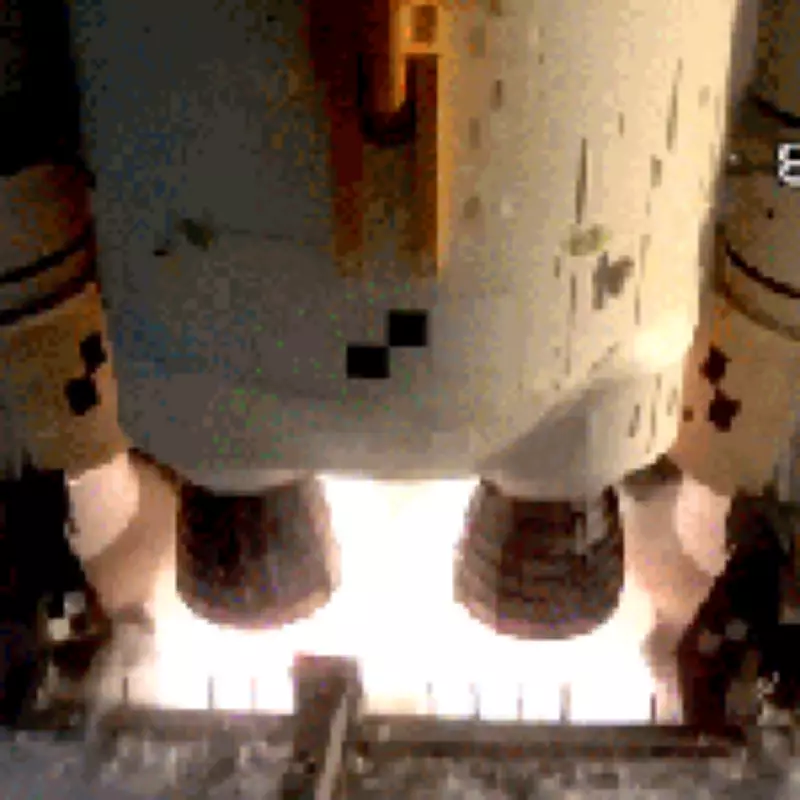
Humanity has reconnected with the moon after a 53-year gap as NASA's Artemis II mission successfully took flight today. A towering 322-foot Space Launch System rocket ignited with a massive flame, lifting off from Launch Pad 39 at 6:35 PM local time in Florida. Crowds at NASA's Kennedy Space Center witnessed the historic moment as the spacecraft, carrying four astronauts, soared into the sky.
Historic Crew and Emotional Liftoff
The Artemis II team features three NASA astronauts: Commander Reid Wiseman, Pilot Victor Glover, and Mission Specialist Christina Koch, all visibly emotional during the launch. Joining them is Mission Specialist Jeremy Hansen from Canada, marking the first non-US space agency member to venture this close to the moon. Wiseman signaled the launch with the phrase 'Full-send,' to which Launch Director Charlie Blackwell-Thompson responded, 'You take with you the heart of this Artemis team, the daring spirit of the American people and our partners across the globe, and the hopes and dreams of this generation. Good luck. Godspeed Artemis II. Let’s go.'
Mission Objectives and Future Plans
This mission represents the first human travel this far from Earth since Apollo 17 in 1972. Its primary goal is to test life-support systems and other critical components, including the toilet, aboard the Orion capsule. If successful, Artemis II will pave the way for Artemis III, scheduled to land astronauts on the moon's south pole by late 2028. The Artemis program, NASA's return-to-the-moon initiative, began with Artemis I in 2022, an uncrewed Orion capsule that orbited the moon over 1.3 million miles.

Launch Challenges and Technical Details
Artemis II faced delays earlier this year due to issues during dress rehearsals, but experts like Libby Jackson, former Mission Control worker and now head of space at London's Science Museum, note that such hiccups are beneficial for safety. 'Until you have got all the way down to zero, it might not happen,' she says of the tense 10-second countdown. The launch is just the start of a 10-day mission, with the initial ascent taking about 10 minutes. The 2,600,000kg orange rocket will be discarded during Earth orbit, with its side boosters firing for two minutes before detaching and falling into the ocean, followed by a six-minute core stage burn.
Orbital Maneuvers and Safety Protocols
After reaching an altitude of nearly 1,381 miles, the upper stage will fire to place Orion into an elliptical Earth orbit for system checks. Jackson emphasizes the importance of deploying solar panels: 'If you don’t deploy the solar arrays, you have no mission, because you need the power.' Mission control has contingency plans to return the astronauts if serious problems arise early in the mission. Four days in, the spacecraft will loop around the moon's far side, allowing observations of unexplored lunar surfaces. Using a 'free return' trajectory, the crew will leverage the moon's gravity to slingshot back to Earth in four days, ensuring a safe return even if propulsion fails. Orion will re-enter Earth's atmosphere at 25,000mph, enduring temperatures up to 2,760°C before splashing down near San Diego.
Scientific Significance and Broader Goals
While Mars missions often dominate space discussions, lunar exploration remains crucial. Dr. Megan Argo, an astrophysics reader at the University of Lancashire, explains that the moon holds untapped secrets about planetary formation and human history. 'The moon is a well-preserved history book,' she says, 'with rocks and potential water deposits offering insights we can’t access on Earth.' Artemis II serves as a trial for future missions, including long-term lunar bases and eventual journeys to Mars. Jackson adds, 'One of the points of the Artemis programme is to learn how to live and work on another planet through your body.'






