

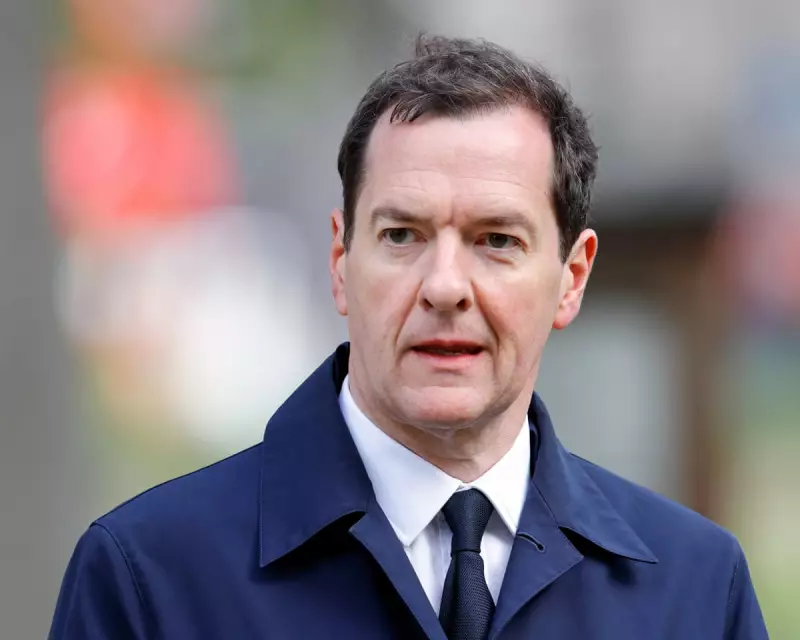
In a significant career move, former Conservative Chancellor George Osborne has been appointed by the artificial intelligence giant OpenAI to head its global government relations. The high-profile role will see him leading the company's efforts to forge partnerships with nations around the world on the rollout of AI technology.
From Treasury to Tech: Osborne's Expanding Portfolio
Osborne, who served as Chancellor of the Exchequer from 2010 to 2016, will take charge of a division internally known as OpenAI for Countries. This initiative focuses on collaborating with governments to implement AI infrastructure at a national level. He will be based in London, not Silicon Valley, marking a strategic placement for engaging with European and other international capitals.
This new position adds to an already diverse post-political career. Osborne currently serves as the chair of the British Museum and acts as an adviser to the cryptocurrency exchange Coinbase. He is also the co-host of a popular podcast with former Labour minister Ed Balls. He is leaving his role as senior managing director at the investment bank Evercore to focus on this new tech-focused challenge.

A Strategic Hire in the Global AI Race
Osborne's recruitment is a clear indicator of the intensifying competition among US tech firms to embed their AI services within national governments. Rivals like Microsoft, Google, and Palantir are also aggressively pursuing contracts with the British government and others.
The appointment creates a fascinating link between UK political eras. One of Osborne's successors, Rishi Sunak, recently took an advisory role with Anthropic, a leading competitor to OpenAI. Furthermore, Osborne's former coalition colleague, Nick Clegg, now holds a senior position at Meta, having worked for Mark Zuckerberg for seven years.
OpenAI has already secured several high-profile government agreements. These include a memorandum of understanding with the UK government to foster AI-driven growth and a deal with Estonia to provide ChatGPT access for all pupils and teachers. The company is also involved in ambitious projects like a $500bn "Stargate" datacentre initiative in locations such as Norway and the United Arab Emirates.
Building Democratic AI Infrastructure
In a statement, Osborne expressed his belief that OpenAI, valued at approximately $500bn, is "the most exciting and promising company in the world right now." He praised its leadership's commitment to developing AI responsibly and ensuring its benefits are widely shared.
Chris Lehane, OpenAI’s chief global affairs officer, framed the hire in geopolitical terms. He stated it reflects a shared belief that AI is becoming critical infrastructure. Lehane emphasised the choice facing the world: building on "democratic AI rails" that distribute technology broadly, or facing alternative models that could concentrate power in the hands of a few.
Osborne's immediate task will be to create new nation-level partnerships and expand existing ones in countries including Argentina, Australia, Germany, and South Korea. His political experience and network are viewed as key assets for navigating complex governmental discussions about AI governance and deployment.
The move comes as OpenAI navigates controversies, including lawsuits related to the impact of its chatbots. The company is defending itself against cases brought by families, including that of 16-year-old Adam Raine, who tragically took his own life after what his family's lawyer described as "months of encouragement from ChatGPT."






