NASA's Artemis II: A Comprehensive Guide to the Lunar Mission
NASA is on the brink of a historic achievement with the Artemis II mission, set to send astronauts around the moon and back for the first time in more than five decades. This ambitious endeavour will propel the crew further into space than humans have ever travelled before, with a planned launch as early as 6 February 2026, though this date hinges on critical factors. Here is an in-depth look at everything you need to know about this groundbreaking space exploration effort.
Understanding the Artemis Programme
The Artemis programme represents NASA's renewed lunar exploration initiative, aiming to return humans to the moon since the last Apollo landing in December 1972. This series of missions is a cornerstone of NASA's long-term strategy to establish the Lunar Gateway, a space station where astronauts can live and work, paving the way for future missions to Mars. Artemis I, launched in November 2022, tested the Space Launch System (SLS) rocket with an uncrewed Orion capsule, marking a resurgence in lunar interest after decades of reduced funding. The programme also positions the United States in a competitive space race against nations like China.
The Rocket and Spacecraft: Engineering Marvels
The SLS rocket, unveiled by NASA on 17 January 2026, is a towering structure at 98 metres, surpassing the height of Big Ben. It took 11.5 hours to transport four miles to the launch pad at Kennedy Space Centre in Florida. The core stage contains two million litres of liquid hydrogen and 750 million litres of liquid oxygen, which, when ignited, produce steam expelled at 10,000 mph. Two boosters, each generating thrust equivalent to 14 jumbo jets, provide 75% of the power during the initial flight phase. Once in orbit, the upper stage with the Orion capsule—equipped for crew sustenance and exercise—continues the journey. The SLS is uniquely capable of delivering astronauts, cargo, and the capsule to the moon in one flight, but at a steep cost: the programme has incurred $23.8 billion since 2011, with the Orion capsule adding $20.4 billion over a decade, totalling $49.9 billion including infrastructure, and an estimated $4 billion per launch.

Mission Overview: A 10-Day Deep Space Journey
During the 10-day Artemis II mission, the crew will rigorously test life support, navigation, and communication systems in deep space. Initial tests will occur in Earth's orbit for safety, followed by entry into high orbit where astronauts will manually pilot Orion before control transfers to NASA's Johnson Space Center in Houston, Texas. The capsule will then spend four days circling the moon, venturing about 4,600 miles beyond its far side before returning to Earth and splashing down in the Pacific Ocean. Success is crucial for advancing to Artemis III, which aims to land astronauts on the moon by mid-2027.
The Crew: International Representation
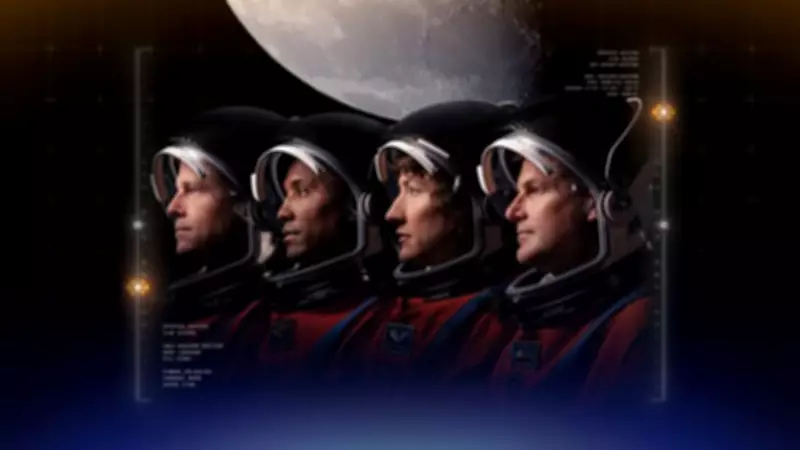
Artemis II features a diverse crew of three American astronauts and one Canadian, who entered quarantine on 23 January 2026 as part of a health stabilisation programme to prevent illness before launch. This quarantine typically lasts 14 days but can be adjusted if the launch is postponed.
Potential Launch Delays and Alternatives
The 6 February launch date depends on a successful wet dress rehearsal four days prior, which simulates the countdown to identify issues. Past setbacks, such as flaws in the Orion capsule's life support system and heat shield from a 2022 test flight, have already caused delays. Weather conditions, including temperature, wind, and precipitation, are also critical; any rain could lead to a postponement. If needed, alternative launch windows are available in February, March, and April 2026, carefully timed with orbital mechanics for the complex lunar trajectory.