

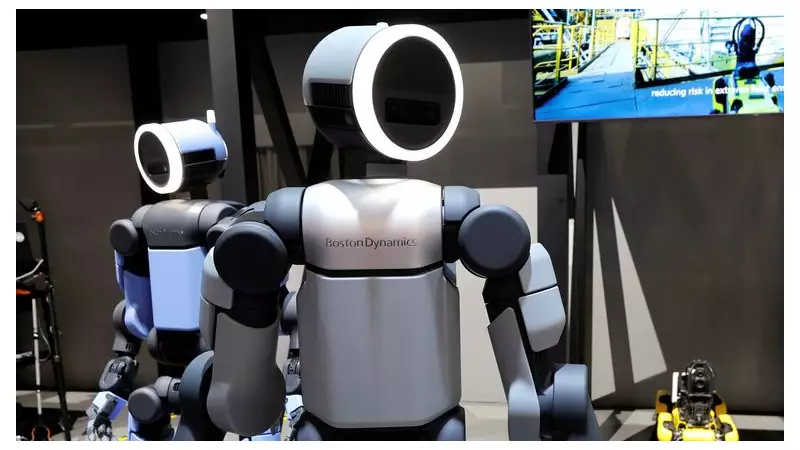
The world could witness robots with human-like capabilities before the year is out, according to one of the most influential leaders in global technology. Jensen Huang, the CEO of semiconductor giant Nvidia, has declared that 2026 will be a pivotal year for advanced robotics, promising the public will see "some pretty amazing things."
From Screen to Reality: AI Enters the Physical World
Huang's prediction, made in an interview at the Consumer Electronics Show (CES) in Las Vegas, reflects a broader sentiment sweeping the tech industry. There is a widespread belief that artificial intelligence is poised to escape the confines of computer screens and begin interacting directly with the physical environment. The annual CES conference was awash with robotic demonstrations, from autonomous vacuum cleaners and lawnmowers to a plethora of humanoid designs, sparking both fascination and unease among attendees.
However, the history of CES hype serves as a cautionary tale. Many technologies touted as revolutionary at the event have failed to meet expectations. On the show floor, the reality often lagged behind the optimism. Numerous robots were rudimentary, requiring remote control intervention for any complex task, rendering them little more than sophisticated and expensive toys.

The "Physical Turing Test" and the Generative AI Brain
Despite the scepticism, experts argue the current excitement is grounded in tangible progress. A powerful example cited is the self-driving car, described as having passed a "physical Turing Test" by navigating the chaotic, real-world environment of city streets. These autonomous vehicles are already operating in several US cities and are scheduled to arrive in London in 2026. If robots can master such unpredictable scenarios, the logic follows, they can be adapted for numerous other applications.
The leap forward is being fuelled by the convergence of advanced robotics and generative AI. Rev Lebaredian, Vice President of Omniverse and Simulation Technology at Nvidia, stated a key breakthrough has been achieved: "We finally have the core ingredient to build the missing piece of robots, which was the robot brain." The ability to run powerful AI models directly on a device means robots can now be equipped with a generative AI "brain," enabling more sophisticated learning and interaction. The techniques that allowed AI to master language are now being successfully applied to physical movement and dexterity.
Factories First: The Practical Path for Robotics
The consensus among leading robotics firms is that the home market remains a distant frontier. The domestic environment is considered too unstructured, risky, and cost-sensitive for widespread robot adoption in the near term. Instead, the focus is squarely on industrial and warehouse settings. Robert Playter, CEO of Boston Dynamics, suggested a realistic timeline, forecasting significant deployment in factories by 2028-2030, with home use likely following another five years later.
Factories and roads present similar appeals: they are controlled environments with clear objectives, making them ideal testing grounds. This shift inevitably raises concerns about human job displacement. When questioned, Jensen Huang framed robotics as a solution to a global labour crisis. "We have a labour shortage in the world... by tens of millions of people," he said, advocating for "AI immigrants" to fill roles in manufacturing and other sectors where human labour is scarce. Playter echoed this, noting that in their customer deployments, robots often take over dangerous or undesirable tasks, freeing human workers to operate or oversee the machines.
While certainty is impossible in fast-moving tech, the industry's leading figures are united in the belief that the fundamental building blocks for advanced robotics are now in place. The question is no longer if, but how soon, these machines will become a commonplace part of our working world.






