

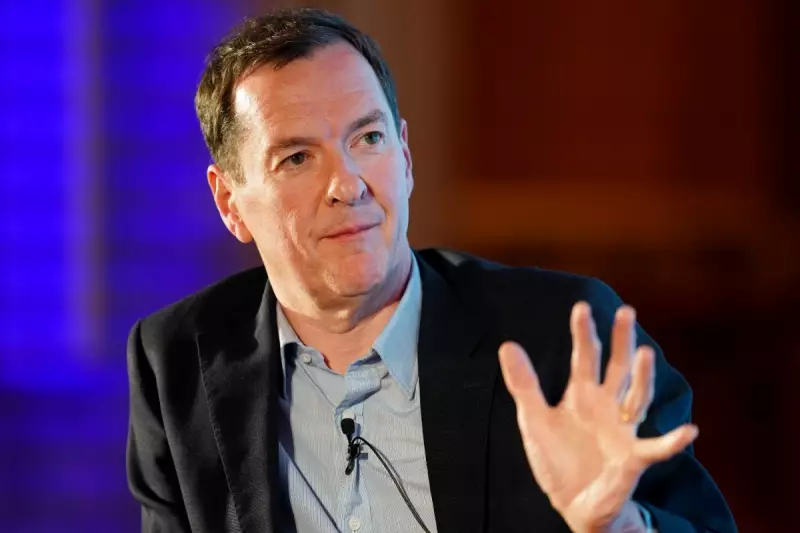
In a remarkable departure from conventional recruitment practices, former Chancellor of the Exchequer George Osborne has disclosed that he secured a prestigious position at OpenAI through a direct, unsolicited approach. Speaking at a World Economic Forum fringe event, Osborne detailed how he bypassed traditional application processes to join one of the world's most influential artificial intelligence companies.
Unconventional Career Move
While most job seekers navigate complex procedures involving CVs, cover letters, and multiple interview rounds, Osborne adopted a more direct method. "It was quite straightforward, actually," he explained when questioned about his recruitment. "I thought, 'What is the most interesting company in the world at this moment, in the most interesting technological space?' and the answer was OpenAI."
The former Conservative MP described taking initiative that he acknowledges is unusual in contemporary hiring landscapes. "I did something that is quite unusual these days, but I would thoroughly recommend: I went and knocked on the front door," Osborne revealed, referring to his decision to contact OpenAI's human resources department directly.

From Finance to AI Leadership
In December 2025, Osborne assumed leadership of OpenAI's newly established 'Countries Initiative', a division dedicated to ensuring artificial intelligence models are grounded in democratic principles. This appointment required him to relinquish several high-profile positions, including roles at Evercore (following its acquisition of boutique investment bank Robey Warshaw) and cryptocurrency exchange Coinbase.
Since departing politics in 2017, Osborne has cultivated a diverse portfolio of roles spanning cultural institutions, financial services, and media. His career trajectory includes positions at the British Museum, asset management giant Blackrock, and the Evening Standard, demonstrating his adaptability across sectors.
Joining During Critical Period
Osborne's arrival at OpenAI coincided with a pivotal moment for the company. Shortly before his appointment, CEO Sam Altman issued a 'code red' warning to ChatGPT staff amid concerns about competitive pressures in the rapidly evolving AI landscape. The company faces significant challenges, including ambitious capital expenditure forecasts estimating requirements of $1.4 trillion over eight years for computing power, chips, and infrastructure.
Despite these pressures, Osborne expressed enthusiasm about his new environment. "The optimism of the people I am working with, the sort of absolute can-do attitude," he remarked about his initial weeks in San Francisco. "We are forging the future here, and it's incredibly positive and exciting, and that, you know, gets you up in the morning."
Bridging Technology and Governance
Reflecting on his governmental experience, Osborne highlighted the unique intersection between artificial intelligence and broader societal structures. "I think what is fascinating about this technology is it just touches on so many different aspects of society, and government," he observed, contrasting it with his previous engagements with companies whose work typically affected specific governmental departments.
In announcing his career transition, Osborne praised Altman and OpenAI's chief operating officer Brad Lightcap as "exceptionally impressive leaders" committed to responsible AI development. His appointment followed speculation about potential roles elsewhere in the financial sector, including rumours linking him to a position at HSBC.
The former Chancellor's unconventional job-seeking approach underscores how traditional career pathways are evolving in response to emerging technologies and industries. His experience suggests that in certain circumstances, direct initiative can prove more effective than conventional application processes, particularly when transitioning between significantly different professional domains.






