

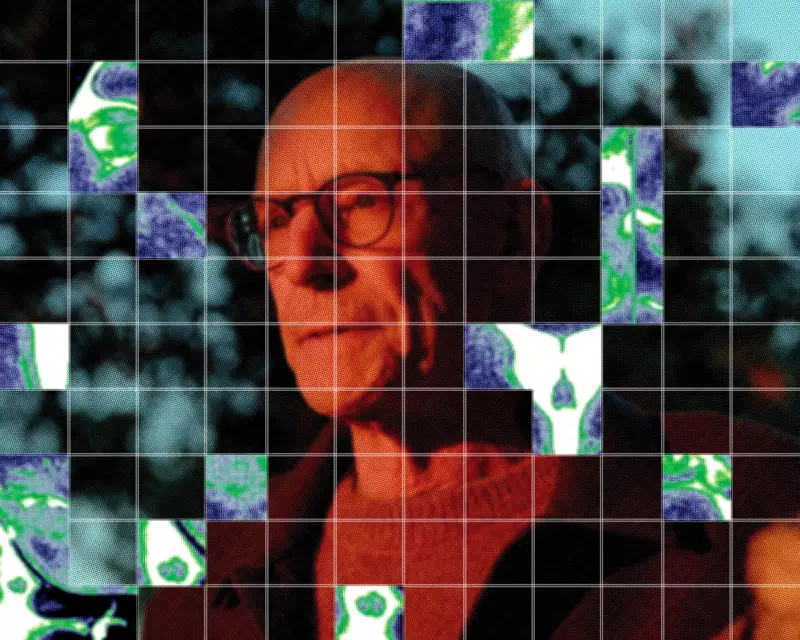
Michael Pollan Advocates for 'Consciousness Hygiene' in the Age of AI
Our inner lives are increasingly shaped by forces designed to capture and monetize attention, according to celebrated author Michael Pollan. In his new book, A World Appears, Pollan explores the mysterious realm of human consciousness and warns that it is under siege from modern technological invaders.
The Assault on Our Inner World
Pollan suggests that people need to develop what he calls "consciousness hygiene" to defend our internal world against multiple threats. Our ability to sit with our thoughts and perceive the world is being systematically disrupted by algorithms engineered to stimulate our dopamine receptors and capture our attention for profit.
"Our consciousness is under siege," Pollan explained in a recent interview. "It's being polluted by several different things that are trying to move in and take over this precious private space of interiority where we enjoy mental freedom."

The Three Primary Threats
Pollan identifies three main forces assaulting our consciousness:
- Political Dominance: "One is our president, who manages to dominate our headspace to a remarkable degree. I don't remember another time when politics and the actions of one person got into our heads in quite the same way."
- Social Media Algorithms: "We're all living with algorithms designed to seize our attention. Attention is consciousness - it's how we direct our consciousness where we want to, but we're losing the 'want to' piece. The algorithms are so good at hooking us and driving our attention where they want to take it because they're monetizing it."
- AI Chatbots: "A newer wrinkle: we have chatbots hacking not just our attention, but our ability to form emotional attachments. Seventy-two percent of teenagers are turning to AI for companionship. People are falling in love with chatbots, using them as therapists, as friends."
What Is Consciousness Hygiene?
Pollan describes consciousness hygiene as an effort to reclaim sovereignty over our mental space. "It's not an emptying by any means," he clarifies. "It's about owning the noise. It's about making it your noise."
Key practices of consciousness hygiene include:
- Meditation: "When you're meditating, you put down your phone and you're not taking in any technological media. You're alone with your thoughts and getting in touch with how much is going on at any one time. Things are bubbling up from the unconscious, but it's all yours."
- Deliberate Everyday Practices: "Turn these moments of everyday life into a deliberate practice, rather than have it be passive and turn over your mind to TikTok or Meta just because you don't know what to do with it."
- Psychedelic Experiences: "A radical form of hygiene is the use of psychedelics. Psychedelic experiences and meditation have a lot in common. It draws a line around your consciousness for you to be with it and see where it wants to go on its own."
The Danger of False Consciousness
Pollan expresses particular concern about people ascribing consciousness to AI chatbots. "These chatbots are not conscious, but they claim to be, and people treat them that way. That is an assault on our consciousness, and a deeper and more meaningful part of it than just engagement."
He compares AI to animals to highlight the distinction: "We get excited when whales communicate with each other, but we don't know what they're saying. But surely whales are more conscious than a chatbot. We're easily fooled."
The problem with chatbot relationships, Pollan argues, is that "they're sycophantic - there's no friction. In every human relationship, even a loving relationship, there's friction. That friction is what helps us define our identities and realize what we think. You don't get that with a chatbot; they suck up to you."

The Therapeutic Dilemma
Regarding the use of AI chatbots as therapists, Pollan acknowledges potential applications but remains cautious. "I have read accounts that suggest chatbots would be good for certain kinds of therapy, like cognitive behavioral therapy, where there isn't that kind of deep emotional attachment at the heart of it. But for the kind of therapy where the relationship is central to the work, it seems like a very risky thing to do."
He reflects on his own psychoanalytic experience: "I think about the psychoanalyst I saw for years, and how important the possibility of her disappointment was. I cared so much about what she thought. That transference relationship is so central to making therapy work."
Consciousness as Secular Soul
Pollan notes that consciousness has become a secular substitute for the soul in modern discourse. "The attention paid to the condition of your soul, which is central to Christianity, sort of had the right idea. The care of the soul is a lot like consciousness hygiene."
However, he distinguishes between the two concepts: "Souls are indestructible - although some people believe consciousness is indestructible. I think the best guess is that it vanishes when you die. But who can say for sure? We don't know. The big takeaway from the book is we have to keep an open mind."
The Luxury of Checking Out
Pollan concludes with a striking observation from poet Jorie Graham: "'This is what is wrong: we, only we, the humans, can retreat from ourselves and not be altogether here.' When she puts it in that context - 'only we, the humans' - you realize: what animal can afford to be anything less than completely conscious? They'd get eaten."
"You realize it's our technology, and this elaborate structure of civilization, that gives us the freedom not to be present, which is to say conscious," Pollan adds. "We normally think we're more conscious than animals, but there's a sense in which they're more conscious than we are. It's a luxury to check out on consciousness."
As we navigate an increasingly digital world, Pollan's call for consciousness hygiene serves as a timely reminder to protect what makes us uniquely human - our ability to experience the world through our own unfiltered awareness.





