

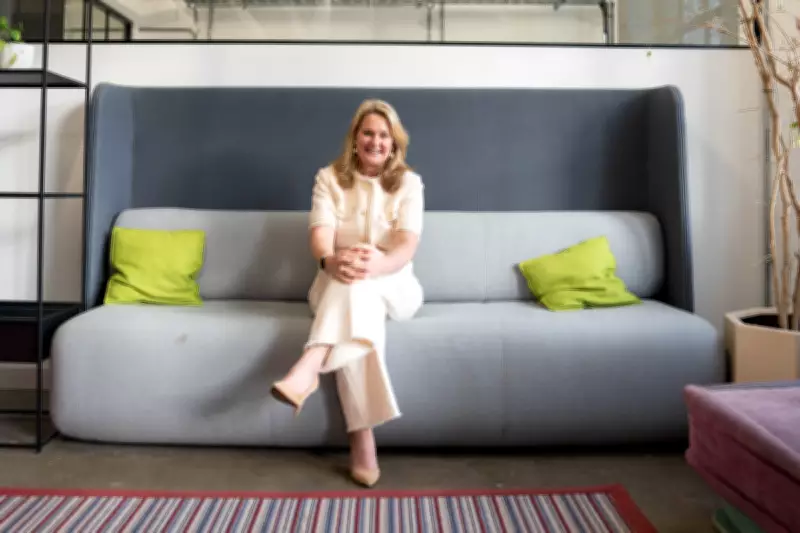
From Start-up to Scale-up: Shifting the Focus to Support for Female Entrepreneurs
While the spotlight often shines on the funding gap facing female founders, one industry veteran is urging a significant shift in focus. Sam Smith, the former chief executive of FinnCap (now Cavendish Financial), argues that the more crucial challenge lies in helping women-led businesses scale after they launch, rather than just addressing initial startup funding.
The Scaling Challenge for Women-Led Businesses
Over 24 years advising growth firms, Smith noted a stark trend: a surprisingly small number of women were building companies large enough to reach the next stage of significant growth. As she told City AM: "When I look back over those 24 years, I could probably count on my hand the number of women founders I advised running sizable companies."
That observation led Smith to launch The Superscalers, a non-profit initiative designed specifically to identify and support women building companies with revenues above £50m. Smith believes this threshold marks a critical turning point in both influence and visibility within the business world.

"From my own experience, I reckon it was around £50m where you start to get a significant voice and you get taken seriously," she explained.
The Current Landscape of Women-Led Scaling
When The Superscalers first began mapping the data in 2024, it found just 80 women in the UK had built businesses to that £50m scale. A year later, the number had risen to 144, showing promising growth but still representing a significant gap compared to male-led businesses.
"What we're seeing now is the result of women starting businesses 10 or 15 years ago and now reaching those next stages," Smith added, highlighting the long-term nature of business growth.
The data shows encouraging progress at earlier stages too. In 2019, fewer than 200 female-founded companies in the UK had reached £10m in revenue. However, last year that figure had climbed to around 1,300, a positive sign that more women-led firms are entering the scale-up phase where expansion accelerates.
"When you get to £20m turnover, it's only one more doubling to get to £40m or £50m," Smith noted optimistically. "There are hundreds of women building companies at that level who are capable of getting there quite quickly."
Funding Challenges and Alternative Approaches
Despite progress, female founders continue to receive only a small share of venture funding globally. Smith notes that while part of the issue is a lack of capital, it's also due to how traditional funding structures fit the way many women build companies.
"VC funding isn't appropriate for most female founders because of the way they scale and the time it takes," she explained. "Many want to build sustainable businesses and maintain their culture and teams, rather than scale quickly towards a fast exit."
This fundamental difference in approach often means female founders have to rely more heavily on bootstrapping or patient capital before raising larger rounds. Smith suggests alternative sources of growth funding, like angel investors and longer-term capital, could play a larger role in supporting women-led businesses.
Beyond Capital: The Network and Belief Barrier
Smith argues that the biggest barrier still comes down to belief and access to networks. "I reckon it took me more than 20 years to feel like I deserved to be in those rooms," she shared candidly.
"When you come from a state school background and don't have that network around you, you just don't know the playbook. You see other people running big businesses and assume you're not it."
Initiatives Driving Change
The Women Who Scale initiative, part of the Scale Expo & Summit set to take place on 22-23 April 2026 at the Business Design Centre in London, aims to connect female founders with investors to help them grow their businesses beyond the early stages.
Amy Knight, co-founder of Women Who Scale, emphasized: "We need to go beyond awareness towards meaningful action, to unlock greater participation and investment outcomes for women."

At the event, founders including Myenergi co-founder Jordan Brompton and Gohenry founder Louise Hill are set to discuss the hurdles ahead of scaling a business, while panels will cover topics from capital access to founder wellbeing.
The Economic Imperative
The Rose Review estimated that matching men's and women's rates of business creation and scaling could add £250bn to the UK economy. Adjusted for inflation, that figure now stands closer to £310bn, highlighting the significant economic opportunity being missed.
Smith's ambition is to see at least 500 female-founded businesses reach the £50m threshold. "At that point, you've got a critical mass of women with real economic power and influence," she said. "And once you get that scale of community, you start changing the system from the ground up."





