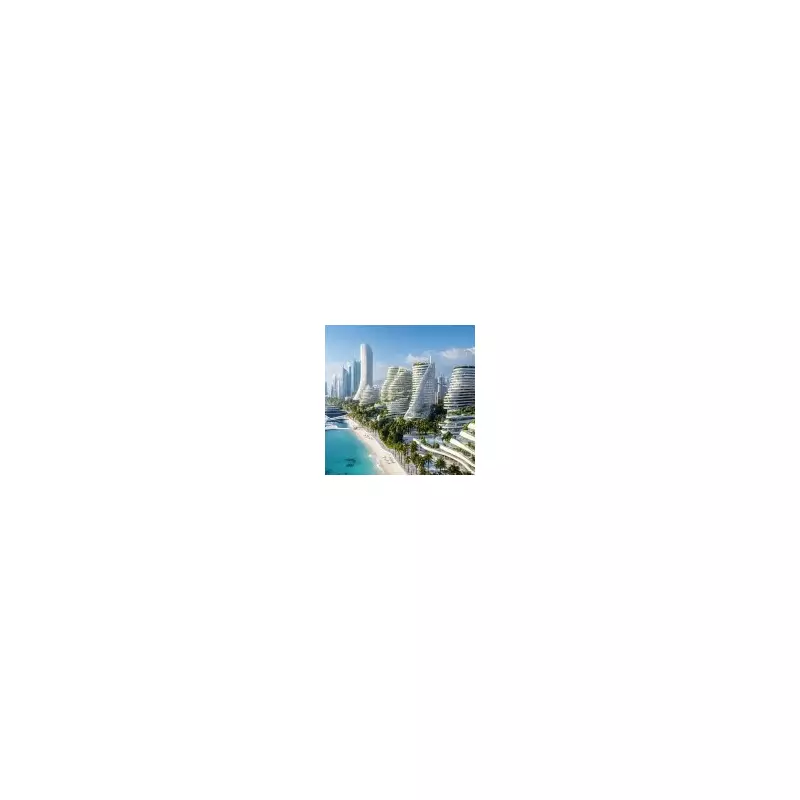
Donald Trump's glittering vision for the future of Gaza, which features futuristic coastline skyscrapers and new cities, has been identified by experts as likely being generated by artificial intelligence. The presentation, delivered by Trump's son-in-law Jared Kushner to world leaders at the World Economic Forum in Davos, Switzerland, showcased ambitious plans for the war-ravaged enclave.
AI Detection Tools Raise Questions
Metro consulted with technology specialists who subjected the slideshow images to sophisticated AI detection tools. These algorithms are designed to identify subtle signs that distinguish computer-generated imagery from human-created content. The consensus among experts is that the Trump administration's visualisations for the $25 billion Gaza reconstruction project were probably produced by AI.
Cybersecurity Specialist Analysis
Dr Marco Ramilli, a cybersecurity specialist and CEO of identifAI, a deepfake tracking company, provided detailed analysis of the images. "The mock-ups of the Gaza cityscapes appear to be AI-generated," Dr Ramilli stated. "Although absolute certainty cannot be guaranteed, the adversarial AI models used by identifAI have indicated, with a very high degree of probability, the presence of AI-generated content."

Adversarial AI refers to artificial intelligence models specifically dedicated to detecting deepfakes and digitally manipulated content designed to appear ultra-realistic. Despite the relatively low resolution of the images used in the presentation slideshow, Dr Ramilli confirmed that his platform's confidence level in identifying them as AI-generated remains "very high."
Architectural Inconsistencies Identified
Nathan Marlor, head of data and AI at Version 1, identified several reasons why the "Coastal Tourism" image might be artificial. "Flowing, organic tower shapes with greenery draped over them are very characteristic of current AI image generators," Marlor explained. "They look impressive at a glance but there's no actual architectural substance; real buildings have floors, structural logic and distinct materials."
Marlor pointed out that an image depicting "New Rafah," Gaza's southernmost city which has been heavily damaged by conflict, shows what appears to be a single building "repeated hundreds of times." He added: "The giveaway with AI-generated concept imagery is that it's very good at surfaces and very bad at substance. Everything here has that smooth, even quality – the lighting, the water, the vegetation. It looks like the idea of a futuristic city rather than an actual proposal grounded in engineering or urban planning."
Verification by Deepfake Detection Company
VerifyLabs.AI, a company specialising in deepfake detection, conducted its own analysis and concluded that the images appear to have been created using digital rendering tools. Nick Knupffer, the company's CEO, noted that developers frequently employ AI technology to convert two-dimensional designs into three-dimensional models.
"However, this also highlights a critical issue," Knupffer added. "When highly polished images are shared without clear context, it becomes increasingly difficult for the public to distinguish between legitimate visualisations and AI-generated content designed to mislead. As more people are exposed to increasingly realistic deepfakes, even imagery shared in good faith creates confusion and mistrust."
Context of the Gaza Reconstruction Plan
The images were unveiled by the Board of Peace, which Trump has stated will oversee the Israel-Hamas truce in addition to the reconstruction efforts. Gaza, a coastal enclave approximately one-third the size of London, would undergo phased reconstruction according to the presentation.
Kushner indicated that construction of Rafah would require approximately three years to complete. The Board of Peace mock-ups suggest that around 75 medical facilities and more than 200 educational centres would be built in Rafah alone.
Current Situation in Gaza
The proposed reconstruction comes against a backdrop of extensive damage throughout Gaza. Israeli military operations have damaged or destroyed more than two-thirds of Gaza's buildings, creating an estimated 42 million tonnes of rubble. United Nations assessments suggest this debris could take up to 14 years to clear completely.

Medical infrastructure has been particularly affected, with UN reports indicating that Israeli forces damaged 125 medical facilities and 34 hospitals during the conflict. Educational facilities have suffered similarly, with 97% of Gaza's schools reportedly flattened after two years of violence, leaving approximately 658,000 children without access to formal education.
The extensive destruction has also raised environmental health concerns, as hazardous materials from collapsed buildings have been released into the air, posing risks to Gaza's 2.1 million residents.
The White House has been approached for comment regarding the origins of the presentation images and the allegations that they were AI-generated.