

World's Smallest AI Supercomputer Operates Without Internet Connection
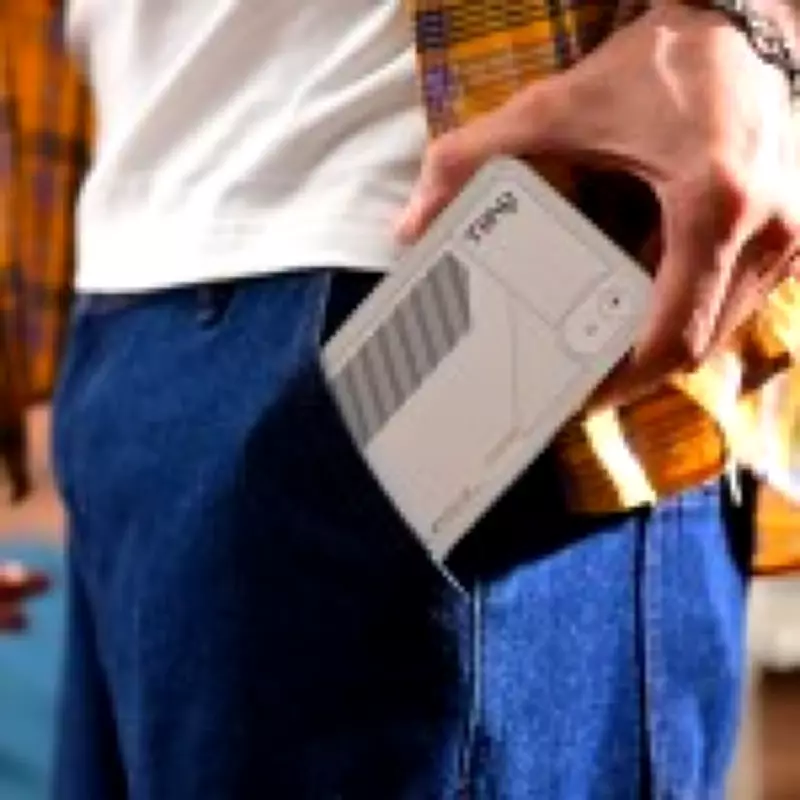
A US technology startup has introduced what it claims is the world's smallest personal AI supercomputer, compact enough to fit into a pocket. The Tiiny AI Pocket Lab has received official verification from Guinness World Records as the smallest personal AI supercomputer ever produced. At first glance, the device resembles a portable power bank more than a high-performance computer. However, despite its diminutive size, this gadget can execute extremely advanced AI models directly on the device itself, eliminating the need for internet connectivity, remote servers, or costly specialized hardware.
Reducing Dependence on Data Centers and Enhancing Accessibility
The company asserts that this innovation could diminish reliance on large data centers while placing powerful artificial intelligence tools directly into the hands of everyday users. Launched on December 10, the AI Pocket Lab is also marketed as a greener and more secure alternative to traditional cloud-based AI systems, which face increasing criticism for their high energy consumption, escalating costs, and potential privacy vulnerabilities.
Samar Bhoj, GTM Director of Tiiny AI, stated: 'Cloud AI has driven remarkable progress, but it has also fostered dependency, vulnerability, and sustainability challenges. This represents the initial step toward making advanced AI truly accessible, private, and personal by transferring the power of large models from the cloud to individual devices.'

Versatile Applications and Strong Privacy Features
Designed to assist with a broad spectrum of everyday AI tasks, the device is likely to attract creators, developers, researchers, and students. Users can request it to analyze complex information, generate written content, or perform multi-step tasks—all without an internet connection. A major selling point is its privacy protection. Instead of transmitting data to the cloud, the device stores documents, preferences, and past activity directly on the hardware, safeguarded with security measures comparable to those used by financial institutions.
Tiiny AI explains that the Pocket Lab is engineered to handle most real-world AI tasks encountered in daily life. For more demanding applications, it can run larger and more powerful AI models capable of complex reasoning and in-depth analysis, all while maintaining data storage securely offline on the device.
Impressive Computing Power and Energy Efficiency
Despite its small form factor, the gadget incorporates substantial computing capabilities. It operates on a 12-core processor and consumes approximately 65 watts of power, enabling it to perform tasks that typically require much larger systems. By avoiding reliance on power-intensive graphics processors common in many AI setups, it uses significantly less electricity and generates a smaller carbon footprint.
Two key technologies facilitate this efficiency:
- One system enhances efficiency by activating only the necessary components of an AI model for a given task, rather than running the entire model each time.
- Another technology distributes the workload across various sections of the chip, allowing the device to execute AI processes more rapidly while consuming less power.
Together, these innovations enable the Pocket Lab to deliver performance akin to much larger AI systems, despite its compact design.
Open-Source Ecosystem and Future Updates
Tiiny AI is also developing an open-source ecosystem around the device. Users can effortlessly install popular open-source AI models and tools with a single click, customizing the device to meet their specific needs. Additionally, they can configure AI assistants and automated tools to assist with diverse tasks. The company confirms that the device will receive regular updates, including enhancements delivered wirelessly.






