

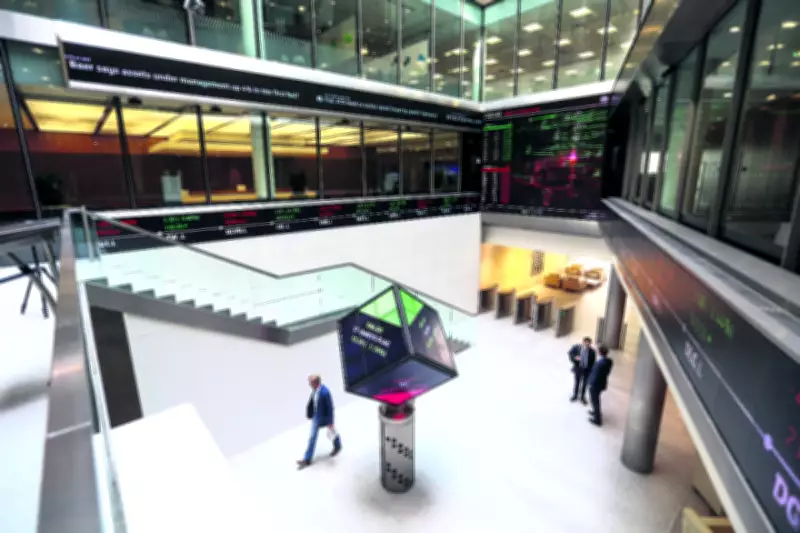
The Financial Conduct Authority (FCA) is set to launch an initiative to gather and publicly release comprehensive data on share trading activity in London, aiming to challenge widespread perceptions that UK public markets suffer from poor liquidity. This move comes as many British companies consider shifting their listings to US stock exchanges, citing deeper capital markets abroad.
A Data-Driven Response to Market Concerns
Simon Walls, interim director of markets at the FCA, emphasised the urgency of addressing what he called a misleading narrative. "The truth is we have way more liquidity here than is often reported, and that is just silly," he stated in an interview with the Financial Times. "We are talking to loads of parties at the moment about whether the FCA can, at a little bit of risk to ourselves, step in and just sort this out."
The regulator's plans will serve as an interim measure ahead of the introduction of its official 'consolidated tape' of trading data next year, which will aggregate information from multiple platforms. Currently, liquidity estimates rely heavily on the London Stock Exchange's central limit order book, but this excludes significant portions of trading activity.

The Hidden Volume in UK Markets
Existing data fails to capture periodic trades conducted through the LSE's auction system, where transactions are completed at scheduled intervals rather than continuously. Additionally, it omits activity in dark pools—private trading venues that allow large institutional trades to occur without immediate public disclosure, thereby minimising market impact.
Between January and September 2025, the LSE recorded 270 million transactions, but the FCA believes the actual total could be four times higher when these excluded segments are accounted for. This substantial gap in reporting has contributed to an underestimation of UK market depth.
Addressing the Exodus of Listings
Numerous firms have pointed to perceived liquidity shortcomings as a key factor in their decisions to seek listings elsewhere. In 2024, Flutter Entertainment highlighted its move to New York as providing access to "the world's deepest and most liquid capital markets," while Tui noted that less than a quarter of its share trading occurred in London compared to its Frankfurt listing.
"People in the market know this (the under-reporting) is a problem," Walls acknowledged. "But it does dog us because sometimes when an issuer has historically chosen to move from the UK to the US, one of the thoughts is that liquidity is lower in the UK and often it's not true."
Myth-Busting and Market Revitalisation
Over the past year, the FCA has circulated a document aimed at dispelling misconceptions, arguing that real liquidity across FTSE indices is comparable to that of major US benchmarks like the S&P 500 and Nasdaq 100. This data publication effort represents the latest in a series of measures designed to reinvigorate the UK's public markets after a challenging period.
In 2024 alone, approximately 88 companies either delisted entirely or transferred their primary listing away from the UK, underscoring the need for decisive action to restore confidence and competitiveness in London's financial ecosystem.






