

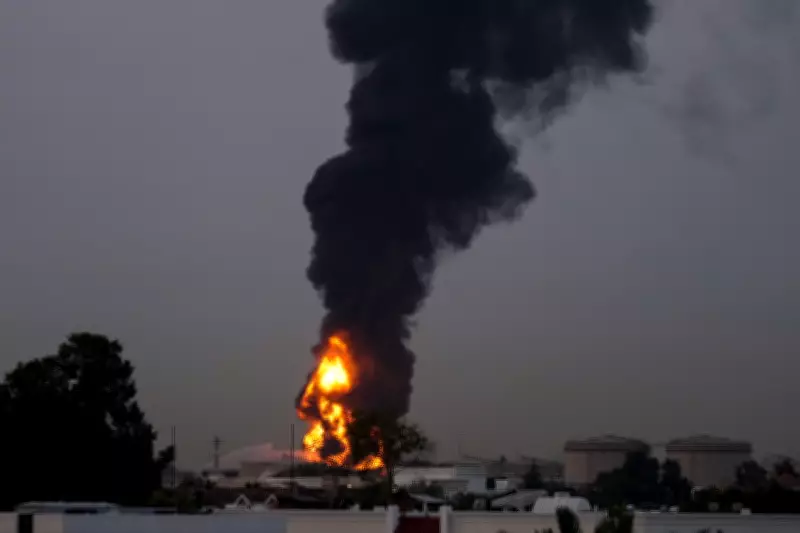
Global Markets Plunge into Panic Mode as Iran Threatens Gulf Energy Facilities
Financial markets were thrown into disarray on Wednesday as escalating tensions in the Middle East triggered a dramatic surge in oil prices, sending global equities tumbling. The FTSE 100, which had opened positively, quickly reversed course, falling over one percent to 10,290.00p as investors reacted to Iran's stark warnings against energy facilities across the Gulf region.
Oil and Gas Prices Skyrocket Following Iranian Threats
The price of Brent crude, the international benchmark for oil, spiked as much as five percent to $110 per barrel following Iran's declaration that several oil facilities in Saudi Arabia, the United Arab Emirates, and Qatar had become "direct and legitimate targets" that would be attacked within hours. This announcement came as energy facilities across the Gulf faced emergency evacuations.
Gas prices experienced an even more dramatic surge, with Europe's benchmark contract, the Dutch TTF, soaring over eight percent to €56 per megawatt-hour. Analysts at Schroders highlighted the UK's particular vulnerability to gas price spikes, noting that current stockpiles are approximately 40 percent lower than they were during Russia's full-scale invasion of Ukraine.

Market Analysts Describe Widespread Panic
Kathleen Brooks, research director at XTB, captured the market sentiment perfectly: "Markets are back in panic mode. The risk is that an oil shipping crisis is morphing into an oil supply crisis. Unsurprisingly, this has spooked a market that was willing to grasp hopeful signs that tankers were slowly getting through the Strait of Hormuz."
Neil Wilson, investor strategist at Saxo Markets, added: "Stocks have turned lower as oil breaks higher out of the one-week range. Markets are being shaken out of complacent mode we have seen the last three sessions."
Geopolitical Tensions Escalate in Critical Shipping Lane
The continued blockage of the Strait of Hormuz, through which approximately one-fifth of the global oil supply flows, has maintained elevated prices throughout the past week. The situation became more complex when former President Donald Trump suggested on Truth Social that America might withdraw responsibility for securing the strait, leaving it to allied nations that depend on the shipping route.
Chancellor Rachel Reeves expressed frustration that Middle Eastern trade had not fully resumed, appearing to criticize the US administration's approach: "There doesn't seem to be a plan for what to do now after the very predictable closure of the Strait of Hormuz."
Government Response and Economic Implications
The UK government confirmed that energy support packages were "under review", though high public sector debt levels and pressures on public finances make a comprehensive subsidy scheme less likely. Treasury and Bank of England officials are particularly concerned about the economic and political impacts of sustained oil price increases.
The Bank of England is expected to maintain current interest rates in its upcoming decision, fearing that higher energy prices could reignite inflationary pressures. City economists suggest that without the Middle Eastern conflict, the Bank would likely have moved toward rate cuts.
Peder Beck-Friis, an economist at PIMCO, explained: "We ultimately think the Bank of England will look through this inflation shock and continue cutting rates over time. But the timing has become more uncertain, and it's possible the Bank delays cuts until late this year or even next."
Inflation Forecasts Worsen with Energy Price Surge
Economic analysis indicates that inflation could exceed three percent by year-end if current price levels persist. Researchers at Pantheon Macroeconomics warned that inflation might top five percent if oil prices climb to $150 per barrel, creating significant challenges for both monetary policy and household budgets across the United Kingdom.






