

Precious Metals Suffer Sharp Declines Amid Global Market Volatility
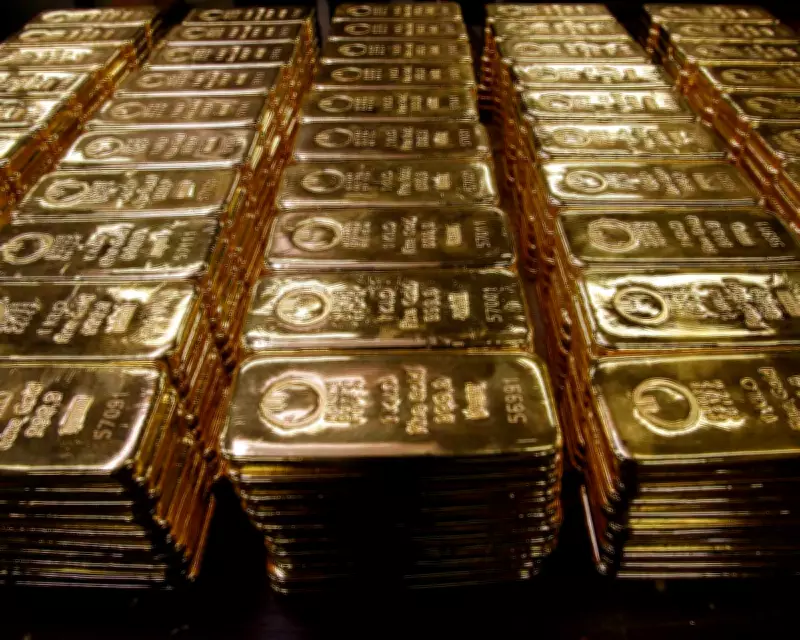
In a dramatic reversal of fortunes, gold prices plummeted by 8% to $4,465 per ounce on Monday, abruptly ending a remarkable rally that had seen the precious metal reach a record high of nearly $5,600 just last week. The sell-off extended to silver, which fell by 7%, compounding a staggering 30% slump experienced on Friday. This sudden downturn has sent shockwaves through financial markets worldwide, rattling investor confidence and prompting a significant reassessment of safe-haven assets.
Trump's Fed Nomination Acts as Catalyst for Market Shift
The precipitous decline in precious metals was largely triggered by former President Donald Trump's announcement that he intends to nominate Kevin Warsh, a former Federal Reserve governor widely regarded as a respected central banker, to become the next chair of the US Federal Reserve. Warsh is poised to succeed Jerome Powell when his term concludes in May, pending Senate confirmation. Market analysts interpreted this move as a signal that the Federal Reserve might adopt a more independent and less accommodative stance under new leadership, diminishing the appeal of gold and silver as protective investments.
Susannah Streeter, an analyst at the brokerage firm Wealth Club, commented on the situation, noting that the metals sell-off reflects a sense of relief among investors that a "Trump cheerleader" would not be installed at the helm of the central bank. "Now financial industry heavyweight Kevin Warsh has been anointed as successor, with deep Fed experience, he's not expected to be a pushover and that's sparked this big reversal of safe-haven positions," she explained. Michael Brown, a senior research strategist at Pepperstone, characterised Friday's market activity as a "meltdown in the metals space," underscoring the severity of the downturn.

Global Stock Markets Feel the Ripple Effects
The turbulence in the commodities market quickly reverberated across global equity indices. In the United States, futures tracking the S&P 500 and Nasdaq indicated losses of 0.9% and 1.2%, respectively. The United Kingdom's benchmark FTSE 100 index slipped by 0.4% during early trading, driven notably by declines in precious metal mining companies such as Endeavour Mining, Fresnillo, and Antofagasta, all of which fell by more than 5%. Similarly, the pan-European STOXX 600 index experienced a 0.4% decrease.
The sell-off extended beyond precious metals to encompass industrial metals as well. Platinum and copper prices dropped by 10% and 9%, respectively, on Monday, having previously been swept up in the broader metals rally. Additionally, the cryptocurrency market faced pressure, with bitcoin declining by 9% over the weekend, falling below the $76,000 mark. This represents a substantial 40% decrease from its peak of $125,000 recorded last year.
Broader Commodities and Currency Movements
Oil prices also retreated, falling by 5% as investors observed signs of easing geopolitical tensions between the United States and Iran. Brent crude traded at approximately $64.80 per barrel, down from recent highs around $71. In contrast, the US dollar demonstrated resilience, appreciating by 0.16% against a basket of rival currencies after experiencing a slump in the latter half of January.
Despite the sharp corrections, analysts maintain a cautiously optimistic long-term outlook for gold. Experts at Deutsche Bank projected on Monday that they still anticipate gold reaching $6,000 per ounce within the current year. Mohit Kumar of Jefferies suggested that the sell-off appeared to be an "unwind" of an excessively "crowded" trade, noting that positioning in gold had been near extreme levels prior to the decline. "Gold was one of the most crowded positions with positioning reaching close to 8 on our indices last week," Kumar stated. "Last two days' move has taken the positioning to just above four. Still on the long side but much less crowded suggesting that the bulk of weaker hands have been cleaned out."

It is important to contextualise the recent declines within the broader upward trend. Even after the significant drops over recent days, gold remains approximately 65% higher compared to the same period last year, while silver has surged by more than 120%, highlighting the substantial gains that preceded this correction.





