

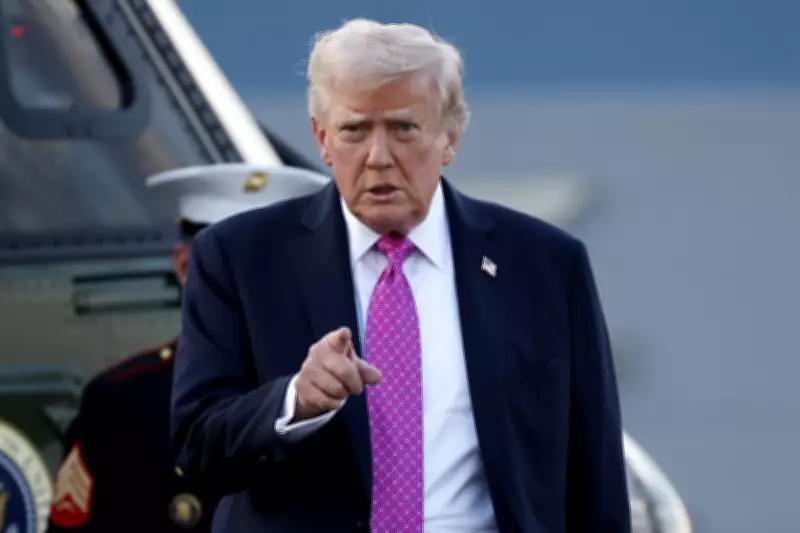
Thursday 29 January 2026 began with the pound holding onto significant gains against a weakening US dollar, as speculation mounted over whether President Donald Trump is intentionally trying to devalue the American currency. This development has captured the attention of traders and economists across the City of London and global financial markets.
Trump's Comments Trigger Market Reactions
President Trump referred to the dollar dropping 1.3 per cent against a basket of currencies as "great," a statement that triggered a further 0.2 per cent fall on Wednesday morning. Over the past year, the greenback has now lost nearly 10 per cent of its value, raising serious concerns among investors and policymakers alike.
Lee Hardman, senior currency economist at MUFG, commented on the situation, stating: "The loss of confidence in US policymaking has triggered renewed fears over currency debasement." This debasement trade involves market participants selling US dollars and Treasury bills to purchase assets like gold or silver, driven by fears that government policy is eroding the currency's fundamental value.

Pound's Remarkable Rally
Amidst the dollar's ongoing struggles, the pound has demonstrated remarkable strength, rallying to levels not seen since September 2021. The British currency stormed onwards to reach the $1.38 mark, representing a significant appreciation that reflects both dollar weakness and underlying confidence in the UK economy.
Hardman further elaborated on the potential motivations behind Trump's approach, noting that his recent comments "reinforce the impression amongst market participants that the Trump administration wants a weaker US dollar to support the manufacturing sector by improving external competitiveness."
Geopolitical Tensions and Market Volatility
The dollar did experience a modest 0.3 per cent recovery in later trading, following reassurances from US Treasury Secretary Scott Bessent, who insisted that the United States continues to pursue a "strong dollar policy." However, this recovery was tempered by escalating geopolitical tensions.
President Trump issued a stern warning to Iran, threatening military intervention after Tehran rejected negotiations against a backdrop of threats. The President did not rule out attacking Iran following its crackdown on protests earlier in the month, creating additional uncertainty in global markets.
Oil Prices Respond to Unrest
The unrest in the Middle East sent oil prices climbing steadily, with a barrel of Brent crude reaching $68.01 when London markets closed, up from $65.92 late on Tuesday. This increase reflects the market's sensitivity to geopolitical developments and their potential impact on global energy supplies.
As the trading day progressed, market participants remained vigilant, monitoring both currency movements and geopolitical developments that could influence trading patterns throughout the session.
Broader Market Context
The currency developments occurred against a backdrop of other significant financial news, including:
- Trump's declaration that "America is back!" as US markets touched record highs
- The Competition and Markets Authority pushing back on Google's AI overviews
- Podcast group Goalhanger securing backing from US investors
- Banks cooling on interest rate cut expectations amid forecasting disagreements
- The High Court granting an urgent hearing on Labour's inheritance tax overhaul
These interconnected developments highlight the complex web of factors influencing global financial markets, from monetary policy and corporate investment to regulatory decisions and political announcements.






