

The global rush to develop Artificial General Intelligence (AGI) – a hypothetical AI with human-level cognitive abilities – is underpinned by a staggering financial gamble. Experts are now warning that if this technological progress stalls, it could trigger a severe financial crash, echoing the 2008 crisis.
The Trillion-Dollar Wager on Superhuman AI
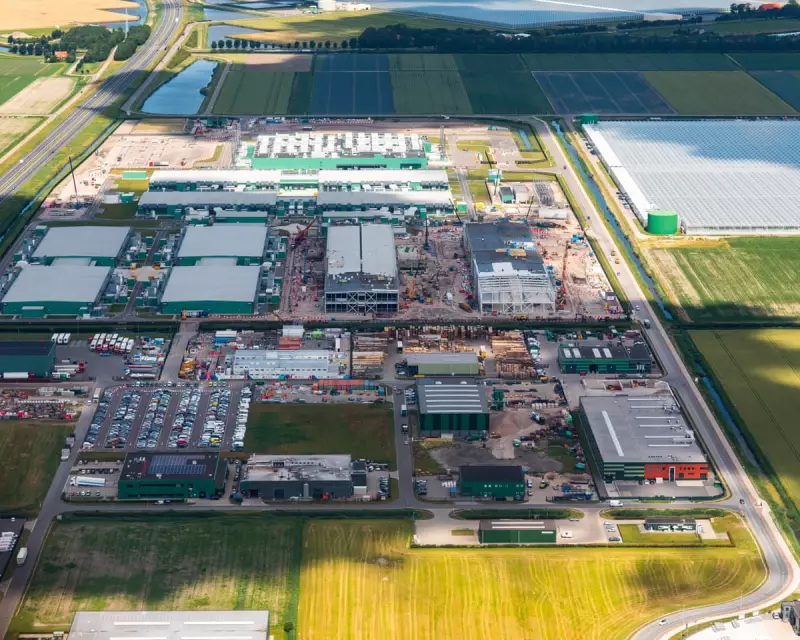
The figures defining this boom are astronomical. An estimated $2.9tn (£2.2tn) is being funnelled into building datacentres, the critical infrastructure for AI systems. Chipmaker Nvidia, which powers these systems, boasts a stock market valuation exceeding $4tn. The competition for talent is equally fierce, with reports of signing bonuses as high as $100m for top engineers.
This colossal investment is predicated on the expectation of a monumental return. AGI represents the ultimate prize: systems capable of performing complex white-collar jobs in fields like law and accountancy, potentially generating profit without the cost of human labour. As David Cahn of Sequoia Capital starkly put it, "Nothing short of AGI will be enough to justify the investments now being proposed."

The Wall Ahead: Warnings from AI's Pioneers
However, one of the field's founding figures, Yoshua Bengio, has sounded a clear alarm. He warns of a "clear possibility that we will hit a wall" – an unforeseen technical obstacle that halts progress. Should this happen, the outcome for investors could be dire. "That could be a real [financial] crash," Bengio states, noting that trillions are being invested expecting advances to continue at their current rapid pace.
Other experts question the fundamental approach. David Bader of the New Jersey Institute of Technology likens the current strategy of simply scaling up existing AI models to "trying to reach the moon by building taller ladders." If AGI requires a revolutionary breakthrough not yet conceived, the entire infrastructure boom may be optimising the wrong architecture.
Debt, Bubbles, and Systemic Risk
The risks are woven deep into the global financial fabric. While tech giants like Alphabet, Amazon, and Microsoft can fund their ambitions from profitable core businesses, a significant portion of the datacentre spending relies on debt.
Analysts at Morgan Stanley estimate half the $2.9tn datacentre spend will come from alternative sources like the private credit market, a sector causing concern at the Bank of England. Meta, for instance, borrowed $29bn from this market for a single datacentre. AI sectors now account for roughly 15% of US investment-grade debt, surpassing the banking sector.
Warning signs are emerging, including rising credit default swaps for companies like Oracle and the presence of high-yield 'junk debt' in the AI infrastructure space. Bader warns of potential "contagion across multiple debt markets simultaneously" if AGI timelines slip.
In stock markets, the concentration is equally alarming. The 'Magnificent 7' tech stocks (Alphabet, Amazon, Apple, Tesla, Meta, Microsoft, Nvidia) now constitute over a third of the S&P 500's value. The Bank of England has explicitly warned of a "sharp correction" risk due to inflated AI-linked valuations, with the IMF noting dotcom bubble parallels.
Even industry leaders acknowledge the frenzy. Alphabet's Sundar Pichai cites "elements of irrationality," Amazon's Jeff Bezos describes a "kind of industrial bubble," and OpenAI's Sam Altman admits "many parts of AI are kind of bubbly."
The Stakes of Success and Failure
The consequences of a crash would be widespread, affecting pension funds, stock market investors, and complex, circular financial deals between major AI players. Yet, optimists argue the current investment is justifiable even without AGI. Technology analyst Benedict Evans points out that generative AI alone could transform entire industries, from advertising to software.

He notes that while the AI capital expenditure figures are vast, they are "not an impossible amount of money," especially compared to sectors like oil and gas. The core belief driving much of the investment is that this technology will fundamentally reshape how business is done.
The world now faces a dual reality. The successful development of AGI carries profound and alarming consequences for society and the economy. However, as the current financial architecture demonstrates, the cost of not achieving it could also be catastrophically high, leaving global markets exposed to a multitrillion-dollar promise that remains unfulfilled.





