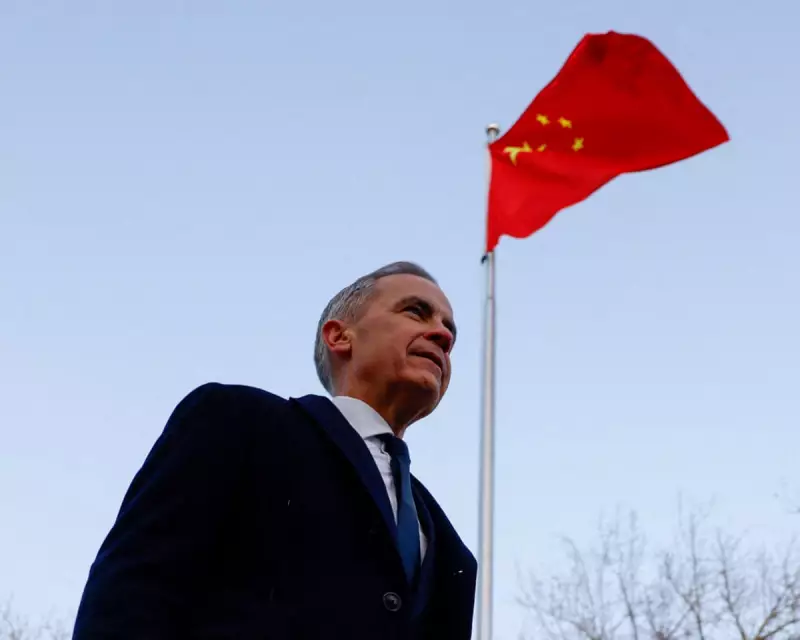
In a significant diplomatic shift, Canadian Prime Minister Mark Carney has secured a preliminary trade agreement with China during his landmark visit to Beijing, aiming to reduce Ottawa's precarious economic dependence on the United States.
A Diplomatic Thaw After a Deep Freeze
Carney's trip marks the first time in nearly a decade that a Canadian prime minister has been officially welcomed in Beijing. The visit successfully aimed to reset a relationship that had been in a deep freeze for years. The Prime Minister described the outcome as a "preliminary but landmark" deal, framing it as an adaptation to a "new world order"—a phrase that aligns with Beijing's rhetoric on a declining US-led global system.
Guy Saint-Jacques, a former Canadian ambassador to China, stated the main goal of recalibrating ties had been achieved. He highlighted the urgency driving Carney's outreach, directly linking it to difficulties with Canada's southern neighbour. This urgency was underscored as US President Donald Trump remarked, just as Carney headed to Beijing, that the US "doesn't need Canadian products." Canada currently sends about 70% of its exports to the US market.

The Details of the Deal and Geopolitical Calculations
The provisional agreement, announced on Friday, includes several key components. It will allow up to 49,000 Chinese electric vehicles into the Canadian market and lowers Chinese tariffs on Canadian canola, lobsters, seafood, and peas from March until year's end. Both sides also pledged to reduce, though not fully remove, tariffs on key industries, hoping to end a bitter trade war.
Professor Lynette Ong, a China scholar at the University of Toronto, noted that while Canada is "desperate" for closer China ties, Beijing is also under pressure to forge deeper relationships. "Despite the headlines... China still relies on exports to drive economic growth," she said, pointing to China's lacklustre economy.
Vina Nadjibulla of the Asia Pacific Foundation of Canada called the joint statement outlining a new strategic partnership the summit's biggest surprise. She described it as a bold move by Carney to position Canada in an evolving geopolitical order for greater strategic autonomy.
Domestic Criticism and Lingering Concerns
The deal has sparked fierce criticism at home. Conservative leader Pierre Poilievre demanded Carney explain his shift from calling China a security threat before the election to announcing a partnership after it. Ontario Premier Doug Ford criticised the EV tariff reductions, warning, "China now has a foothold in the Canadian market and will use it to their full advantage at the expense of Canadian workers."
Experts also warn of potential pitfalls. Michael Kovrig, a former diplomat and senior Asia adviser, cautioned that every new government thinks it can handle China better than the last. "History says otherwise," he said, describing a typical cycle of optimism, friction, and damage control. He stressed that China is not just another market but a one-party state that uses trade as political leverage.
Nadjibulla echoed concerns, noting that deepening reliance on Chinese demand for canola is "worrisome," given Beijing's history of using trade coercion against sectors where partners are heavily dependent.
During the visit, Carney did set out "red lines" for Ottawa, including human rights and election interference. However, he concluded with a pragmatic stance: "We take the world as it is – not as we wish it to be." As the details of this aspirational partnership are worked out, Canada's gamble on diversifying its trade relationships enters a critical and uncertain phase.