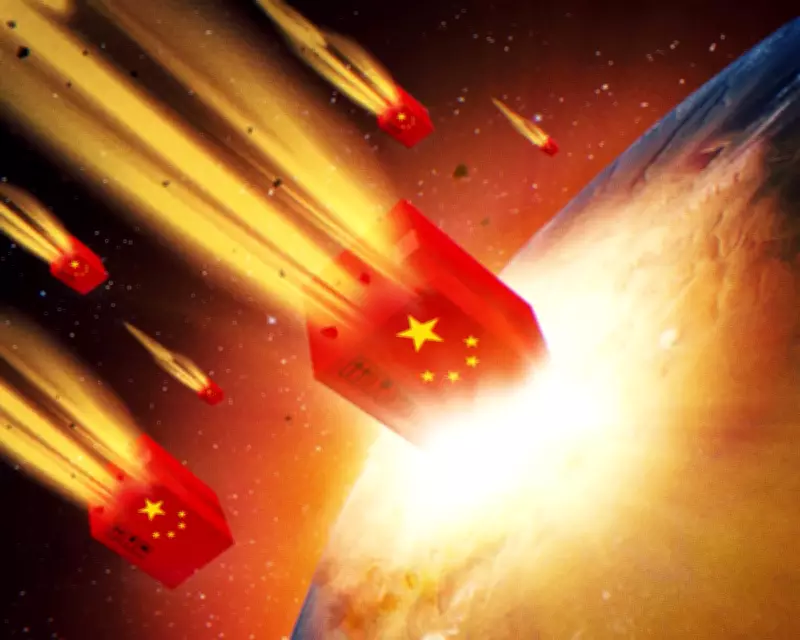
The global economic landscape is undergoing a seismic shift as China's colossal trade surplus reaches unprecedented levels, creating immense pressure on manufacturing sectors across both developed and developing nations. Recent data reveals a startling 20% increase in China's trade surplus during 2025, ballooning to a staggering $1.2 trillion despite significant trade barriers erected by the United States.
The Expanding Chinese Export Wave
While former President Donald Trump's tariff walls successfully reduced Chinese sales to American markets, Beijing's overall export strategy has proven remarkably resilient. Chinese exports expanded by more than 5% overall, with particularly strong growth in key international markets. Exports to the 11 countries comprising Asia's ASEAN bloc surged by over 13%, while shipments to the European Union increased by more than 8%. Meanwhile, Chinese imports remained essentially flat, exacerbating the already substantial trade imbalance.
This gargantuan surplus is creating what economists describe as a stranglehold on manufacturing industries worldwide. From established industrial powers in Europe to emerging economies across Asia and Latin America, factories are struggling to compete with the relentless flood of Chinese goods entering global markets.

Global Response to Chinese Trade Practices
The international community is increasingly vocal about the disruptive impact of China's export-led economic strategy. The World Trade Organization has documented more than 300 antidumping investigations since 2020 initiated by low- and middle-income countries targeting Chinese exports ranging from steel and cutlery to footwear and washing machines.
Several nations have taken direct action to protect their domestic industries. Mexico recently imposed tariffs of up to 50% on Chinese goods, while India raised tariffs on steel imports specifically to counter the surge in Chinese shipments. These protective measures reflect growing global concern about what many perceive as unfair Chinese trade practices.
Institutional Strain and Calls for Reform
The strain on international economic institutions has become increasingly apparent. European Union Trade Commissioner Maroš Šefčovič recently declared that "we urgently need a new system of global trade governance fit for the 21st century" as traditional frameworks struggle to address contemporary challenges. There is growing consensus that the WTO's foundational "most favored nation" principle may require revision to address current economic realities.
Critics argue that China maintains an unfair advantage through currency manipulation, state subsidies to exporting firms, and restricted access to its domestic market. The United States has formally communicated to the WTO that China's manufacturing output now exceeds that of the next nine largest manufacturing nations combined, describing these imbalances as "the greatest threat to a global economy of fair and reciprocal trade."
The American Context and Global Implications
The United States' turn against the global economic order it helped establish did not occur in isolation. The "China shock" following Beijing's 2001 accession to the WTO delivered a severe blow to American manufacturing regions, creating fertile ground for political movements advocating economic nationalism. However, experts note that America's exceptional response stemmed partly from inadequate social infrastructure to manage industrial disruption compared to other affluent nations.
While America's economic challenges are largely self-inflicted, China's export policies are increasingly viewed as contributing to global economic instability. As Eswar Prassad, former head of the China division at the International Monetary Fund, observed: "Forget Trump's tariffs. The real danger lies in China's trade surplus."

Strategic Crossroads for Beijing
China stands at a critical juncture in its economic development. The United States' retreat from global leadership under the Trump administration has created what analysts describe as an unparalleled opportunity for Beijing to assume greater international responsibility. Canadian Prime Minister Mark Carney's recent strategic partnership agreement with Chinese President Xi Jinping, alongside China's expanded free trade agreement with ASEAN nations, suggests potential pathways for constructive engagement.
However, China's continued adherence to mercantilistic policies threatens to undermine this opportunity. Business investment is delivering diminishing returns within China itself, requiring increasing capital to generate each additional job. Meanwhile, household spending remains remarkably low at just 40% of GDP compared to 60% across OECD nations, limiting domestic prosperity.
Beijing's argument that raw material purchases benefit developing nations while its exports overwhelm their manufacturing sectors is unlikely to build sustainable support for Chinese global leadership. The world needs an engaged China to help preserve open trading systems as America turns inward, but this requires Beijing to move beyond defining itself merely as a reasonable alternative to a United States that has "gone off the rails."
China now faces a fundamental choice: embrace its potential role as steward of an alternative trading system or continue export policies that validate America's turn against globalization and further erode faith in the international economic order from which China has benefited so substantially.