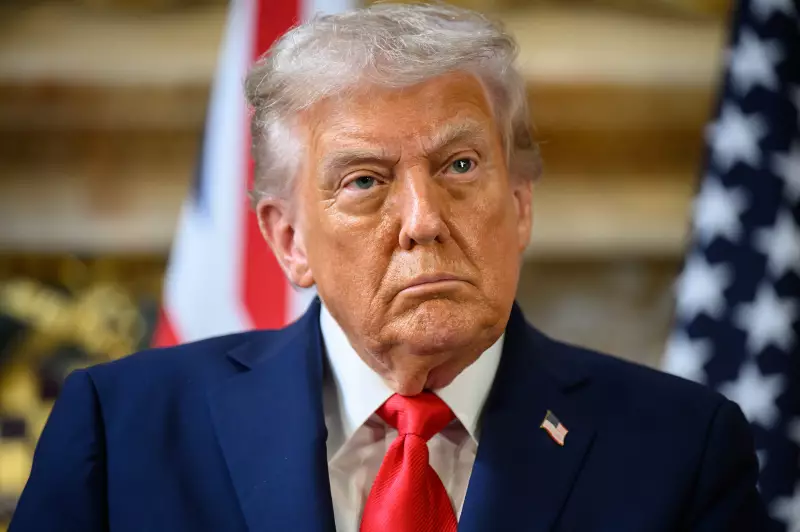
The European Union has issued a stark warning that its retaliatory tariffs against the United States could be imposed "very quickly" in response to President Trump's unwavering determination to annex Greenland. This development has dramatically heightened the risk of a major confrontation between the world's largest economy and its biggest economic bloc, casting a shadow over the World Economic Forum in Davos.
Escalating Tensions Over Greenland Sovereignty
EU Economic Commissioner Valdis Dombrovskis emphasised that while efforts are ongoing to find a "constructive solution," the bloc is fully prepared to respond to US tariff threats with immediate countermeasures. Speaking to the Financial Times at the Davos summit, Dombrovskis underscored the seriousness of the situation, indicating that diplomatic channels are being strained by President Trump's provocative stance.
On Tuesday evening, President Trump reinforced his ambition to take control of Greenland, an autonomous territory within the Kingdom of Denmark. He warned European leaders that they would "have to find out" how far he is willing to go, leaving the door open to potential military action. Trump asserted there was "no going back" on his plans and suggested that NATO countries would ultimately be "very happy" with proposed resolutions, though he questioned whether allies would reciprocate support for the US.

Diplomatic Efforts and Behind-the-Scenes Maneuvering
NATO Secretary General Mark Rutte attempted to reassure business leaders and strategists during a Wednesday morning event, stating he is working "behind the scenes" to ease tensions between the US and the EU. However, Rutte also expressed concern that global powers are "dropping the ball" on addressing threats from Russia and supporting Ukraine, particularly in light of the escalating dispute over Greenland's sovereignty.
The situation has exposed significant rifts among Western allies, with French President Emmanuel Macron accusing Trump of "bullying" and warning of a dangerous shift towards a "world without rules." Canadian Prime Minister Mark Carney, known for his advocacy of multilateral cooperation, described the current international order as experiencing a "rupture, not a transition," urging middle powers to unite in defence of shared values.
Confrontations and Strategic Warnings at Davos
Tuesday's events at the World Economic Forum featured heated exchanges between policymakers, with political leaders challenging US allies to stand firm against Trump's unilateral actions. Chancellor Rachel Reeves directly confronted US Commerce Secretary Howard Lutnick during a panel discussion, countering his optimistic assertion that tariff issues would "sort themselves out" despite the Greenland controversy.
Reeves highlighted America's continued dependence on China for rare earth materials and stressed the importance of maintaining strong European alliances to reduce this reliance. She argued that even a nation as powerful as the United States cannot afford to act alone, emphasising the need for continued dialogue among countries that share common values to navigate an increasingly unstable global landscape.
The escalating rhetoric and firm positions from both sides suggest that the coming weeks will be critical in determining whether diplomatic solutions can prevail or whether the world will witness a significant escalation in transatlantic trade tensions.