Iran's Blockade of Strait of Hormuz Sparks Global Fertilizer and Food Crisis
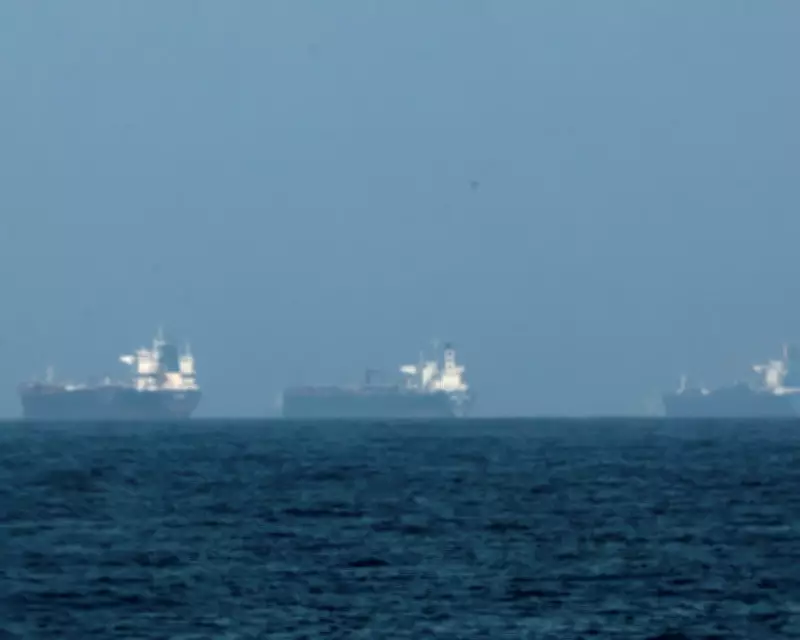
The strategic Strait of Hormuz, a crucial Gulf waterway, has been effectively shut down since the United States and Israel launched attacks on Iran over the weekend. This blockade is now severely impacting the global fertilizer supply chain, raising alarms among analysts about potential disruptions to crop production and food security worldwide.
Critical Chokepoint for Global Trade
Passage through the strait, located off Iran's southern coast, has mostly halted, stranding vital shipments. Between a quarter and a third of the world's trade in raw materials for fertilizer, along with a fifth of seaborne crude oil and gas, typically traverses this narrow passage. The de facto closure is specifically affecting the transport of ammonia and nitrogen, which are essential components in many synthetic fertilizer products.
Roughly half of global food production relies on synthetic nitrogen, and without adequate fertilizer, crop yields are expected to plummet. This shortage threatens to drive up prices for household staples such as bread, pasta, and potatoes, while also increasing the cost of animal feed.

Gulf Region's Pivotal Role in Fertilizer Production
The Gulf is home to some of the world's largest fertilizer manufacturing sites, and a prolonged transport shutdown could disrupt production and escalate costs. Iran ranks as the fourth-largest global exporter of urea, the most widely used nitrogen fertilizer, following Russia, Egypt, and Saudi Arabia.
Fertilizer manufacturing is already being strained by the availability of raw materials and rising energy costs. Fossil gas constitutes between 60% and 80% of the production cost for nitrogen fertilizer. The global nitrogen supply is anticipated to face further setbacks due to shutdowns of fossil gas plants in the Gulf, including Qatar's largest facility, which closed after a drone attack.
Price Surges and Historical Parallels
Fertilizer prices are already on the rise, evoking memories of the spikes in gas and fertilizer costs witnessed in early 2022 following Russia's full-scale invasion of Ukraine. Egyptian urea prices, a key benchmark, have surged by more than 25%, reaching $625 per metric tonne, up from $484-$490 last week, according to CRU Group, a consultancy monitoring commodity prices.
Chris Lawson of CRU noted that the Middle East accounts for approximately 45% of global sulfur trade, a critical raw material for fertilizer production, along with various metals and industrial chemicals. He warned, "While there are many parallels to 2022, the supply and demand implications of the conflict in the Middle East have the potential to be much more severe and wide-ranging, particularly if the Strait of Hormuz is restricted for longer than two weeks."
Immediate Impacts and Maritime Incidents
The crisis has escalated with recent maritime attacks. On Wednesday, a container ship reported being hit by a projectile in the strait, causing a fire in its engine room, as confirmed by UK maritime trade operations. This incident follows others where at least two crew members lost their lives, highlighting the growing dangers in the region.
Farmers Bear the Brunt of Volatility
Concerns about fertilizer supply emerge at a challenging time for farmers in the UK, Europe, and North America, who have begun planting spring crops. While most producers have sufficient fertilizer for the current year, they typically would be planning purchases for the next season. The UK meets about 40% of its nitrogen fertilizer needs domestically, with the remainder sourced from imports.
Any reduction in fertilizer availability would likely lead to decreased application on crops, resulting in lower yields and higher food prices. Following Russia's invasion of Ukraine, food and non-alcoholic drink prices soared by 16.5% in the year to November 2022, according to the Office for National Statistics. Recently, grocery price inflation rose unexpectedly, climbing 4.3% in the four weeks to 22 February, as reported by Worldpanel by Numerator, a market research company.

Tom Bradshaw, president of the National Farmers' Union, stated, "We are seeing immediate price volatility, but at this stage, it is too early to say how the UK may be impacted in the medium term." Farmers were already grappling with narrow profit margins before the Middle East conflict drove up costs for key inputs like fertilizer and fuel.
Svein Tore Holsether, chief executive of Yara, the world's second-largest fertilizer producer, emphasized the strain on agricultural producers: "Farmers were already in a challenging situation before this and were struggling with narrow margins. Input prices are increasing, but at the same time, there hasn't been much impact on crop prices, so we are putting a very big burden on the shoulders of farmers now, unless there is a step up in supporting farmers in this challenging time."
This unfolding crisis underscores the fragile interdependence of global supply chains and the urgent need for strategic responses to mitigate impacts on food security and economic stability.