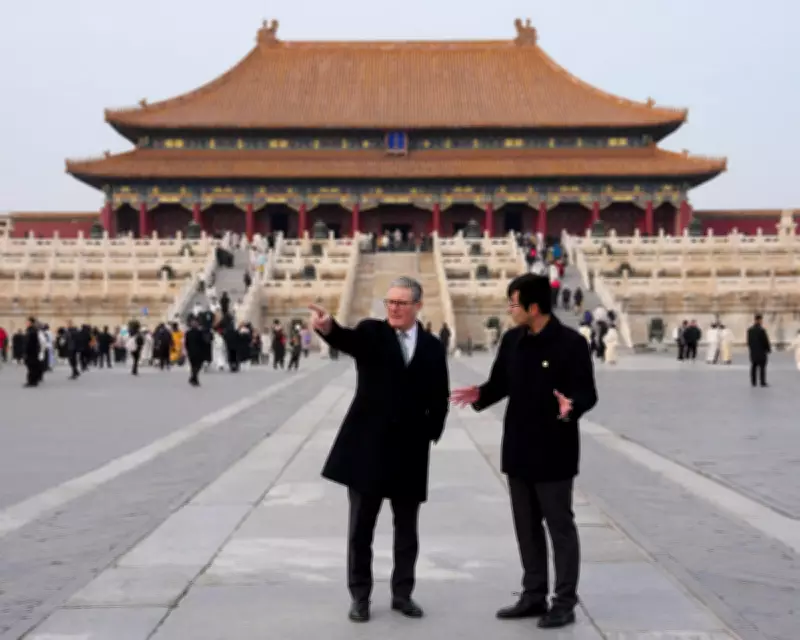
Starmer's Diplomatic Mission to Beijing Yields Concrete Agreements
Prime Minister Keir Starmer's official visit to China has concluded with several significant agreements being established between the two nations. While the trip hasn't produced the multi-billion pound investment packages that sometimes characterise such diplomatic missions, the British government has secured practical arrangements across multiple sectors that could have meaningful impacts on trade, security, and travel.
Visa-Free Travel Arrangement for British Citizens
Perhaps the most immediately noticeable achievement from Starmer's Beijing discussions is the establishment of visa-free travel for British visitors to China. Under this new arrangement, UK citizens will be able to visit China for periods up to thirty days without needing to navigate the usual visa application bureaucracy. This brings Britain into alignment with approximately fifty other nations that already enjoy similar visa-free access, including major European partners like France, Germany, and Italy, as well as global allies such as Australia and Japan.
Progress Toward Services Trade Agreement
The United Kingdom, which exports approximately £13 billion worth of services to China annually, has secured agreement for a feasibility study examining the potential for a comprehensive services trade deal between the two countries. While no free trade agreement currently exists specifically covering services, this development represents a significant step toward establishing clearer, legally binding frameworks for British service sector companies operating in the Chinese market.

Business leaders accompanying Starmer expressed optimism about this development. Melissa Geiger, Chair of KPMG UK, noted that "the further opening up of this major new market will unlock significant bilateral trade and investment opportunities and create jobs across the UK."
Intelligence Sharing to Combat Organised Crime
One of the most operationally significant agreements involves enhanced intelligence sharing between British and Chinese authorities regarding organised crime networks, with particular focus on illegal immigration channels and drug trafficking operations. This cooperation could prove especially valuable in addressing small boat crossings in the English Channel, as estimates indicate more than half of the engines used in such crossings last year originated from Chinese manufacturers.
Starmer emphasised that this arrangement would "help us cut off the supply of boats at source – stopping crossings before lives are put at risk and restoring control to our borders." The agreement also targets opioid smuggling operations originating from China.
Sector-Specific Cooperation Agreements
A series of memorandums of understanding were signed covering multiple business and regulatory areas, including:
- Enhanced collaboration on product standards and certification
- Cooperation in health sector initiatives
- Partnerships in sports industry development
- Technical education and training exchanges
- Food safety protocols and standards alignment
- Animal and plant quarantine procedures
Strengthening Economic Dialogue Mechanisms
The visit has reinforced the UK-China Joint Economic and Trade Commission, which resumed meetings last year after a hiatus since 2018. This continuation signals China's apparent interest in maintaining economic engagement with Britain, following last year's summit that resulted in agreements to increase services trade between the nations.
Facilitating British Business Expansion in China
Starmer highlighted that British businesses have been seeking improved market access and clearer regulatory frameworks in China. The agreements reached aim to address these concerns by creating channels to help UK companies identify Chinese partners more easily and by working toward mutual recognition of professional qualifications.
Jerome Frost, Chief Executive of engineering firm Arup, who participated in the trade delegation, welcomed the developments, stating: "We welcome the great work done by both governments on this agreement as an opportunity to deepen the work we've been doing in China for decades. China is home to some of our most technically demanding and innovative projects."

While the agreements may not represent the dramatic investment announcements sometimes associated with prime ministerial visits, they establish practical frameworks across multiple sectors that could facilitate increased economic cooperation and address specific operational challenges facing both nations.