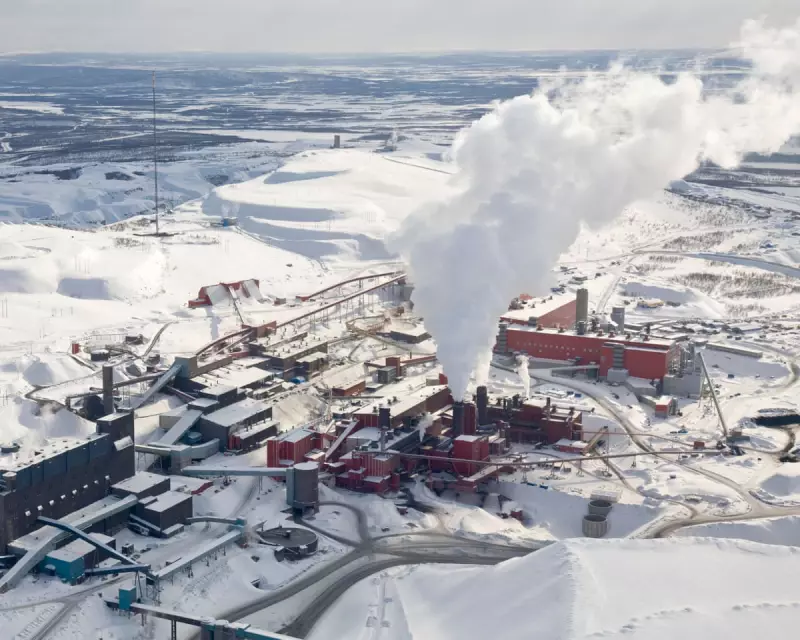
In the perpetual blue twilight of the Arctic winter, where temperatures plunge to -20C, a critical mission is unfolding 900 metres beneath the Swedish town of Kiruna. A dedicated team of 20 is forgoing the scant daylight to spearhead a project of continental importance: establishing Europe's first operational rare earth mine.
The Underground Race for Technological Independence
Every day, the crew from state-owned mining company LKAB drives 4km through a vast network of tunnels. Their destination is the edge of the Per Geijer deposit, a rich seam of magnetite-hematite-phosphate containing 17 rare earth elements. These materials, including neodymium and praseodymium, are the lifeblood of modern technology, essential for everything from electric vehicles and smartphones to military jets and wind turbines.
Currently, there are no operational rare earth mines in Europe. The continent, along with much of the West, is almost entirely reliant on China, which controls an estimated 85% of final processing for light rare earths and 100% for heavy rare earths. This dependency has become a source of acute geopolitical tension, with the EU accusing Beijing of "weaponising" its near-monopoly.

"I think people often miss the point," says Professor Nigel Steward, a materials scientist at Imperial College London. "They say 'why don't we just produce rare earths in Europe?'. But you have to have the entire supply chain to do that."
Blasting a Path Through Rock and Reliance
The work in Kiruna is a tangible, gruelling response to this challenge. Using remote technology, the team drills 84 holes into the rock face, fills them with explosives, and detonates them between 1.15am and 1.45am each night. The blasts are sometimes felt by residents above, in a town already being relocated piecemeal due to mining subsidence.
By 5am, after ventilating the fumes, the mucking-out process begins. In a control room 1.3km underground, operators remotely "scale" the rock, breaking the debris into chunks for driverless trains. Team leader Jim Lidström, a 37-year-old Kiruna native, then oversees the stabilisation of the new tunnel, bolting walls and spraying concrete. Progress is steady but slow, at about five metres per day.
LKAB's chief executive, Jan Moström, explains the strategic shift. Exposing the entire Per Geijer deposit could take "years and years." Instead, the company is focusing on incremental development, connecting the rare earth resource to the existing iron ore mining system and developing it in stages. "That is the huge difference," he states.
A Decade-Long Journey to De-risk the EU
The urgency is palpable, but the timeline remains long. Experts warn that moving from a mine to refined end products could take 10 to 15 years. LKAB is attempting to accelerate this process, investing €80m in a demonstration plant in Luleå to test separation techniques and taking a stake in Norwegian firm REEtec to develop cleaner refining methods.
Moström traces Europe's current vulnerability back to the 1980s, when stringent environmental regulations in the West coincided with China's willingness to accept the toxic byproducts of rare earth processing. "I've been talking in Brussels... about the huge disadvantages we created... when we closed the mining industry," he says. On the EU's slow awakening to the danger, he is blunt: "Politicians will never be more courageous than the voters."
The stakes are high. The EU uses around 20,000 tonnes of permanent magnets annually, with up to 18,000 tonnes sourced from China. Last year, China's imposition of export restrictions in its trade war with the US sent shockwaves through European industry, highlighting the acute risk of this unbalanced relationship.
"China has not just got the capacity to weaponise its trade but shown it has the willingness to do so," notes George Riddell, a senior trade adviser at Flint Global.
For now, all eyes are on the relentless, dark progress beneath Kiruna. The team there represents Europe's most immediate hope of forging a new path, one blast at a time, towards a future less beholden to a single, dominant supplier for the materials that power modern life.