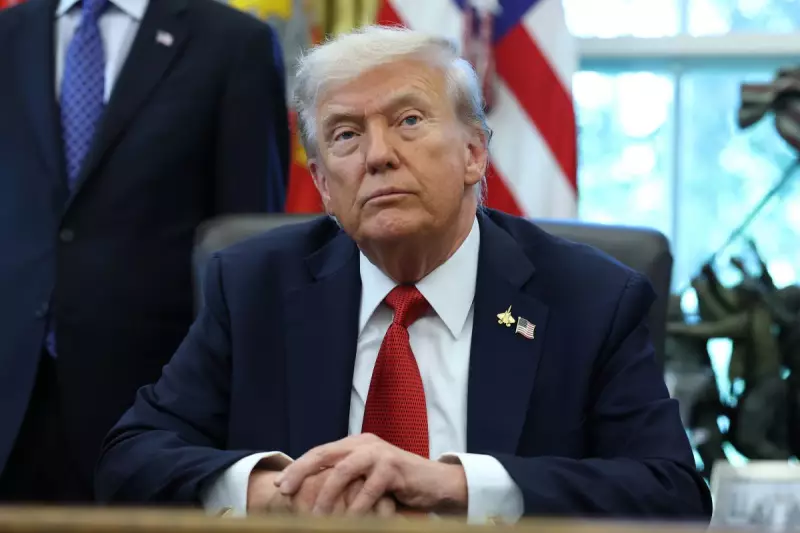
In a significant escalation of trade tensions, former US President Donald Trump has announced plans to impose a 25 per cent tariff on a wide range of South Korean imports. The declaration, made via a Truth Social post on Monday, accuses Seoul of failing to uphold the terms of a bilateral trade agreement finalised late last year.
Trump's Tariff Rationale and South Korean Response
Trump asserted that the United States had acted "swiftly" to reduce its own tariffs in accordance with the deal, but South Korean lawmakers have been too slow to approve the corresponding legislation. He emphasised the importance of reciprocal action, stating, "Our trade deals are very important to America. In each of these deals we have acted swiftly to reduce our tariffs in line with the transaction agreed to. We, of course, expect our trading partners to do the same."
The proposed tariff hike would affect products including lumber, automobiles, pharmaceuticals, and other goods subject to reciprocal tariffs. This move marks a sharp reversal from last summer, when Trump pledged to slash many tariffs on South Korea to 15 per cent as part of a broader agreement.

Market Reactions and Diplomatic Moves
South Korea's flagship Kospi index initially fell following the announcement but later recovered by 2.73 per cent to 5,084 KRW, equivalent to approximately £2.74. This rebound came after the South Korean government confirmed it was seeking urgent talks with Washington and shares in major exporters bounced back.
The office of South Korean President Lee Jae Myung stated it had received no official notification or explanation from the US government regarding the tariff decision. In response, Industry Minister Kim Jung-kwan, currently in Canada, will travel to Washington as soon as possible to meet with US Commerce Secretary Howard Lutnick.
Background of the US-South Korea Trade Deal
The original agreement, reached last October during Trump's visit to South Korea, included a commitment from Seoul to invest $350 billion (£256 billion) in the United States, with portions allocated to shipbuilding. It also provided crucial relief to South Korean automotive companies by reducing tariffs on cars and car parts to 15 per cent, aligning them with levies imposed on the EU and Japan.
However, the deal's implementation has been hampered by delays in South Korea's legislative process. A bill proposed in November to enable the $350 billion investment remains stalled, contributing to the current impasse.
Confusion and Global Implications
Trump's announcement has caused widespread confusion within South Korea's economic and finance ministries, which are attempting to decipher "the intent" behind the statement. Officials speculate Trump may be referencing the stalled investment bill, prompting Finance Minister Koo Yun-cheol to urge the National Assembly to expedite its passage on Tuesday.
Further complicating matters is the fact that the original deal was documented in a fact sheet and memorandum of understanding rather than a formal treaty, leaving room for interpretation and dispute.
This latest tariff threat adds to global economic uncertainty, coming after a tumultuous week where Trump threatened steep levies on eight European countries, including the UK, over opposition to US plans regarding Greenland, before retracting the warnings. On Saturday, he also threatened 100 per cent tariffs on Canada if it pursued a trade deal with China, though Canadian Prime Minister Mark Carney denied any such negotiations were underway.
The situation underscores the volatile nature of international trade relations under Trump's approach, with potential repercussions for markets and diplomacy worldwide.