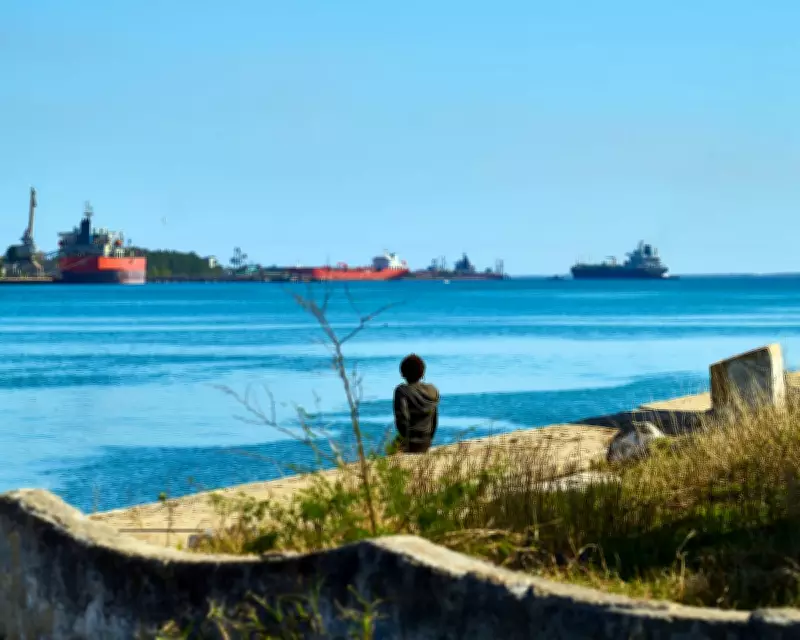
In a significant policy shift, former President Donald Trump has indicated a relaxation of the de facto oil blockade on Cuba, just as a Russian oil tanker under US sanctions approaches the island nation. The vessel, named Anatoly Kolodkin, is carrying 730,000 barrels of crude oil and is headed for Matanzas Bay in Havana, Cuba, with its arrival expected imminently.
Trump's Surprising Statement on Oil Shipments
Speaking to reporters aboard Air Force One, Trump stated, "If a country wants to send some oil into Cuba, right now, I have no problem whether it’s Russia or not." This comment marks a departure from his administration's previous stance, which had effectively prevented all oil shipments to Cuba in an effort to pressure the Havana government. Until now, the Trump administration had issued a series of threatening statements and actions to enforce this blockade.
Background of the Oil Blockade and Cuba's Energy Crisis
The US oil blockade has plunged Cuba into a severe energy crisis, with the country not receiving any oil imports for three months, according to President Miguel Díaz-Canel. This has led to strict rationing of gasoline, soaring fuel prices, and multiple power outages across the island. Public transport has dwindled, and some airlines have suspended flights, further straining Cuba's fragile economy.

Cuba lost its main regional ally and oil supplier in January when US forces captured Venezuela's president, Nicolás Maduro. Trump had previously threatened to impose tariffs on any country sending oil to Cuba and even mused about "taking" the island, highlighting the tense geopolitical context.
Russian Tanker's Role and Potential Impact
The Russian tanker Anatoly Kolodkin, tracked by services like MarineTraffic and LSEG, is set to discharge its cargo at Cuba's Matanzas port if it maintains its current course. Jorge Pinon, an expert on Cuba's energy sector at the University of Texas at Austin, expressed surprise that the US did not attempt to intercept the tanker before it approached Cuban waters. He noted that once the vessel enters Cuban territory, it "is almost impossible for the US government to stop it."
According to Pinon, the 730,000 barrels of crude could be converted into approximately 250,000 barrels of diesel, enough to cover Cuba's demand for about 12.5 days. This shipment offers a critical lifeline, providing significant relief amid the ongoing energy shortages.
Geopolitical Implications and US Policy Shifts
The New York Times reported that the US would allow the Russian tanker to reach Cuba, though the reasons behind this decision remain unclear. A move by Washington to block the tanker by force could have escalated tensions at sea with Russia, potentially leading to a broader conflict. Trump's comments suggest a new flexibility in US policy, possibly driven by strategic considerations or a desire to avoid direct confrontation with Moscow.
This development comes as Cuba faces dire conditions, with reports of water and electricity shortages, children begging in streets filled with rubbish, and widespread economic hardship. The Russian oil shipment, while temporary, could alleviate some of these pressures and signal a potential thaw in US-Cuba relations under Trump's administration.
With contributions from Reuters and Agence France-Presse, this story highlights the complex interplay of energy, politics, and international diplomacy in the Caribbean region.