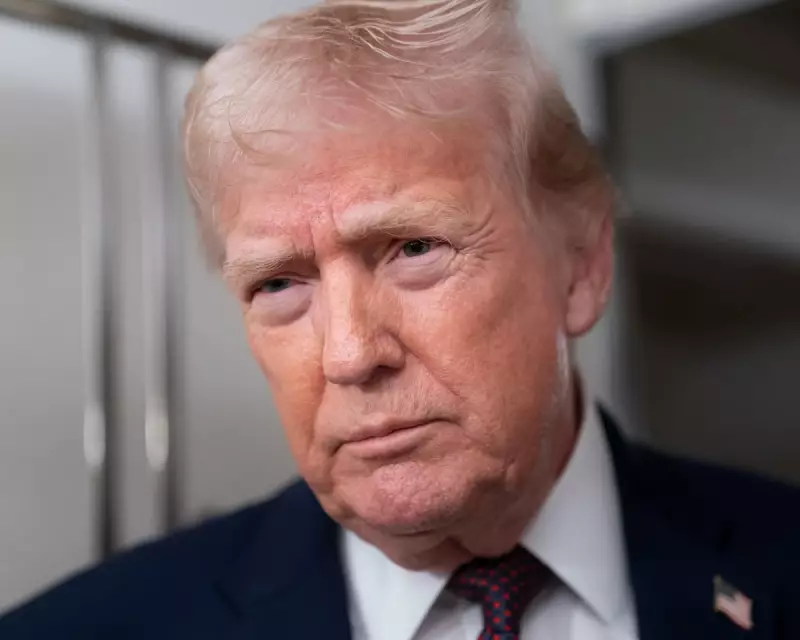
Former US President Donald Trump has issued a stark warning to the international community, declaring that any nation engaging in trade with the Islamic Republic of Iran will face significant new tariffs on all business conducted with the United States.
A Sudden Declaration on Social Media
The announcement came via a post on Trump's Truth Social platform on Monday. "Effective immediately, any Country doing business with the Islamic Republic of Iran will pay a Tariff of 25% on any and all business being done with the United States of America," he stated. Trump added that the order was "final and conclusive," though he provided no further specifics on its implementation.
This aggressive trade policy threat emerges as the US administration deliberates its response to the situation inside Iran, which is currently experiencing its most significant wave of anti-government demonstrations in years. The protests, which began on 28 December, have evolved from initial grievances over economic hardship into direct challenges to the country's clerical leadership.

Context: Protests and International Pressure
According to the US-based rights group HRANA, the unrest has led to substantial casualties. The group says it has verified the deaths of 599 people, comprising 510 protesters and 89 security personnel, since the demonstrations commenced. Iran, a long-standing adversary of the US and a member of OPEC, has been under heavy American sanctions for years.
Trump's declaration appears to be part of a broader strategy to increase pressure on Tehran's leaders. He has previously stated that the US is in contact with Iranian opposition groups and has not ruled out military action. However, White House press secretary Karoline Leavitt indicated on Monday that "diplomacy is always the first option for the president," while acknowledging that airstrikes remain among the alternatives.
Interestingly, Tehran confirmed it was keeping communication channels with Washington open as Trump considered his response. This internal crisis represents one of the most severe tests for Iran's clerical establishment since the 1979 Islamic Revolution.
Unanswered Questions and Legal Challenges
Significant questions surround the proposed tariff measure. At the time of the announcement, there was no official documentation on the White House website detailing the policy. Furthermore, no information was provided regarding the legal authority Trump would use to impose the tariffs, or whether they would target all of Iran's trading partners indiscriminately.
This move is consistent with Trump's approach during his second term, where he has frequently used the threat of tariffs as a tool against countries he perceives as having unfair trade practices or ties to US adversaries. However, his broader trade policy is currently under legal scrutiny, with the US Supreme Court considering whether to strike down a wide range of his existing tariffs.
The economic impact could be wide-reaching. Data from the World Bank indicates that in 2022, Iran exported products to 147 different trading partners. Its top export destinations include China, the United Arab Emirates, and India, all of which are major trading partners with the United States. It is crucial to note that such tariffs are ultimately paid by US importers who bring in goods from the affected countries.
The White House did not immediately respond to requests for comment on the specifics or legality of the proposed tariff order. The international community now awaits further clarification on how this bold threat will be translated into policy.