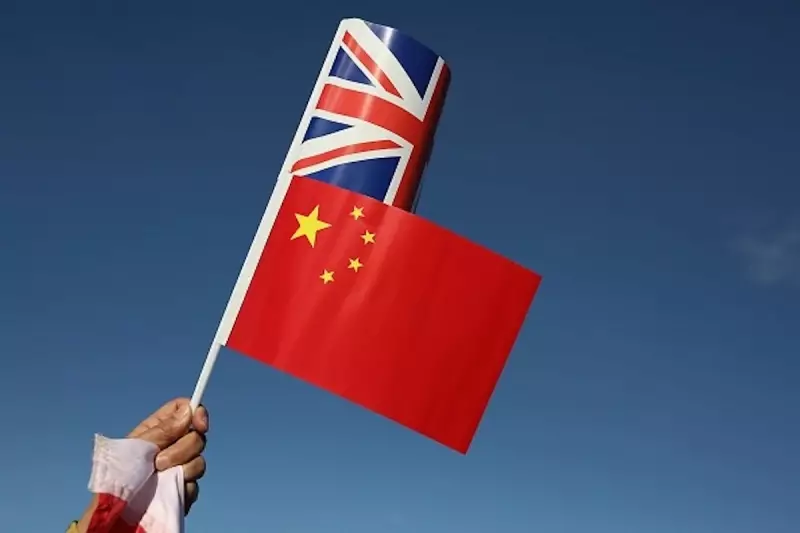
As the Prime Minister embarks on the first UK prime ministerial visit to China since 2018, business leaders are calling for a fundamental shift in Britain's approach to its economic relationship with the world's second largest economy. David Bharier, Head of Research at the British Chambers of Commerce, argues that the current reactive stance must be replaced with a clear, predictable, and durable strategic framework to provide businesses with the stability they desperately need.
The Fragile State of Business Confidence
Small business exporter sentiment has been in sharp decline, with geopolitical risk becoming part of the daily noise that firms must navigate. The recent Greenland tariff episode highlighted how market access, even with close partners, can no longer be assumed stable. Analysis from Aston University demonstrates that in every scenario, retaliatory action would have made the UK worse off economically.
Attitudes toward China have shifted dramatically in recent years. A 2018 British Chambers of Commerce survey found 53 percent of responding firms wanted the UK to prioritise a trade deal with China. By early 2022, that figure had plummeted to just 19 percent, as aggressive Covid-19 lockdowns, supply-chain breakdowns, and rising costs damaged perceptions of the Chinese market.

China's Evolving Economic Landscape
For businesses with exposure to China, the country represents multiple markets simultaneously: a customer base, a production platform, a source of critical inputs, and increasingly a standards-setter in fast-moving sectors. Recent observations from Supply Chain Resilience Week events across Shenzhen, Guangzhou, and Shanghai reveal two significant structural shifts.
Unprecedented Industrial Capacity
China's industrial breadth is historically unprecedented, being the only country with production capacity across all 41 major UN industrial categories. It accounts for roughly one-third of global manufacturing output and approximately $3.6 trillion in merchandise exports. In many product lines, there is simply no alternative ecosystem that can match China on cost, speed, and depth.
Beijing is pushing aggressively up the value chain, from electric vehicles to advanced electronics. Development cycles are being dramatically compressed, with automotive suppliers reporting cycles shrinking from five years to less than one year in some cases.
The Rule-Setting Ambition
China's forthcoming 15th Five-Year Plan (2026–2030) signals a strategic shift from participating in global governance to actively shaping it in areas including green finance, carbon accounting, industrial standards, and platform regulation. This raises practical questions for UK firms about whose standards will govern the world economy in coming decades.
However, this ascent is not frictionless. Firms operating in China now face "involution" – intense domestic competition and falling margins that create major pressure points. Suppliers with weak financial buffers could easily topple during another supply chain shock, while subdued internal demand, high youth unemployment, and middle-income trap risks add further operational and social volatility.
The UK's Strategic Dilemma
The government's challenge is not choosing between being "tough" or "open" toward China, but deciding whether to run China policy by reaction or through a clear, durable framework that businesses can plan around. The British Chamber in China's 2025 position paper captures the consequences of policy drift, with businesses reporting mixed signals from both governments and long-standing technical barriers remaining unresolved.
Legitimate security concerns around intellectual property, data, and critical infrastructure often overshadow practical engagement. Yet the UK is not starting from zero – it runs a services trade surplus with China, and opportunities exist in advanced engineering, financial, and legal services. The UK also possesses an underused asset in Brand Britain, with a 2024 BCC survey finding 52 percent of exporters believing the UK's reputation actively supports growth overseas.

Three Essential Elements of a Business-Focused China Strategy
1. A Clear Published Framework
Businesses need the government to set out clearly where the UK welcomes deeper commercial engagement, where safeguards apply, and where activity will be blocked outright. Firms can work with clear red lines but cannot plan effectively around ambiguity and uncertainty.
2. Portfolio Risk Management Approach
China policy must be treated as part of comprehensive risk management. In a situation where the UK's principal security ally can threaten tariffs over territorial claims, diversification of supply chains and customers becomes one of the few levers available to manage exposure. This becomes increasingly important if the UK finds itself between a more transactional United States and a system-shaping China.
Diversification requires time and capital investment and cannot be achieved overnight. Firms in China consistently report that "China-plus-one" strategies – particularly moves into Southeast Asia – often prove more costly than anticipated, with some operations ultimately returning quietly to Chinese production bases.
3. Trusted Channels for Business Evidence
The UK must build reliable mechanisms for gathering real-world business intelligence. One of Britain's hidden strengths is its global Chamber network, spanning tens of thousands of businesses and thousands of events annually. Initiatives like Supply Chain Resilience Week demonstrate how sector-specific convening can generate real-time commercial intelligence that should be embedded in government decision-making.
From Performance to Predictability
China is not a relationship the UK can simplify, but it is one that can be stabilised for both business and security through more deliberate policy. This means resisting the urge to frame China as either a binary opportunity or an existential threat, instead focusing on structured engagement, targeted protection, and a predictable framework that allows firms to invest with their eyes open.
The British Chambers of Commerce will advance this agenda through deeper research, clearer policy engagement, and practical delivery mechanisms including its new Diplomatic Advisory Hub and Trade Accelerator programme. These initiatives aim to help firms navigate risk and expand internationally with greater confidence.
As geopolitical tensions reshape global trade patterns, British businesses need clarity rather than choreography in the UK's approach to China. A strategic framework that provides predictability could help reverse the decade-long decline in small business confidence and position UK firms to navigate the complex realities of 21st century international commerce.