UK Government Announces Major Steel Protection Measures
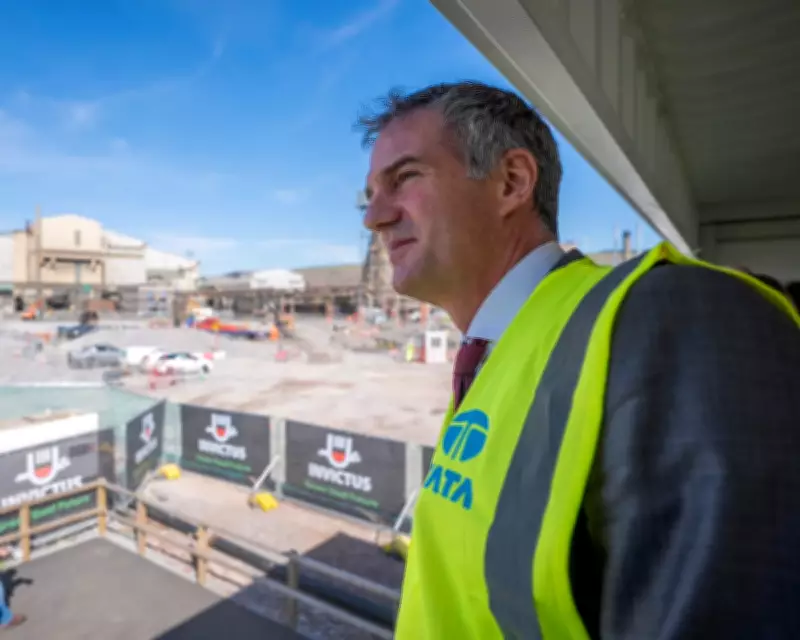
In a decisive move to safeguard Britain's remaining steel plants from potential collapse, the UK government has unveiled a comprehensive new strategy that includes doubling tariffs on imported steel to 50%. Business Secretary Peter Kyle announced these "steel safeguards" during a visit to Tata Steel's Port Talbot facility in south Wales, where industry leaders had recently warned of imminent crisis without government intervention.
New Protectionist Measures and Domestic Production Targets
The £2.5 billion strategy establishes ambitious targets for domestic steel production, aiming for 50% of all steel used in the UK to be manufactured domestically. Within this framework, half of that domestic production is specifically designated to come from Wales. The plan seeks to increase overall domestic steel production by 30% while implementing significant trade restrictions on foreign imports.
Beginning in July, import quotas for numerous overseas steel products will be reduced by 60%, with duties on imports exceeding those quotas rising sharply to 50%. This represents a substantial increase from previous tariff levels and marks one of the most aggressive protectionist moves in recent UK industrial policy.

Addressing Global Market Imbalances
"This is a very strident set of protections for British production to equal out the unfair competitive behavior elsewhere that doesn't create a level playing field for British steel," explained Business Secretary Peter Kyle. He emphasized that the strategy would "align with investment for the transition to green steel, but also investments in other areas that make sure our domestic production matches the best in the world."
The UK's actions bring it in line with similar protectionist measures recently implemented by the United States, European Union, and Canada. These coordinated responses primarily target the global steel surplus created by China, which remains by far the world's largest steel producer. Chinese steel exports reached unprecedented levels in December, intensifying competitive pressures on domestic industries worldwide.
Industry Context and Transition Challenges
The current steel safeguards, established before the UK's departure from the European Union, are set to expire on July 1. The European Union has proposed parallel measures that would double its tariffs to 50% while halving quotas with third countries, including the UK. Both trading blocs are expected to negotiate carve-outs featuring lower tariffs as they unite against cheaper Chinese steel imports.
This latest strategy represents an attempt to protect what remains of Britain's steel industry following decades of contraction. The last blast furnace at Port Talbot ceased operations in 2024 after Tata Steel received a £500 million rescue package to transition to electric arc furnace technology, a move that resulted in the loss of 2,800 jobs. Construction has begun on these new, environmentally friendly furnaces that melt scrap metal, with operations expected to commence in 2028.
Global Protectionism and Domestic Concerns
The UK's tariff increases follow similar protectionist trends globally. Former US President Donald Trump initially imposed 25% global steel tariffs during his first term, then doubled them to 50% last June for the EU, Canada, and other trading partners—though notably excluding the UK. This has created a wave of protectionism as steel producers worldwide scramble to secure new markets.
Despite the announced measures, significant challenges remain for the sector. Alasdair McDiarmid, assistant general secretary of the Community trade union, noted persistent concerns about energy prices and other industry pressures. However, he described recent discussions in Port Talbot with ministers and Tata Steel executives as "positive and productive."
"We have sat across from business secretaries for years who promise things and don't deliver, but this government is following through," McDiarmid observed. "At Port Talbot we can see progress."
Welsh Perspective and Broader Implications
Welsh First Minister Eluned Morgan welcomed the new strategy as "good news for our steel communities and the thousands of people across Wales who work in or around the industry, now and in the future."

The government's announcement follows a National Audit Office report estimating that taxpayer support for British Steel's Scunthorpe plant could exceed £1.5 billion by 2028, raising questions about the sustainability of government intervention. Ministers assumed control of the north-east England steelworks in April last year after Chinese owner Jingye threatened to shut down blast furnaces at the loss-making facility. Scunthorpe remains the UK's last plant producing virgin steel.
When questioned about the NAO report, Business Secretary Kyle declined to comment specifically, stating only that the government was discussing the matter. He noted that Scunthorpe's blast furnaces "would continue until the companies themselves decide to transition."