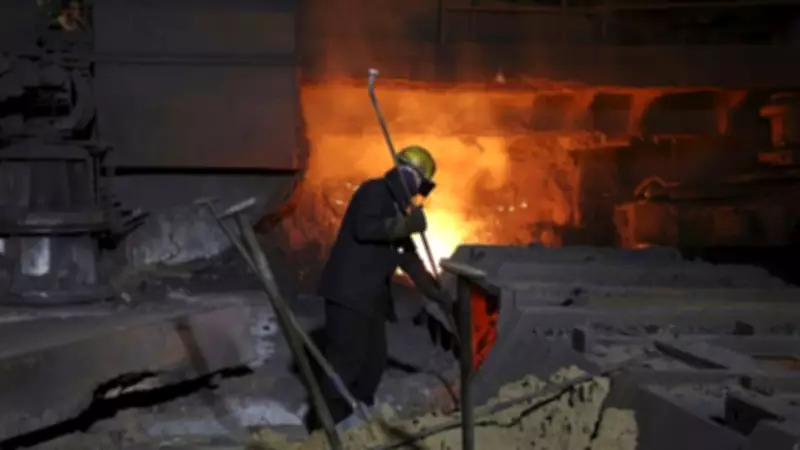
The UK government has unveiled a new Steel Strategy that includes a 50% tariff on many steel imports and £2.5 billion in financial support for producers, signaling a dramatic turn towards protectionist policies. Sky's economics editor Ed Conway describes this move as a watershed moment for the British economy, with far-reaching implications beyond the steel sector itself.
A Strategic Shift in Trade Policy
At the heart of the strategy is a bold attempt to reverse the decline of domestic steel production. Currently, only 30% of steel used in the UK is manufactured locally—a record low that has raised concerns about national self-sufficiency. The government aims to increase this proportion to 50%, bringing it back to pre-pandemic levels through substantial investment and trade barriers.
Financial Support and Nationalization Efforts
The £2.5 billion funding package will be distributed to both nationalized and private steel producers. A significant portion will go to British Steel's Scunthorpe plant, which has been effectively brought under state control, while the remainder will assist private manufacturers in developing lower-carbon steel technologies. This financial injection is designed to modernize the industry and enhance its competitiveness on the global stage.

The Tariff Decision: Breaking with Tradition
The introduction of a 50% tariff on steel imports, coupled with stricter import quotas, represents a radical departure from the UK's historical commitment to free trade. For years, British steelmakers have struggled against subsidized competitors from countries like Vietnam and Turkey, where producers benefit from government support that UK companies lack. Previously, imports of cheap galvanized steel from these nations faced minimal or no tariffs, creating an uneven playing field.
A Historic Protectionist Turn
This marks the first major increase in UK trade barriers since Brexit, when Britain regained control of its trade policy. While similar tariffs have been implemented in Europe and the United States under former President Donald Trump, the UK had previously resisted such measures. The move challenges the nation's legacy as a pioneer of free trade, dating back to the abolition of the Corn Laws in the 19th century, and reflects a broader global trend towards economic protectionism.
Implications for the Economy and Industry
Although the government argues that its approach is more nuanced than the blunt tariffs seen in America, the strategy undeniably signals a shift in economic philosophy. By prioritizing domestic production, the UK aims to secure its supply chains for critical infrastructure, including wind turbines and construction projects, which currently rely heavily on imported steel.
Industry experts warn that without these measures, the steel sector faces an existential crisis. The new tariffs and quotas are expected to provide immediate relief to struggling producers, though they may also lead to higher costs for downstream industries and consumers.
Looking Ahead: A Watershed Moment
While the Steel Strategy may appear to focus on a niche sector, its implications are profound. This policy shift not only redefines the UK's trade relationships but also sets a precedent for future industrial strategies. As Britain navigates post-Brexit economic challenges, this move could inspire similar protective measures in other vulnerable industries, reshaping the country's economic landscape for years to come.