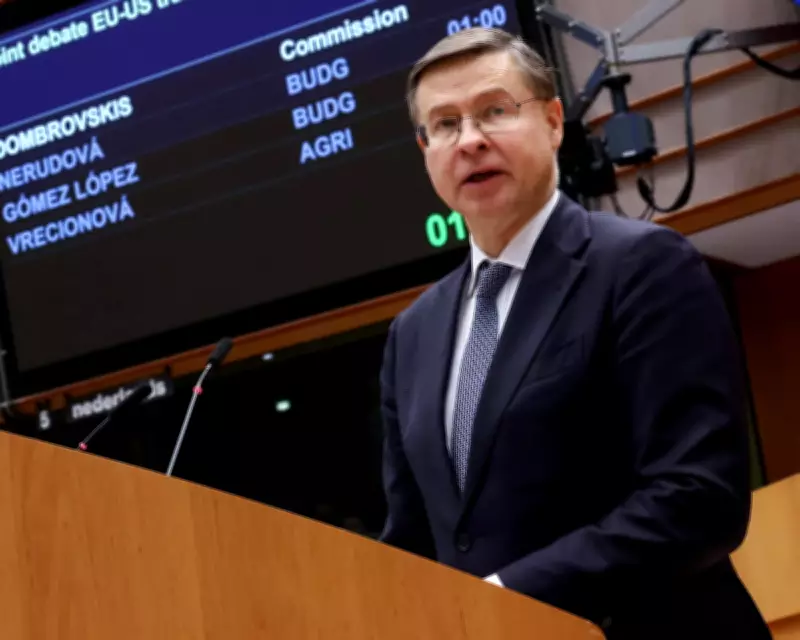
The United States and European Union have solidified a significant trade agreement, marking a pivotal moment in transatlantic economic relations. This deal, announced after extensive negotiations, aims to reduce barriers and foster increased cooperation between the two economic powerhouses.
Key Provisions of the Trade Agreement
The new trade pact includes provisions to streamline regulatory standards, enhance digital trade, and promote sustainable practices. It is expected to boost bilateral trade by facilitating smoother exchanges of goods and services, with a focus on innovation and environmental sustainability.
Tariffs Imposed on Russia and Iran
In a related move, both the US and EU have imposed additional tariffs on Russia and Iran. These measures are in response to ongoing conflicts and geopolitical tensions, particularly Russia's actions in Ukraine and Iran's regional activities. The tariffs target key sectors, including energy and technology, to exert economic pressure.

The decision reflects a coordinated effort to address security concerns through economic means, with leaders emphasizing the need for a united front against aggression and instability.
Reactions from European Leaders
European officials, including Dutch Prime Minister Mark Rutte and representatives from Denmark, have expressed support for the trade deal and tariff actions. They highlight the importance of transatlantic unity in tackling global challenges, from trade disputes to security threats.
Rutte noted that the agreement strengthens economic ties while reinforcing shared values, such as democracy and rule of law. Danish leaders echoed this sentiment, underscoring the deal's role in promoting stability and prosperity in Europe and beyond.
Implications for Global Trade
This development is poised to reshape global trade dynamics, potentially influencing other nations to align with US-EU policies. Analysts suggest it could lead to shifts in supply chains and investment patterns, as businesses adapt to the new regulatory environment.
Moreover, the tariffs on Russia and Iran signal a hardening stance against adversarial states, with potential ripple effects on international diplomacy and economic sanctions regimes.
Overall, the US-EU trade deal and associated tariffs represent a strategic alignment aimed at bolstering economic resilience and geopolitical influence in an increasingly complex world.