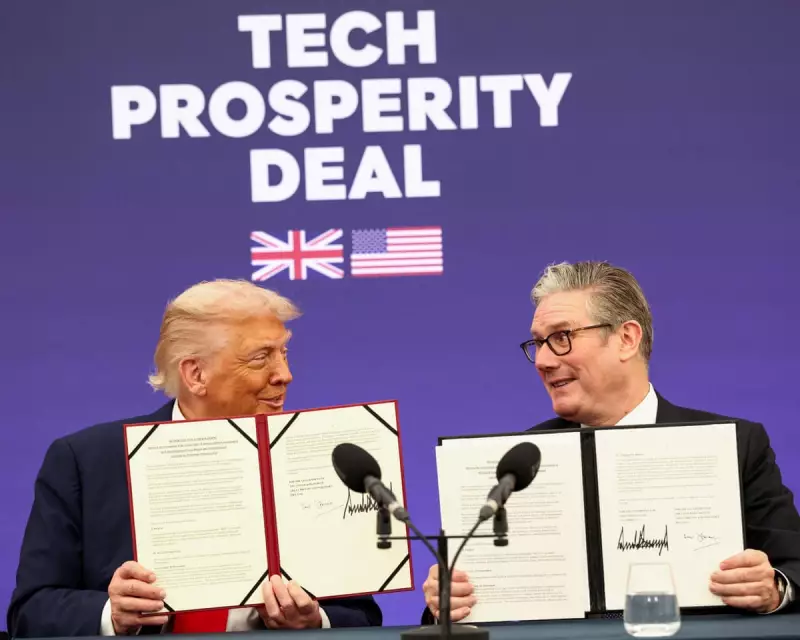
A major £31 billion technology and prosperity agreement between the United Kingdom and the United States has been suspended by Washington, dealing a significant blow to bilateral relations and a flagship policy of Prime Minister Keir Starmer.
The Deal on Hold: A Major Setback for UK Tech Ambitions
The deal, which was announced with great fanfare during US President Donald Trump's state visit to the UK in September, promised to unlock massive investment from American tech giants. It included a £22 billion pledge from Microsoft and a £5 billion commitment from Google, aimed at supercharging the British technology sector.
Central to the agreement was the creation of an artificial intelligence 'growth zone' in north-east England, a project UK officials claimed could attract up to £30bn and create 5,000 jobs. Prime Minister Starmer hailed the pact as a "generational step-change" that renewed the special relationship for a new era.

However, the US has now paused the implementation of the entire agreement. Washington officials have pointed to a lack of satisfactory progress from the UK side on lowering long-standing trade barriers.
Key Sticking Points: Digital Tax and Food Standards
According to reports, the Trump administration's frustrations centre on several specific UK policies. A primary point of contention is Britain's 2% digital services tax, which is levied on the revenues of large tech firms like Amazon, Google, and Apple, raising approximately £800 million annually for the Treasury.
President Trump has repeatedly threatened retaliation against countries implementing such taxes. Despite pressure, the Starmer government has so far resisted US calls to scrap or substantially amend the levy.
Other major hurdles include:
- UK food safety rules, which block the import of certain American agricultural products like chlorine-washed chicken and hormone-treated beef.
- Online safety regulations, with the US pushing for a review of their enforcement.
British ministers have acknowledged the US objections but have stood by their manifesto commitment not to dilute farming standards, a move that would be highly controversial with British farmers and consumers.
Negotiation Hardball and the Path Forward
British government sources have sought to downplay the suspension, characterising it as "the usual bit of hardball negotiations by the Americans." One official noted that a separate deal on tariff-free British pharmaceutical exports had also been "on and off" before it was finalised.
"[US Commerce Secretary] Howard Lutnick is a tough guy. We understand that the Americans negotiate incredibly hard but we'll stand our ground," a source said.
Business and Trade Secretary Peter Kyle was in the US last week for talks with Lutnick, US Trade Representative Jamieson Greer, and Treasury Secretary Scott Bessent. Discussions also covered whisky and steel tariffs, as well as collaboration on critical minerals. Further negotiations are scheduled for January.
A UK government spokesperson stated: "Our special relationship with the US remains strong and the UK is firmly committed to ensuring the tech prosperity deal delivers opportunity for hard-working people in both countries."
The development coincides with Prime Minister Starmer interviewing final candidates for the crucial role of British Ambassador to Washington, underscoring the delicate state of current transatlantic diplomacy.