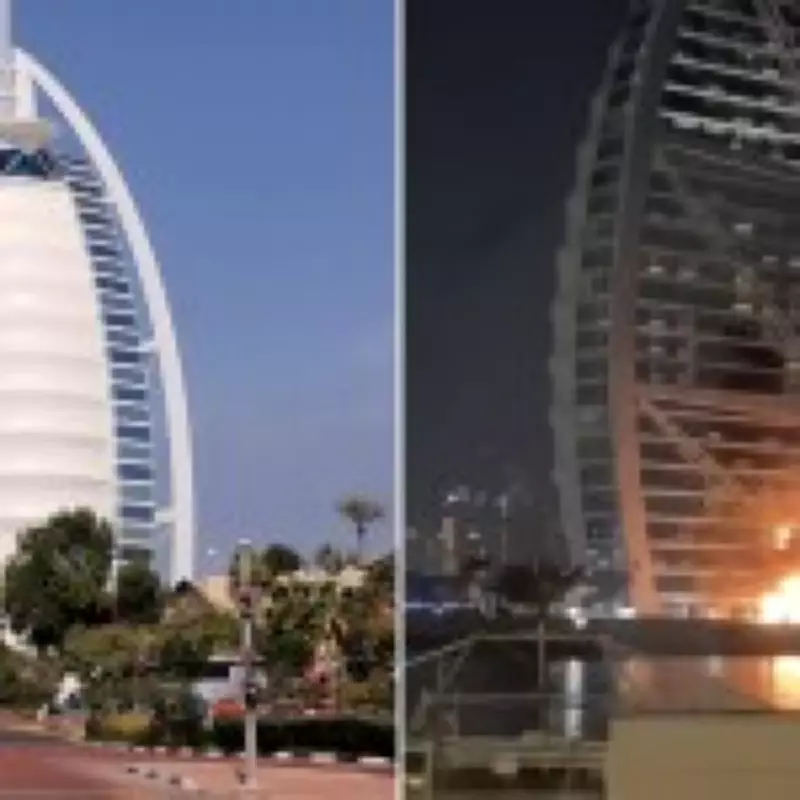
Burj Al Arab Hotel Survives Iranian Drone Strike Thanks to 30-Year-Old Safety Design
In a dramatic escalation of Middle East tensions, the world-renowned Burj Al Arab hotel in Dubai became an unexpected target during Iranian retaliation strikes this past weekend. The iconic structure, standing 321 meters tall on its own private artificial island near Jumeirah Beach, was struck by fragments from an intercepted Iranian drone, setting parts of the 60-story five-star hotel ablaze.
Miraculous Survival Without Casualties
Despite terrifying footage showing flames and smoke pouring from the upper levels of what is recognized as the sixth-tallest hotel globally, authorities confirmed no deaths or injuries resulted from the attack. This remarkable outcome has been attributed to sophisticated fire and smoke safety systems implemented during the hotel's construction over three decades ago.
Stephen Ferguson, who helped design these critical safety features as one of his first engineering projects, described watching the events unfold as witnessing "the worst case scenario you planned for come true." Now serving as a Green Party councillor for St Neots, Ferguson explained that when designing the systems in the 1990s, the team utilized what were then considered supercomputers to simulate smoke spread patterns.

Engineering That Stood the Test of Time
"This was the ultimate test of the designs," Ferguson told media outlets. "If you had told me 30 years ago the fire risk would have been caused by a drone strike, I would have found it hard to believe. When you are testing and implementing these designs, you obviously can't start a big fire in the hotel to see what would work, so you have to put your faith into what you have made."
The engineering team faced particular challenges with the hotel's unique architecture. They needed to ensure that:
- All balconies would remain clear of smoke accumulation
- Occupants on upper floors could contend with buoyant hot air traveling upward
- People would maintain visibility of emergency exits despite smoke conditions
Ferguson elaborated on their solution: "We designed the air conditioning systems to suck out enough air they can pump out smoke. It's the kind of thing you hope never has to be done, but it's such a relief it seems to have worked."
Broader Regional Escalation
The attack on Dubai's most recognizable hotel occurred within a broader context of regional military escalation. Hours before the strike, the United States and Israel had launched military action against Iran, prompting Tehran's retaliation across multiple Middle Eastern locations.
In related developments, two drones struck the U.S. Embassy in Saudi Arabia, with reports indicating a blast was heard and black smoke seen rising from the building. No injuries were reported in that incident either, as the embassy was empty during early morning hours. Former U.S. President Donald Trump has vowed retaliation for the embassy attack, telling News Nation that "you're going to find out soon" what form that response would take.
The Burj Al Arab incident represents a sobering moment for architectural safety engineering, demonstrating how designs created for conventional fire risks can prove unexpectedly vital in unprecedented conflict scenarios. As Middle East tensions continue to simmer, the hotel's survival stands as a testament to forward-thinking engineering that protected lives during what Ferguson described as an "unthinkable scenario."