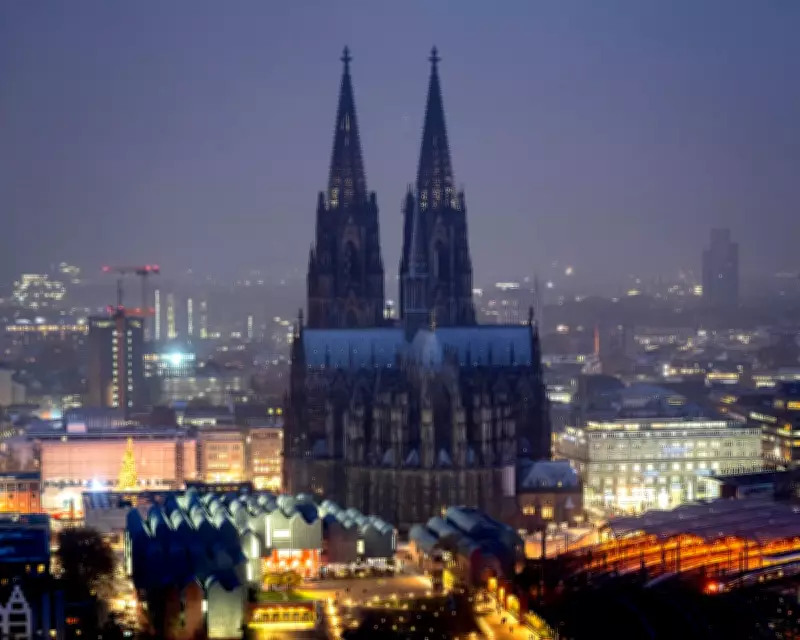
Cologne Cathedral's Controversial Ticket Plan Ignites Social Justice Debate
Plans to introduce visitor fees at Cologne Cathedral, the world's tallest twin-spired church, have sparked a significant outcry across Germany. Critics are warning that charging admission would create a socially unjust barrier, effectively limiting access to one of Europe's most iconic Gothic structures to only those who can afford it.
The Financial Imperative Behind the Fees
Cathedral officials announced this month that the majestic building, which towers over Cologne's main railway station along the Rhine River, can no longer be maintained without establishing a new revenue stream. They revealed a scheme to begin selling tickets starting in July, with admission prices estimated between €12 and €15 (£10 to £13). Worshippers attending services would be exempt from these charges.
The financial pressures have become increasingly severe. Inflation and high staffing costs for 170 employees have driven up maintenance expenses, while cash reserves that previously filled financing gaps have largely dried up. This depletion was exacerbated during the COVID-19 pandemic when fee-paying visits to the cathedral's 157-meter towers and treasure chamber were halted for extended periods.

According to the church's website, maintaining the cathedral costs €16 million annually, while income reached just under €14 million in 2024. This shortfall has persisted since 2019, creating an unsustainable financial situation despite cost-saving measures like reducing staff through attrition.
A Heated Social Justice Controversy
Architect Barbara Schock-Werner, who heads the non-profit Zentral-Dombau-Verein zu Köln association supporting the cathedral's conservation, has emerged as a vocal critic. With over 19,000 members, her organization plays a crucial role in preserving the historic structure.
"I would find that unfair to the people of Cologne and the surrounding region," Schock-Werner told the local newspaper Kölner Stadt-Anzeiger. "If only the well-off can afford to go into a church, I think that's socially unjust."
The architect, who oversaw conservation and restoration work until her retirement in 2012, expressed deep regret that Germany's most famous church would begin charging tourists at all. "There must also be non-commercial spaces. People shouldn't have to pay for everything – least of all for visiting a church," she emphasized, arguing that any fee above €10 would be irresponsible.
The Cathedral's Monumental Significance
Cologne Cathedral stands as an architectural marvel with profound historical significance. Construction began in 1248 and was finally completed in 1880, creating a structure that has become the most recognizable symbol of Cologne's urban skyline. The cathedral joined UNESCO's World Heritage list in 1996 and attracts approximately six million visitors annually.
The building serves as a powerful reminder of resilience, having survived sustained Allied bombing during World War II, including the RAF's first 1,000-bomber raid in 1942. Though badly damaged, the cathedral remained standing amid a landscape of rubble, becoming a symbol of hope and endurance.
Among its many treasures are custom-designed pixelated stained-glass windows by renowned painter Gerhard Richter, installed in 2007. These 20-meter windows, which cast brilliant shadows on the mosaic floors, have themselves become a significant tourist attraction.
Divergent Perspectives on Visitor Fees
Interestingly, Gerhard Richter, now 94, has expressed support for visitor fees at the church. He noted that other great European cathedrals, such as Milan's, have long collected such revenues. Cathedral dean Guido Assmann revealed that tourists account for 99% of visitors, with those entering the nave for services, lighting candles, or praying in most areas remaining exempt from the new admission fee.

The debate occurs within a broader European context where charging for cathedral access varies significantly. In Germany, most churches remain freely accessible to the public, though exceptions exist. Berlin Cathedral charges €15 for a standard viewing ticket, while other major European cathedrals command even higher prices: Sagrada Família in Barcelona costs €26, and Vienna's St. Stephen's Cathedral charges €29.
Another major European tourist attraction, Rome's Trevi Fountain, recently introduced a €2 entry fee to help manage crowds and pay for the monument's upkeep. The fountain attracted over 10 million visitors in 2025 alone, highlighting the growing trend of implementing fees at popular heritage sites.
As Cologne Cathedral prepares to implement its controversial ticket system, the debate continues to rage between financial necessity and social responsibility, raising fundamental questions about who should have access to cultural and religious heritage in an increasingly commercialized world.