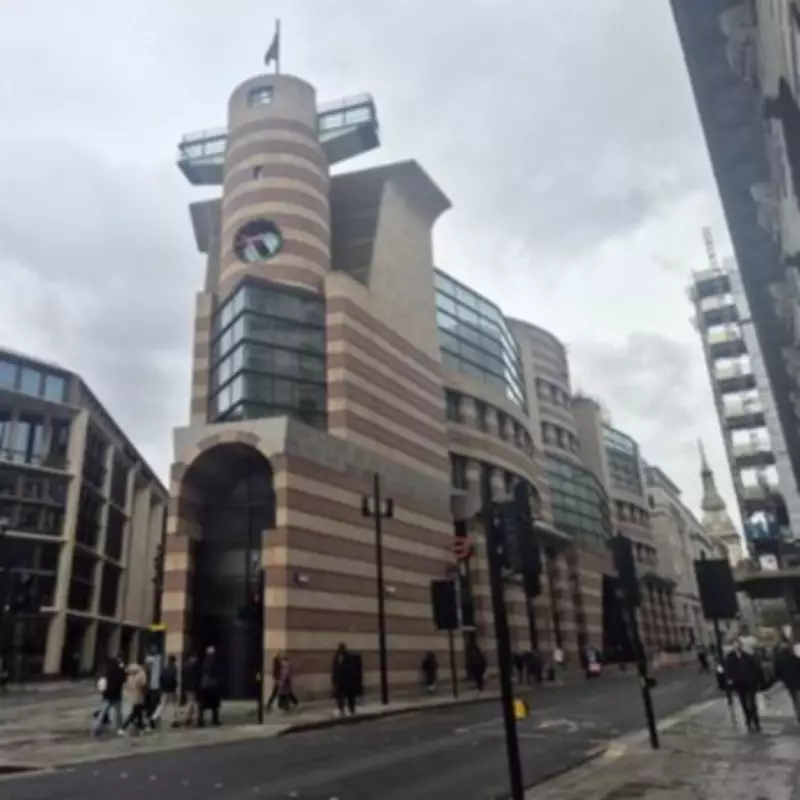
Iconic London Building to Lose Rooftop Restaurant in Major Refurbishment
A prominent Grade II*-listed building in the heart of London's financial district is set to undergo significant changes that will see its rooftop restaurant removed and office space expanded. The City of London Corporation's Planning Applications Sub-Committee has approved refurbishment plans for No 1 Poultry at Bank Junction, marking a controversial shift for the architectural landmark.
Architectural Heritage Meets Modern Demands
No 1 Poultry, designed by renowned architect Sir James Stirling and completed in 1998, is recognized for its distinctive color scheme and postmodern design. The building has a storied history, having been subject to two public inquiries before finally receiving consent from the House of Lords in 1991. The latest proposal, submitted in December 2025, represents the most substantial alteration to the building since its completion.
The approved scheme will see the removal of the Coq d'Argent restaurant from the roof level and the conversion of that space into additional office accommodation. Public access to the Rotunda Garden will be eliminated, with this area repurposed as ancillary outdoor space for office workers. Only the Apex Garden will remain publicly accessible, though through a reopened ground floor entrance with a capacity limited to 80 people.

Heritage Concerns and Objections
The proposals drew significant opposition from heritage groups and individuals connected to the original design. Philip Palumbo, whose father Lord Palumbo commissioned the building, criticized the plans as "short-sighted," particularly highlighting concerns about the loss of public access to rooftop spaces.
Laurence Bain, speaking on behalf of the former directors of James Stirling Michael Walford and Associates Ltd (JSMWAL), delivered particularly strong objections. Appointed as project architect for the original scheme, Bain argued that the building's decline in performance resulted from "mismanagement and lack of coordination" rather than design flaws.
"Public access to the roof gardens would be significantly diminished by proposals that are unworkable from both design and technical viewpoints," Bain stated in his objection. He further claimed the applicant had failed to demonstrate how the scheme would improve the site's economic viability, suggesting the primary motivation was simply "to acquire as many public square feet for the use of office space."
Planning Committee Debate and Decision
During the March 25th sub-committee meeting, planning officers presented a report contesting the extent to which the rooftop areas had ever been truly public spaces. They noted that access had always been "commercially managed" and conditional on being a restaurant customer, with the Apex Garden opened only at the operator's discretion and when weather permitted.
The debate among committee members revealed divided opinions. Councillor Shravan Joshi, former Planning and Transportation Chair, supported the application, arguing that "there's little point in us having dormant monuments that celebrate brilliant architecture. We have to have buildings that are vibrant, that are full of people."
In contrast, Deputy Marianne Fredericks expressed regret that she couldn't support specific elements while rejecting others, stating she could not approve the proposal due to the loss of public space. "The experience of the rooftop as part of the wider building was unique in the City," she noted, "which would be lost if the application was green-lit."
Approval with Conditions
Committee Chair Deputy Tom Sleigh framed the decision as being "about your appetite for change," highlighting the proposal's potential to create "a more sustainable building, a high quality office space, new public space, and a public space which works better."
The scheme ultimately received approval with nine members voting in favor, six against, and one abstention. Conditions include maintaining the Apex Garden's public accessibility for a minimum of 1,600 hours annually, though officers suggested these hours might be extended based on feedback received during the meeting.

This decision represents another chapter in No 1 Poultry's complex history, balancing preservation of architectural heritage against the evolving needs of London's commercial landscape. The refurbishment aims to enhance the building's commercial function while maintaining some public access, though in a significantly reduced capacity compared to previous arrangements.