Rammed Earth: An Ancient Building Material for a Sustainable Future
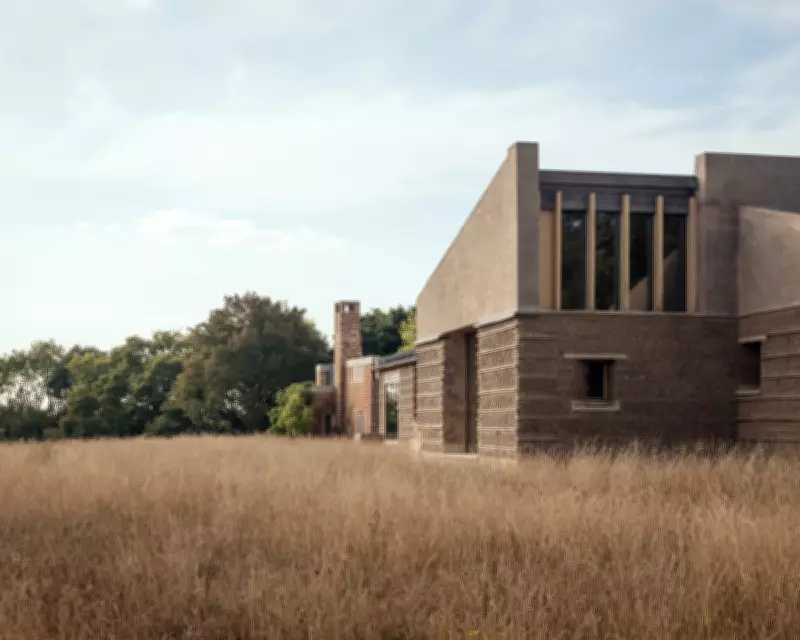
In the picturesque countryside of Wiltshire, a unique homestead stands as a testament to an ancient building technique that is experiencing a remarkable resurgence. The Rammed Earth House, nestled within the Cranborne Chase area, represents one of the few contemporary projects in the United Kingdom constructed entirely from unstabilised rammed earth. This traditional material, which dates back to the Neolithic period, consists of compacted earth and is gaining renewed attention from architects and builders seeking sustainable alternatives in an industry responsible for over one-third of global carbon emissions.
The Circular Construction Process
The construction of the Rammed Earth House exemplifies the principles of circular economy within the building sector. Material recycled from demolished outbuildings on the site was ingeniously repurposed to create the structure. Furthermore, the project benefited from the clay-rich soil naturally present on the grounds of the former brickworks where it is located. This approach minimises waste and reduces the need for transporting materials over long distances, thereby lowering the overall carbon footprint of the construction process.
Emaad Damda, a lead architect at Tuckey Design Studio, which worked on the Wiltshire project, emphasises the growing relevance of rammed earth in the context of climate change. "The fact that our temperatures in northern Europe and other temperate climates are rising means that rammed earth, as a material, offers thermal mass, temperature regulation, and moisture control," Damda explains. These properties make it particularly suitable for creating energy-efficient buildings that can adapt to changing environmental conditions.

Addressing Global Housing and Environmental Challenges
The revival of rammed earth comes at a critical juncture for the global construction industry. With urban populations projected to expand significantly—for instance, the OECD reports that Africa's urban population is expected to double to 1.4 billion by 2050—the demand for housing and infrastructure is intensifying worldwide. Concurrently, the construction sector remains a major contributor to greenhouse gas emissions, prompting architects and engineers to explore bio-based materials like bamboo and earth as viable solutions.
Jonathan Tuckey, founder of Tuckey Design Studio, highlights the geological suitability of earth as a building material. "If you find a geological map of the world where seams of clay run underneath the surface, earth is—by no coincidence—used as a building material," Tuckey notes. This natural abundance allows for local sourcing, which can significantly reduce the environmental impact associated with material extraction and transportation.
Overcoming Practical and Regulatory Hurdles
Despite its advantages, the adoption of rammed earth in modern construction faces several challenges. The material's composition varies depending on local soil conditions, which can lead to inconsistencies that complicate building regulations and home insurance approvals. Additionally, rammed earth is vulnerable to erosion from rain and damage from low temperatures, which are common features of the British climate.
Antonio Moll, a tutor of environmental and technical studies at the Architectural Association, points out that "the enemy of rammed earth is water and low temperatures." To mitigate these issues, some projects use "stabilised" rammed earth, which incorporates additives like lime or cement. However, this approach can undermine the low-carbon benefits of using earth in the first place, leading some to refer to it as "dirty concrete."
Innovative Approaches and Urban Applications
To address these challenges, architects are developing innovative methods for incorporating rammed earth into contemporary building practices. For example, Moll's studio is working on Orchard House, a residential building block in Dartford that utilises prefabricated rammed earth blocks manufactured in a Spanish factory and then transported to the site. While this involves some carbon emissions from importation, Moll argues that the overall environmental benefits still outweigh those of conventional bricks.

Roger Boltshauser, a Swiss-based architect advocating for rammed earth construction in Europe, is optimistic about the potential for localised production. He suggests that prefabricated blocks could be produced within a 300-kilometre radius of building sites to minimise carbon emissions. Boltshauser's practice has repurposed former cement and brick factories for this purpose, aiming to standardise blocks and streamline regulatory approvals.
Far from being limited to rural settings, rammed earth is also making its way into urban landscapes. Matthias Peterseim, an architect at Boltshauser's studio, notes that their first rammed earth buildings were actually constructed in Zurich. By combining earth with materials like glass and timber, these structures blend seamlessly into city environments while avoiding the use of cement, which is harder to recycle.
Aesthetic and Environmental Benefits
Beyond its sustainability credentials, rammed earth offers distinct aesthetic and sensory advantages. Jonathan Tuckey describes the atmosphere within the Rammed Earth House as uniquely different from conventional buildings. "Acoustically, in terms of the softness of sound and light, the filtering of air—it has so many benefits," Tuckey says. "It produces incredibly beautiful spaces to live in, to work in, and to be in."
The ingenuity of unstabilised rammed earth lies in its ability to create a truly circular construction process. Materials are sourced locally, used to build structures, and can eventually be returned to the earth if demolition becomes necessary. This closed-loop system not only reduces waste but also aligns with broader environmental goals, such as those outlined in urban sustainability initiatives and climate action plans.
As the construction industry continues to seek ways to mitigate its environmental impact, the revival of ancient techniques like rammed earth offers a promising path forward. By learning from historical building cultures—such as medieval structures in Morocco, cited by Boltshauser as inspiration—modern architects can develop solutions that address contemporary challenges while honouring traditional wisdom. The growing interest in materials that prioritise sustainability, beauty, and practicality suggests that rammed earth may well become a mainstream choice for eco-conscious building projects across the United Kingdom and beyond.