Trump's Gaudy Vision for America's 250th Anniversary Celebration
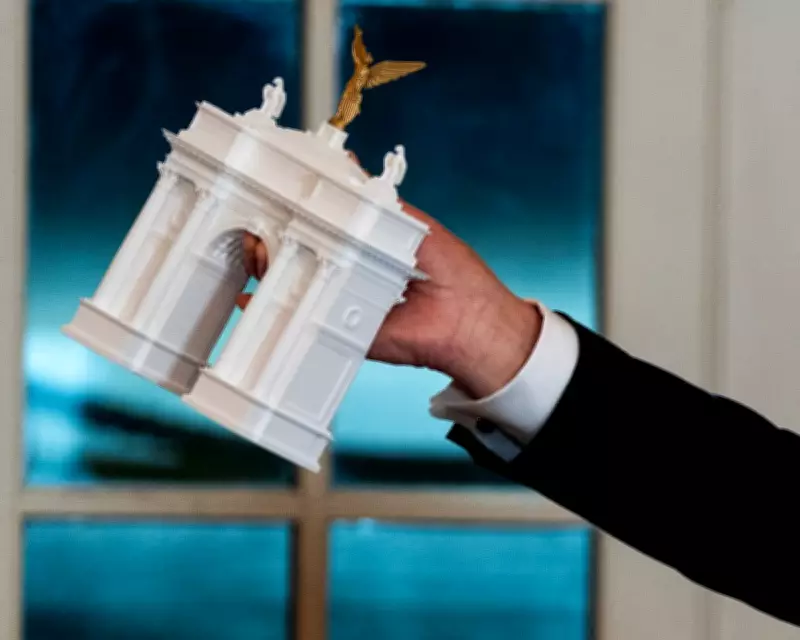
As the United States approaches its semiquincentennial in 2026, former President Donald Trump has unveiled a series of controversial proposals that starkly contrast with the nation's previous commemorative efforts. The centrepiece of his vision is a monumental 250-foot arch, initially dubbed the "Arc de Trump" and later rebranded as the Independence Arch, which would tower over the Potomac River opposite the Lincoln Memorial in Washington DC.
From Modernist Progress to Golden Spectacle
When America celebrated its bicentennial in 1976, the nation marked the occasion with the opening of the National Air and Space Museum's modernist exhibition hall on the National Mall. Designed by the prestigious firm Hellmuth, Obata + Kassabaum, this architectural statement reflected American technological advancement and forward-looking optimism, despite the political turbulence of the Watergate era.
Fifty years later, Trump's approach represents a dramatic departure from this tradition of progressive commemoration. His recently shared designs for the Independence Arch feature three variations, all modelled on Rome's first-century Arch of Titus, with differing degrees of elaborate gilding and statuary. Architectural critics have already described the most ornate version as exemplifying "regional car dealership rococo," reflecting Trump's well-documented preference for ostentatious display.

Monumental Ambitions and Historical Parallels
Trump has reportedly settled on the largest proposed scale for his arch, embracing the symbolic "250 for 250" concept - one foot for each year of American existence. At 250 feet, it would significantly surpass the 164-foot Arc de Triomphe in Paris, a comparison Trump himself highlighted during a White House Christmas reception, declaring "we're gonna top it by, I think, a lot."
This fascination with triumphal arches follows a historical pattern among authoritarian figures, most notably Adolf Hitler's collaboration with architect Albert Speer on a planned 328-foot arch for postwar Berlin. Trump's architectural ambitions extend beyond the Independence Arch, including controversial mandates requiring "classical" or "traditional" styles for federal buildings, which critics argue represent an attempt to control public space and suppress progressive architectural expression.
Beyond Architecture: UFC Fights and Presidential Currency
The arch represents just one element of Trump's unconventional semiquincentennial proposals. His plans reportedly include staging Ultimate Fighting Championship events in a temporary arena on the White House's south lawn and minting $1 coins featuring his own likeness, which would contravene an 1866 law prohibiting living persons from appearing on US currency.
These proposals have raised eyebrows even among some conservative circles, with the cage fight concept particularly striking observers as unprecedented for any presidency. Trump's approach appears calculated to create spectacle and controversy in equal measure, reflecting what some commentators describe as his "killer clown proclivities" enabled by acquiescent allies across public and cultural institutions.
Preservation Pushback and Public Stewardship
Not all of Trump's proposals have met with passive acceptance. His controversial plan to shutter and redevelop the Kennedy Center - a celebrated work of modernist architecture by Edward Durell Stone completed in 1971 - has sparked significant opposition from preservation organisations.
Docomomo US, a heritage body dedicated to conserving modern buildings, has emerged as a vocal critic of the Kennedy Center proposals. Executive director Liz Waytkus emphasised that "the Kennedy Center is a celebrated work of modern architecture and a landmark achievement" that "belongs to the public and must be stewarded transparently, not treated as private assets." The organisation has joined with other groups to assert the public's right to participate in decisions affecting nationally significant cultural sites.

Imperial Aspirations and Mortal Realities
In co-opting historical symbols for his personal brand of spectacle, Trump appears to envision himself as a modern Roman emperor, using architecture and public events to project power and legacy. His preference for classical templates and golden embellishments represents a deliberate rejection of the modernist principles that characterised previous American commemorations.
Yet as Trump pursues these grandiose plans, critics recall the tradition of Roman triumphs where a servant would whisper "memento mori" - remember you are mortal - to victorious generals during their victory parades. This ancient reminder of transience and humility stands in stark contrast to Trump's monumental ambitions, serving as a poignant counterpoint to his efforts to stamp his "crassly gilded imprimatur" on the nation's 250th anniversary celebrations.
The debate over these proposals continues to unfold, reflecting deeper tensions about American identity, presidential legacy, and how a nation chooses to commemorate its history while facing its future.