'Was I scared going back to China? No': Ai Weiwei's Momentous Return
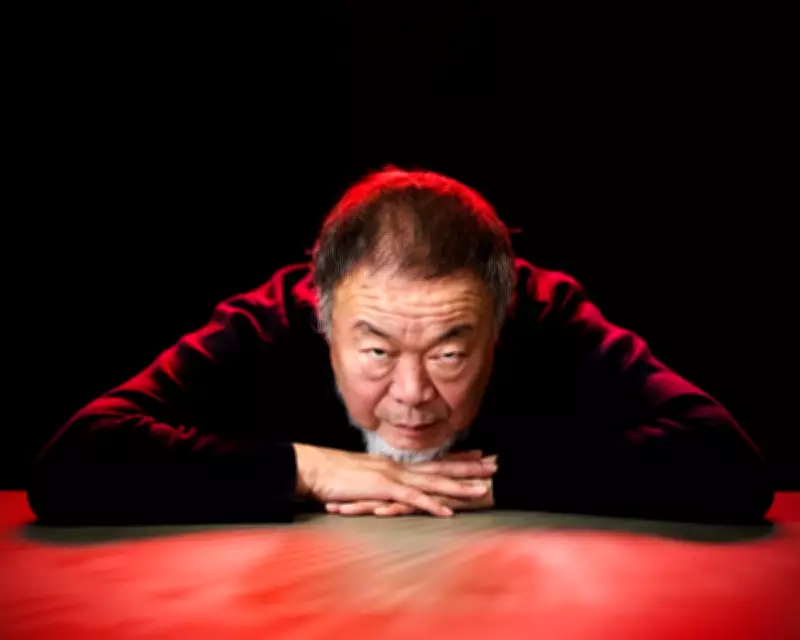
After more than a decade in exile, the world-renowned artist and activist Ai Weiwei made a dramatic return to his homeland, describing the experience as 'like a phone call suddenly connecting'. In an exclusive interview, the 68-year-old artist reveals the emotional and political calculations behind his first visit to China since his detention by authorities.
The Weight of Homecoming
Before boarding the flight with his 17-year-old son Lao, who had never met his grandmother, Ai Weiwei confronted memories of his 81-day detention in 2011. 'They said, 'When you come out, your son won't recognise you',' he recalls of his captors' threats. 'That was very heavy and really the only moment that touched me.'
The artist, known globally as China's most prominent critic, faced the possibility of not seeing his elderly mother again. 'People said, 'Are you scared?' I said, 'No, why should I be scared?' I'm Chinese. I have a Chinese passport. I'm entitled to go back and see my mum,' he states defiantly.

A Fragmented Reality
His journey proved surprisingly smooth. After being interviewed at the airport for a couple of hours, he was released into a country whose familiar sensations provided unexpected comfort. 'It was like a piece of jade broken that you can put back together because it matches very well,' he poetically describes. 'Everything's so familiar: the light, the temperature, the people.'
This homecoming comes as Ai Weiwei publishes 'On Censorship', a 90-page polemic examining state control, artificial intelligence, and surveillance. Born in Beijing in 1957 and raised in labour camps after his poet father's exile, the artist brings personal experience to his analysis of power dynamics.
Art as Political Statement
Ai Weiwei's artistic career has been as dramatic as his personal history:
- 1,600 Chinese artisans created 100 million hand-painted porcelain seeds for his Tate Modern Turbine Hall installation
- 14,000 fluorescent orange lifejackets cloaked Berlin's Konzerthaus in a refugee tribute
- A film dedicated to children who died in the 2008 Sichuan earthquake challenged official narratives
- An upcoming Manchester exhibition features 30 tonnes of buttons smuggled into China for transformation
His new book argues that western societies misunderstand censorship, defining it as 'the exercise of power over intellectual space' and warning that 'even on sunny days, shadows are inevitable'.
Surprising Political Alignments
The interview reveals unexpected political perspectives. Ai Weiwei discusses his 2018 selfie with AfD leader Alice Weidel, whose far-right party advocates for 'large-scale repatriations' of foreigners. While acknowledging some of Weidel's positions 'could be wrong', he praises her as 'more rational than other political opponents in Germany' and supports her call for German independence from American influence.
His assessment of China has also evolved. He now describes the nation as 'in an upward phase' technologically and personally, while criticising the west for losing its 'ethical authority' and descending into something 'barely recognisable'.
Censorship in the West
Ai Weiwei claims to experience similar surveillance and censorship in western countries as in China. He recounts an incident involving the Royal Academy in London, where an exhibition was cancelled after he posted a controversial tweet about Jewish persecution. Although Academicians voted to retain his membership, he says an article he wrote about free speech for the RA's magazine was rejected due to 'lack of space'.
'I have several cases like this,' he reveals. 'Happens in Britain and in Germany.' The RA disputes his account, stating the decision was made before submission and emphasising their commitment to 'plurality of voices, tolerance and free thinking'.

A Shattered Mirror World
Looking toward 2026, Ai Weiwei paints a bleak picture for free expression. 'Today we are living in a complicated world, where life is more like a shattered mirror,' he reflects. 'It reflects the reality, but the reality can be a broken reality.'
When asked if his China trip restored faith in humanity, he pauses before responding with characteristic wit: 'If we were in the time of the Tang dynasty, someone like me would go back and write beautiful poetry. But not today. I just take a few selfies.'
The artist continues to divide his time between Lisbon, Berlin, and Cambridge, maintaining his Chinese passport while navigating the complex realities of global censorship and artistic freedom in an increasingly fragmented world.