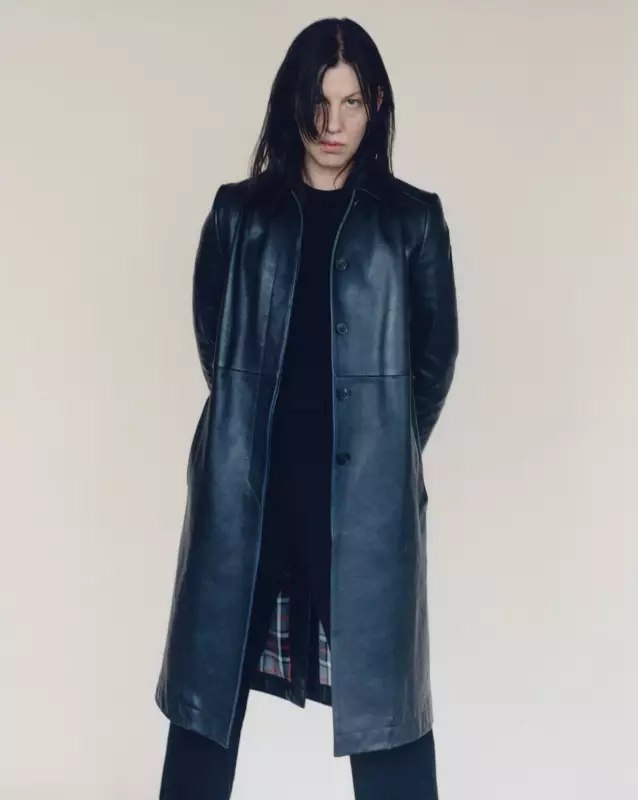
Anne Imhof: Navigating Art World Acclaim and Controversy
"Revolutions don't happen inside a museum," declares Anne Imhof, one of Germany's most significant contemporary artists, during a revealing interview about her evolving career trajectory. This statement encapsulates her complex relationship with the art establishment, fashion industry, and critical reception that has defined her journey from international sensation to polarising figure.
From Venice Triumph to New York Criticism
Just a few years ago, Imhof represented the art world's most sought-after ticket following her groundbreaking 2017 Venice Biennale presentation. Her transformation of the German pavilion - originally redesigned by Nazis in 1938 - into what critics described as a "sinister, S&M-flavoured catwalk show from hell" earned her the prestigious Golden Lion award. The installation featured menacing Dobermans patrolling outside, performers in black sportswear roaming beneath raised glass floors, and created what many considered the definitive Instagram-ready art experience of its era.
However, her 2025 New York exhibition at the Park Avenue Armory, titled "Doom: House of Hope," received markedly different treatment from critics. Major US broadsheets offered mixed reviews while influential online publications like Hyperallergic delivered what Imhof describes as "proper drubbings." One particularly stinging headline characterised the show as "a bad Balenciaga ad" - a comparison that visibly irritated the artist during our conversation.

Fashion Collaborations and Artistic Integrity
Imhof's increasing visibility within fashion circles has undoubtedly contributed to shifting perceptions of her work. Having served as a semi-official muse for Balenciaga designer Demna, she created a moody lockdown show for Burberry in 2020 and staged a Nike-sponsored "battle of the bands" performance last year. Most recently, she appeared with partner Devon Teuscher in Valentino's advertising campaign, photographed in a hotel bed dressed in the Italian brand's latest collection.
German newspaper Welt suggested her career was becoming "a cautionary tale of what happens to artists who get into bed with the fashion industry," noting that "one front-row appearance is one too many." This criticism reflects broader tensions within contemporary art regarding commercial collaborations and perceived authenticity.
Political Dimensions and Artistic Evolution
When questioned about whether she feels pressure to make her work more explicitly political, Imhof offers a nuanced response. "I think I have a responsibility towards my work," she explains, "but also towards the people I work with, not to make political statements just to make pieces more desirable. It's not that I think art isn't political - on the contrary."
Her current exhibition in Porto, "Fun ist ein Stahlbad" (Fun is a Steel Bath), represents a deliberate shift in approach. Where previous installations emphasised immersion, this show features deliberately uninviting sculptures including an empty black metal swimming pool and a grid of crowd-control barriers. "The viewer confronts a sculpture that already embodies control rather than being guided through it," Imhof observes. "The body becomes a site of thought, movement a form of intelligence - that is inherently political."
Between Accessibility and Autonomy
Imhof's debut album "WYWG" (Wish You Were Gay), containing songs written in the early 2000s, demonstrates her continued engagement with multiple artistic forms. The music bears influences from challenging acts like Genesis P-Orridge and Black Flag while occasionally revealing surprising melodic accessibility reminiscent of the Velvet Underground.
"I think there is a need or a desire of mine to make my work accessible," she acknowledges. "I don't think the future of art lies in making it into some elite bubble." This philosophy extends to her fashion collaborations, which she defends as strategic engagements rather than surrenders of artistic autonomy. "When I talk about mimicry," she clarifies, "I mean a strategy for staying alert within powerful systems, including social structures, as a means of survival."

Legacy and Future Directions
As Imhof approaches fifty, her career exemplifies the complex negotiations contemporary artists must navigate between critical acclaim, commercial opportunity, and artistic integrity. Her work continues to explore themes of control, visibility, and resistance while engaging with popular culture in ways that challenge traditional art world boundaries.
"Fashion and art are not separate moral systems," she concludes. "They both involve labour, production, and circulation that aren't fully transparent. For me, the question is more about agency: who makes decisions, who is involved, and whether the work can maintain its critical position while moving through these systems." This ongoing exploration ensures that Anne Imhof remains one of contemporary art's most compelling and controversial figures.