London's Black Queer Clubland Exhibition Reveals Four Decades of Nightlife
A compelling new archival exhibition in London is bringing to light the vibrant and often overlooked history of Black queer club culture. Spanning from the late 1970s to 2021, Reunion 79-21: Revisiting Black Queer London Clubland presents a visual journey through decades of riotous nightlife, from pioneering drag queens to wild voguing performances.
Documenting a Cultural Movement
The exhibition traces the emergence and evolution of Black queer club culture against a backdrop of significant social challenges. These include racial exclusion, homophobia, the devastating HIV/Aids crisis, urban gentrification, and the persistent erasure of Black queer histories from mainstream cultural narratives.
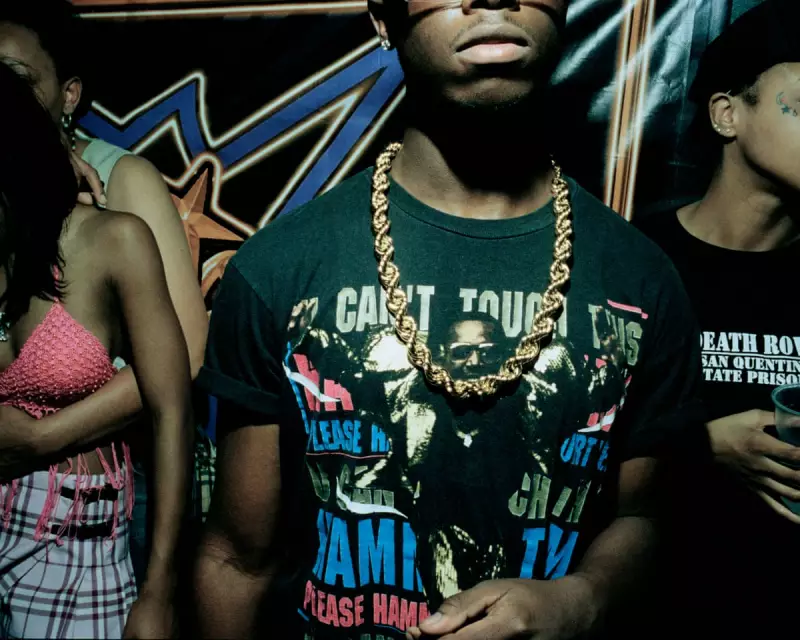
Photographer Jason Manning, whose work features prominently in the exhibition, reflects on his approach to documenting these spaces. "Being outside of a situation or scene can be a useful position to be in and can facilitate the documentation process," Manning explains. "At the same time, participating, even momentarily, can be a rewarding process both in terms of capturing material and feeling closer to the subject matter."

Intimacy and Inclusivity in Nightlife Photography
Manning's photographs capture the unique atmosphere of London's Black queer clubs, where permissive spaces allowed for fresh and innovative fashion statements that blurred boundaries between irony, acceptability, and taste. "The crowd will always bring their own colour to the event in more or less subtle ways," he observes.
Discussing his most successful images, Manning notes: "My most successful nightlife images are often ones that depict intimacy. Sometimes my presence as a photographer is hardly noticed as a result. Photography can be intrusive but I like to think my intrusions are a celebration and positive appreciation of the environment and the people in it."
Historical Perspectives from Clubland Pioneers
The exhibition also features work from photographer Dave Swindells, who began documenting the scene through personal connections. "Photographers often start out by snapping their family and friends, and I did the same," Swindells recalls. "I was fortunate that my brother Steve was a club promoter, so my first nightlife photos were taken at The Lift, a pioneering gay night where the music was mostly Black American imports and the crowd were predominantly queer and very diverse."
Swindells captures iconic moments from legendary venues including The Candy Bar in Soho, Area in Vauxhall, and the spectacular Kinky Gerlinky parties at Café de Paris. His images document everything from Roy Inc's first drag performance to Winn Austin's magisterial hosting of voguing balls just as Madonna's "Vogue" topped the charts.
Preserving Cultural Heritage
The exhibition serves as an important archival project, preserving moments that might otherwise be lost to history. From the polysexual atmosphere of early clubs to the boundary-pushing fashion and performance culture that developed in these spaces, Reunion 79-21 offers a comprehensive look at how Black queer Londoners created community and expressed identity through nightlife.
Curated by Shaun Wallace, the exhibition runs until 25 January at the Great Pulteney Street gallery in London, providing visitors with a rare opportunity to engage with this significant chapter of London's cultural history.