Cecily Brown's Triumphant Return to London: A Journey from YBA Outsider to Serpentine Sensation
In the early 1990s, Cecily Brown departed London, a city where her painterly pursuits felt hopelessly unfashionable amidst the rise of the Young British Artists (YBAs). Now, decades later, she has returned with a blockbuster exhibition at the Serpentine Gallery, and the art world has finally embraced her perspective. Brown's story is one of resilience, artistic integrity, and a profound connection to nature and heritage.
Escaping the YBA Shadow: A Painter's Struggle in 1990s London
While contemporaries like Damien Hirst and Sarah Lucas were making headlines with provocative installations and performances, Brown remained dedicated to her palette and brush. "There was this feeling in London at the time that if you were a painter, you were a loser," she recalls. "I didn't feel like a saddo for being a painter in New York." Her move to the United States in 1994 was not an escape from admiration but a search for a community where her craft could flourish without judgment.
Artistic Evolution: From New York Recognition to Global Acclaim
Brown's career trajectory has been nothing short of remarkable. Signed by the mega-gallery Gagosian in her twenties, her works now reside in prestigious institutions like MoMA and the Tate. Recent surveys, including one at the Metropolitan Museum of Art in New York, have cemented her status. Her paintings, characterized by their slippery complexity and rich allusions, command millions, positioning her among the most valuable living female artists. Despite this success, ahead of her Serpentine show, she admits to nerves, driven by a desire to continually improve and prove her worth.

Picture Making: A Celebration of Nature and Instability
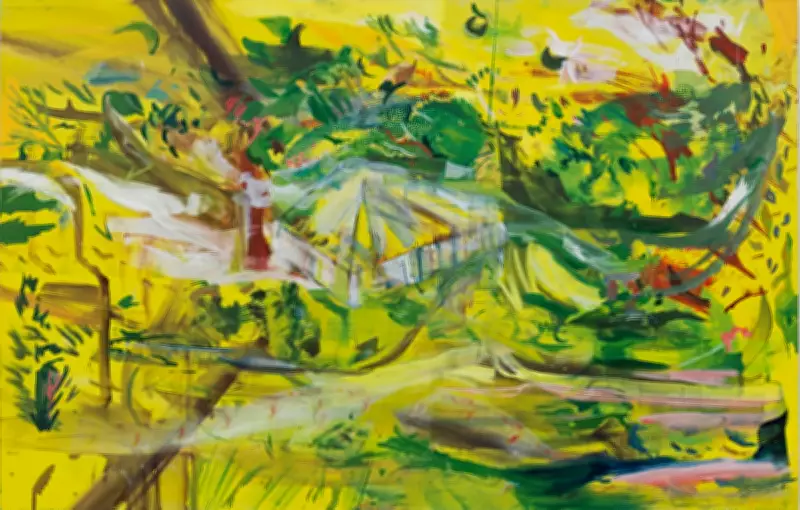
The exhibition, titled Picture Making, features a blend of new and old paintings, alongside recent monotypes and drawings. Inspired by Kensington Gardens, the canvases are a vibrant riot of energy, with streaks of sunshine yellow, mud brown, and spring green. Brown describes them as "celebrating nature, colour, and light," yet acknowledges an underlying instability. In her signature style, recognisable details—such as dogs, trees, or bird boxes—emerge from abstract strokes before dissolving, inviting viewers to engage in slow, attentive looking.
Personal Roots and Artistic Influences
Born in London and raised in Surrey, Brown's childhood was idyllic yet complex. At age 21, she discovered that her biological father was the influential art critic David Sylvester, who had nurtured her artistic ambitions from a young age. This connection exposed her to giants like Francis Bacon, emboldening her to borrow from art history. "When I started looking at art seriously, looking just wasn't enough," she explains. "I wanted to copy it as a way of understanding it." Her work often pilfers colors and details from past masters, recontextualizing them into something entirely new.
Reflections on the Art World: From Shyness to Confidence
Brown's journey has also involved navigating the art world's social dynamics. Initially shy around "super cool kids" like Lucas and Hirst, she now walks into openings with confidence, partly due to her commercial success. However, she critiques the contemporary art scene, noting that "greed has overtaken creativity." She laments a market-driven environment where many artists produce work directly for sale, risking the loss of art's essence. Despite this, she remains committed to her craft, continuously evolving from early hedonistic bunny paintings to landscapes and classical themes.
A Future Between Two Worlds: London vs. New York
While Brown harbors a fantasy of living in England, especially during pleasant weather, memories of rainy bus stops in her youth give her pause. She acknowledges that financial stability—such as the ability to take a cab—changes one's experience of a city. As for her place in the London art scene, she feels a newfound belonging, no longer the outsider but a celebrated figure whose expensive paintings speak to her hard-earned position.

Cecily Brown's Serpentine exhibition marks not just a homecoming but a validation of her lifelong dedication to painting. In a world that once dismissed her medium, she has carved a path that honors tradition while embracing innovation, proving that art, at its core, is about persistent vision and emotional depth.